What If the Only Thing Between You and the Life You Deserve Is a Hidden Wealth Code Waiting to Be Activated
>>> Open the Door <<<

Picture this: You grab your smartphone one morning, and the back feels warm and uneven. A bulge pushes against your thumb. Panic hits as stories of fires flash in your mind; you act fast and power it off.
That quick move saved trouble. Battery swelling strikes many phones. It happens when lithium-ion cells build dangerous gases from overcharge or heat.
These gases create pressure. The battery can rupture, leak toxins, or spark thermal runaway. Fires and explosions follow if punctured or squeezed. Real cases show phones splitting apart, with damage to screens and boards.
Even if it works, risks grow with every charge or call. Swelling signals deep damage; you can’t fix it yourself. Safety comes first, always.
There Is a Frequency That the Wealthiest Families Have Used for Generations and Most People Will Never Know It Exists
>>> Open the Door <<<

Don’t press the spot or try repairs at home. Power off now. Keep it cool and away from kids or pets.
This guide walks you through key steps. You’ll learn to spot early signs like gaps in the case or stiff buttons. Then take safe first actions to cut risks.
Next, grasp common causes such as cheap chargers or drops. Find out how to get pro repairs without harm. Finally, pick up tips to prevent it in your next smartphone.
What If the Only Thing Between You and the Life You Deserve Is a Hidden Wealth Code Waiting to Be Activated
>>> Open the Door <<<
Experts agree: Drain power if safe, then recycle right. Pros handle battery swaps. Follow these, and you stay protected.
Recent alerts highlight checks for all devices. Swollen batteries caused injuries and big repair bills in power tools and packs too. Phones face the same threats from high energy needs.
Act early. Your phone lasts longer, and you avoid danger. Read on for the full plan.
Spot These Key Signs of Battery Swelling on Your Phone
You can catch battery swelling early if you know what to watch for. These signs pop up on smartphones from iPhones to Pixels and beyond. Check your device today to avoid risks like fire or leaks. Start with what your eyes pick up first.
Visual Clues You Can See Right Away
A swollen battery pushes against the phone’s case and screen. The back might bulge out like a balloon under pressure. Look for a puffy appearance that makes the device rock on a flat surface instead of sitting steady.
Gaps often form at the edges where parts meet. The screen lifts away from the frame, or the back cover separates. You might spot rainbow patterns near the edges, like oil on water from strained adhesives.
Color changes show up too. The case warps or cracks under stress. Metal or glass parts shift, creating uneven lines.
Spot these on different phones like this:
| Phone Type | Key Visual Signs |
|---|---|
| iPhone | Screen lifts; back shows gaps |
| Google Pixel | Screen separates badly; case warps |
| Honor | Back cover rises; device wobbles |
| Samsung | Bulging case; edge cracks |
Hold your phone at eye level under good light. Turn it side to side. If it looks off, don’t ignore it.
Touch and Feel Warnings to Check
Run your fingers over the back with care. A healthy phone feels firm and flat. Swelling makes it squishy or soft, like pressing a ripe fruit.
Buttons turn stiff from the pressure inside. The power or volume keys stick or resist clicks. They won’t snap back as before.
Warmth stands out too. The phone heats up fast, even when idle. It stays hot during light use like texts or calls.
Check gently only. Press light with one finger. Never poke hard or squeeze. That could spark a leak or worse. If it feels wrong, set it down right away.
Sounds and Smells That Signal Danger
Swelling stays quiet most times. But watch for rare hissing or popping noises. These come from gas building up or a seal breaking. They signal high fire risk.
Smells give strong clues too. A chemical odor, sweet like nail polish remover, means electrolytes leak. It hits near the ports or vents.
These point to real danger. Stop using the phone now. Unplug it. Power off if safe. Keep it in a cool, open spot away from flammables. Call a pro for help fast. Your safety beats any call or app.
What to Do First If Your Phone Battery Swells
You spot the signs of a swollen battery. Your heart races. Now comes the critical part: act fast to cut risks like fire or leaks. These steps keep you safe and protect your home. Follow them in order, and stay calm.
Step 1: Turn Off the Phone Now
Power off your phone right away. This stops electrical flow that builds heat and pressure inside the battery. Gases from damage grow worse with use, so shutting down lowers the chance of thermal runaway, where heat spirals out of control.
Press and hold the power button until the screen goes black. If it won’t turn off, let the battery drain on its own in a safe spot. Don’t force it or charge it; that adds fuel to the problem.
Wear gloves if the phone feels hot. Handle it with care to avoid shocks or bursts. Once off, it cools faster, and risks drop.
Step 2: Isolate It in a Safe Area
Move the phone to a spot that won’t spread fire if things go wrong. Pick a fireproof area like an outdoor patio or garage. Keep it away from kids, pets, paper, fabrics, or anything that burns easy.
Place it in a metal container such as an old pot with a lid or a steel trash can filled with sand or kitty litter. These catch sparks or leaks. Use tongs or thick gloves; bare hands risk burns from heat or chemicals.
Stay clear of direct sun, hot cars, or water. Watch from afar for smoke, odd smells, or hissing. If you see those, leave the area, shut doors, and call emergency services.
Here are quick picks for safe spots:
- Backyard metal bin with lid.
- Garage concrete floor in a pan of dirt.
- Fire-safe bag from a hardware store.
Distance matters. Put at least six feet between it and your living space.
Step 3: Get Professional Help Quick
Contact an authorized repair shop or your phone maker’s service center without delay. They train to handle swollen lithium-ion batteries in smartphones. Search online for “authorized [your brand] repair near me” or check the official site.
Tell them exactly what you see: the bulge size, any warmth, smells, or sounds. Mention when it started and your steps so far, like powering off. Wrap the phone in a plastic bag first for safe transport.
If repair isn’t worth it, ask about disposal. Pros tape the terminals with electrical tape to stop shorts, then direct you to hazardous waste spots. Local fire stations, retailers like Best Buy, or programs like Call2Recycle take them free.
Don’t toss it in regular trash; that sparks landfill fires. Skip mail or DIY removal. Experts make it simple and safe.
You took charge fast. Your quick moves prevent bigger issues. Next steps build on this solid start.
Why Does Your Phone Battery Swell? Common Causes
A swollen battery turns your reliable smartphone into a safety hazard. Gases trapped inside push against the case until it bulges. Pinpoint the triggers now so you spot problems early and prevent them. Heat, poor habits, and time wear down the cells. Let’s break down the top reasons your phone’s battery puffs up.
Overcharging and Charger Issues
You plug in overnight and wake to a bloated back panel. Overcharging heats the battery and sparks reactions that release gases. Lithium-ion cells fill with hydrogen and others when voltage stays high too long. The pouch can’t vent them, so pressure builds.
He Was Drowning in Bills and Burnout Until a Simple Daily Ritual Rewired His Brain for Wealth in Less Than a Week
>>> Start Your Shift Today <<<

Fast chargers speed this risk if they push too much power. They deliver quick juice, but without smart controls, heat spikes inside. Your phone might hit full charge, yet the current keeps flowing. That extra energy breaks down the electrolyte, a liquid that carries charge.
Third-party chargers make it worse. Cheap ones lack built-in safeguards like auto-shutoff. They send wrong voltage or unstable power, which stresses the cells. Brands promise compatibility, but fakes overload circuits. Stick to official cables; they match your phone’s needs.
Here’s what sets risky chargers apart:
- No certification marks like UL or MFi; these prove safety tests.
- Overly fast speeds beyond your model’s limit, say 65W on a 20W phone.
- Thin or frayed cords that drop voltage and cause uneven charging.
One user swapped a knockoff for the original and saw heat drop right away. Test yours: charge to 100% then unplug. If it stays warm, switch chargers fast.
Age and Wear Over Time
Batteries don’t last forever. Each charge cycle chips away at the core structure. After 300 to 500 full charges, the anode and cathode start to crack. That’s the negative and positive layers where reactions happen.
Chemicals degrade as electrons shuttle back and forth. The solid electrolyte interphase, a thin protective film, thickens and flakes off. Without it, metal ions wander and form dendrites, tiny branches that short-circuit the cell. Those shorts generate local heat and spit out more gas.
Your smartphone’s battery hits this wall around two years of daily use. Partial charges help, but full drains speed the breakdown. Gases form from the electrolyte splitting into carbon dioxide and hydrogen. The pouch swells as pressure mounts.
Factors that hasten wear include high temps during cycles. Charge in summer heat, and degradation doubles. Track health with apps; drop below 80% capacity signals trouble.
Replace proactively if you notice fast drains alongside swelling. New cells hold shape better and cut gas risks. Your phone runs smoother too.
Safe Ways to Fix a Swollen Battery Without Risks
You can’t truly fix a swollen battery at home. The damage inside runs too deep; gases from broken chemicals make repairs impossible. The only safe path leads to professionals who replace the battery. They follow strict rules to avoid fires or leaks. This keeps your smartphone and home out of harm’s way.
Why Home Fixes Lead Straight to Danger
Puncture the bulge to let gas out? That sparks instant fire or toxic release. Press down hard? You risk rupture and chemical sprays. Charge or drain it? Heat builds and speeds the breakdown.
Experts from Apple and Samsung agree: swollen lithium-ion batteries demand full replacement. Once cells degrade, no trick undoes the harm. Stories of exploded phones fill forums because people tried quick fixes.
Skip these traps. Your goal stays simple: contain the issue until pros step in. They spot hidden risks you miss.
Safe Handling Before You Seek Help
Power off your smartphone if you haven’t already. Let it sit in that fireproof spot from earlier steps. Use plastic tools only if you must lift a loose back cover; never force glued parts.
Wear gloves and eye gear. Work outdoors or in open air. Grab the battery with blunt tongs. If heat rises or smells grow, drop it in sand and back away.
These moves buy time without new dangers. Pros arrive ready to take over.

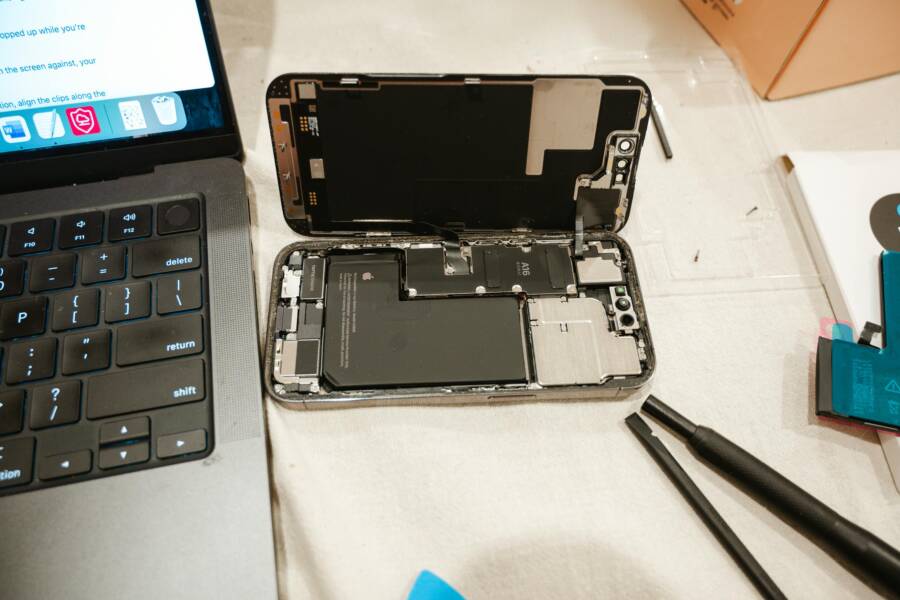
Photo by Harry Tucker
How Pros Replace the Battery Right
Take your phone to an authorized center. Apple runs battery service programs for iPhones. Samsung offers certified spots too. Search for “official [brand] battery repair” near you.
Techs treat it as hazardous waste. They seal it for transport, then swap in a new cell. Expect tests for other damage like warped boards. Costs run $50 to $100, often less under warranty.
Pick shops with lithium battery training. They use quality parts that match your model. Your phone returns safe and strong.
After replacement, charge smart: unplug at 100%, keep cool, use real cables. This stops swelling from coming back.
Proper Disposal Keeps Everyone Safe
Don’t trash a swollen battery. It starts landfill fires or poisons soil. Tape the contacts with electrical tape first. Drop it at stores like Best Buy or Call2Recycle sites.
Fire stations and repair shops take them free. They send units to certified recyclers who break down metals safely. No mail-ins; leaks happen in transit.
Follow these, and you close the loop right. Your old battery harms no one. Pros make the swap smooth, so you charge up worry-free.
Top Tips to Prevent Battery Swelling in the Future
You handled the swollen battery issue. Now focus on habits that stop it from happening again. Simple changes to your routine keep gases from building up in lithium-ion cells. Your smartphone stays flat and safe for years. Start with these proven steps today.
Charge Smart to Cut Stress
Stick to a 20-80% charge range most days. Full charges to 100% or deep drains to 0% strain the battery and speed gas formation. Unplug once it hits full; leave it connected overnight invites trouble.
Use original chargers and cables every time. They deliver steady power with built-in controls. Cheap fakes send unstable voltage that heats cells and puffs them out.
Turn on features like Optimized Battery Charging on iPhones. Go to Settings, then Battery, and Battery Health. It pauses at 80% until you need the rest. Android phones offer similar limits in battery settings. These tools match your daily patterns and ease wear.
Control Heat Every Day
Heat kills batteries fast. Keep your phone under 95°F, or 35°C. Skip hot cars, direct sun, or charging under pillows. Games or videos while plugged in raise temps quick; pause them.
If it warms up, unplug and let it cool in open air. Store spares at 50% charge in a dry, cool drawer. Extreme cold works too, but room temp beats all.
A thin case helps vent heat. Thick ones trap it like a blanket on a hot day. Feel the back after use; cool means good.
Check and Maintain Regularly
Track battery health weekly. On iPhones, check Settings > Battery > Battery Health. Below 80% capacity? Plan a swap soon. Apps like AccuBattery work on Android for the same info.
Avoid fast charging unless needed. It pushes power hard and builds heat. Limit heavy apps during charges.
Update your phone’s software often. New versions fix battery bugs and add protections. Wipe dust from ports with a soft brush; clogs force uneven power.
Follow these, and your next smartphone dodges swelling. Small efforts pay off big. You charge worry-free.
Conclusion
You now know the clear signs of battery swelling on your smartphone, from bulging backs and stiff buttons to odd smells. The first steps stay simple and vital: power off the device right away, isolate it in a fireproof spot like a metal bin with sand, and contact pros for safe replacement or disposal. These actions cut fire risks and protect your home.
Check your phone today. Run your fingers over the back, inspect edges for gaps, and test buttons. Early spots prevent bigger issues, as recent user reports show swelling hits models from Pixels to iPhones without warning.
Safety always wins. Follow these steps, and you handle swollen batteries with confidence. No more panic over warm bulges or lifting screens.
Share your story in the comments: Did you spot swelling early? Bookmark this guide for quick reference, and grab our next tips on smartphone battery health. Stay safe and charged.
What If the Only Thing Between You and the Life You Deserve Is a Hidden Wealth Code Waiting to Be Activated
>>> Open the Door <<<