
She Pressed Play on a Strange Audio Track and Within Days Her Financial Reality Started Shifting in Ways She Could Not Explain
>>> See How It Works <<<

If your phone keeps re-enabling Bluetooth as soon as it restarts, you’re not alone. A quick reboot should bring you back to a clean slate, not a Bluetooth world where devices keep pairing on their own. This guide walks you through practical steps to diagnose the cause and fix the issue without diving into complicated settings or risky tricks. You’ll learn what usually triggers auto Bluetooth on startup, how to test fixes, and ways to prevent a recurrence.
In many cases the problem isn’t a rogue app at all. It can be a mix of system features, routine updates, and connected devices nudging Bluetooth back to life. The goal is to identify the real trigger and disable it, so Bluetooth stays off until you want it on.
Why Bluetooth Might Turn On After Reboot
Bluetooth is designed to be present and ready. That means it can turn on automatically for several reasons.
- App automations and background tasks make Bluetooth turn on to complete a task such as syncing a wearable or checking a smart home device.
- Car integration or wireless audio accessories request Bluetooth on at startup to re-establish a connection with your phone.
- Smart home apps or routines exist to simplify reconnecting to headphones or speakers after a reboot.
- System updates or factory settings can reset Bluetooth preferences and re-enable it.
- Some devices or OEM software include a startup optimization that re-enables Bluetooth when the system starts.
Understanding these triggers helps you pick the right fix. The goal is not to disable Bluetooth forever, only to stop it from turning on by itself when you don’t need it.
Thousands of People Were Struggling With Money Until They Discovered This One Ancient Secret Hidden in Sound
>>> Unlock It Now <<<

Quick Fixes You Can Try Right Now
Start with the simplest steps. They require little time and can clear up many issues.
Thousands of People Were Struggling With Money Until They Discovered This One Ancient Secret Hidden in Sound
>>> Unlock It Now <<<
- Turn Bluetooth off before reboot
- If you can, switch Bluetooth off from the Quick Settings panel or Bluetooth settings, then perform the reboot. This reduces the chance of the system turning it back on automatically.
- After the device restarts, check whether Bluetooth remains off. If it stays off, you’ve narrowed the problem to something that re-enables it during startup.
- Check for startup permissions and auto-launch settings
- On Android, look for items like Auto-start, Background activity, or Launch by default in the Apps section of Settings. Manufacturer skins can place these options under different names, but the idea is the same: some apps are allowed to run and wake Bluetooth automatically.
- If you spot such options, restrict Bluetooth related apps from auto-launch. Save and reboot to verify.
- Inspect automation apps
- Popular automation tools like Tasker, MacroDroid, or IFTTT can toggle Bluetooth based on conditions. Temporarily disable or delete any profiles that involve Bluetooth, then reboot to test.
- Even if you don’t think you set up a profile, a friend or a recent backup could have introduced one. It’s worth a quick scan.
- Review smart home and wearables apps
- Apps that control routines for your phone and smart devices can request Bluetooth on startup to sync data. Open Google Home, Samsung SmartThings, Fitbit, and other related apps to see if there are any startup routines that include Bluetooth.
- Disable or modify those routines, then reboot to see if the problem persists.
- Check car and automotive connections
- If you regularly connect to a car stereo via Bluetooth, the car system might trigger Bluetooth on the phone when it detects a nearby car. Remove the phone from the car’s paired devices list or adjust auto-connect settings to require user confirmation.
- Clear Bluetooth cache (Android)
- Go to Settings > Apps or Apps & notifications > See all apps > Bluetooth > Storage > Clear cache.
- Reboot and observe if Bluetooth still turns on by itself. Clearing the cache can remove corrupted data that nudges Bluetooth on.
- Update software
- Install any pending OS updates or app updates. A known bug in the Bluetooth stack can cause sporadic behavior, and software fixes are common in updates.
- After updating, reboot and test one more time to ensure stability.
- Reset network or phone settings if needed
- On Android, you can reset network settings without wiping personal data. On iPhone, a full reset of all settings is possible without erasing your media.
- This can resolve misconfigured defaults that influence Bluetooth behavior. Always back up before a reset.
- Check device compatibility and accessory firmware
- Sometimes a smartwatch, wireless headset, or other Bluetooth device sends a persistent reconnect signal that makes the phone re-enable Bluetooth. Update the accessory’s firmware and re-pair if necessary.
If these quick fixes don’t stop the problem, you’re ready to dig deeper with a structured diagnostic plan. The goal is to identify a repeatable trigger and confirm the fix with a controlled test.
A Simple Diagnostic Plan to pinpoint the culprit
A calm, methodical approach works best here. Treat each step as an experiment and confirm the result before moving on.
- Reproduce the issue in a controlled way
- Reboot the phone in a consistent environment, ideally after a fresh start with no devices connected. Note the exact moment Bluetooth turns on if you can.
- If it happens every time, you’ve got a repeatable trigger to focus on.
- Isolate potential apps
- If you suspect an app, try a clean boot. Restart in Safe Mode (instructions vary by device) to see whether Bluetooth still turns on by itself.
- If the issue stops in Safe Mode, a third-party app is the likely culprit. Return to normal mode and disable apps in batches to identify the offender.
- Test connections and automations
- Disable all automations again and disconnect wearable devices temporarily. Reboot and verify Bluetooth behavior.
- Reintroduce automation or wearables one by one to see which one triggers the re-enablement.
- Examine system services
- Some phones have services that manage Bluetooth in the background. If you can access a developer or maintenance menu, view running services or battery optimization for Bluetooth to ensure it isn’t being forced on startup.
- Document findings
- Keep a simple log of each test, including the steps you took and the result. This helps you see patterns and communicates clearly if you need support from the device maker.
In practice, most cases fall into one of two categories: an app or routine you forgot about, or a car/earbud connection requesting a quick startup connection. The diagnostic plan helps confirm which path to follow.
Thousands of People Were Struggling With Money Until They Discovered This One Ancient Secret Hidden in Sound
>>> Unlock It Now <<<
When a Deeper Fix Is Needed
If the issue persists after trying the fixes above, consider more formal steps.
- Factory reset as a last resort
- Back up all important data first. A factory reset returns the phone to its original state and often clears stubborn Bluetooth quirks.
- After the reset, install essential apps one by one and test Bluetooth after each installation to catch a potential trigger early.
- Seek professional help
- If the device is under warranty, contact the maker’s support line. There may be a known hardware or firmware issue affecting your model.
- A service center can run hardware diagnostics that you can’t perform at home.
- Consider a software rollback only if advised
- If a recent OS update introduced the problem, some devices allow a downgrade. This is device specific and not always recommended, so follow official guidance carefully.
Prevention: Keep Bluetooth Under Control
Prevention helps you avoid a repeat cycle of automatic Bluetooth activations.
- Keep software updated
- Regular updates fix bugs and tighten control over background behavior. Enable automatic updates if you trust the source.
- Manage automations and connected devices
- Review automation rules and device connections every few months. Remove anything you no longer use.
- Label devices clearly so you don’t confuse a routine with a manual action.
- Be mindful of car and headset connections
- When you remove a device, also check its settings for any startup preferences. Disable auto-connect options if possible.
- Regularly clear old Bluetooth profiles
- Periodically delete forgotten devices from the Bluetooth pairing list. Old profiles can behave oddly after OS changes.
- Keep a simple core setup
- Avoid keeping too many automation apps installed at once. A lean setup reduces the risk of conflicting rules.
Quick Troubleshooting Checklist
- Bluetooth off before reboot
- No auto-launch permissions for Bluetooth apps
- No active automation that toggles Bluetooth
- Car and headset connections reviewed
- Bluetooth cache cleared
- OS and essential apps updated
- Backup performed before major changes
If you want a quick reference, use this streamlined approach: start with a controlled reboot with Bluetooth off, disable automations, check car connections, clear cache, and update software. If it still acts up, you’re looking at a deeper issue that may require a reset or professional help.
A Visual Reference to Bluetooth On The Surface
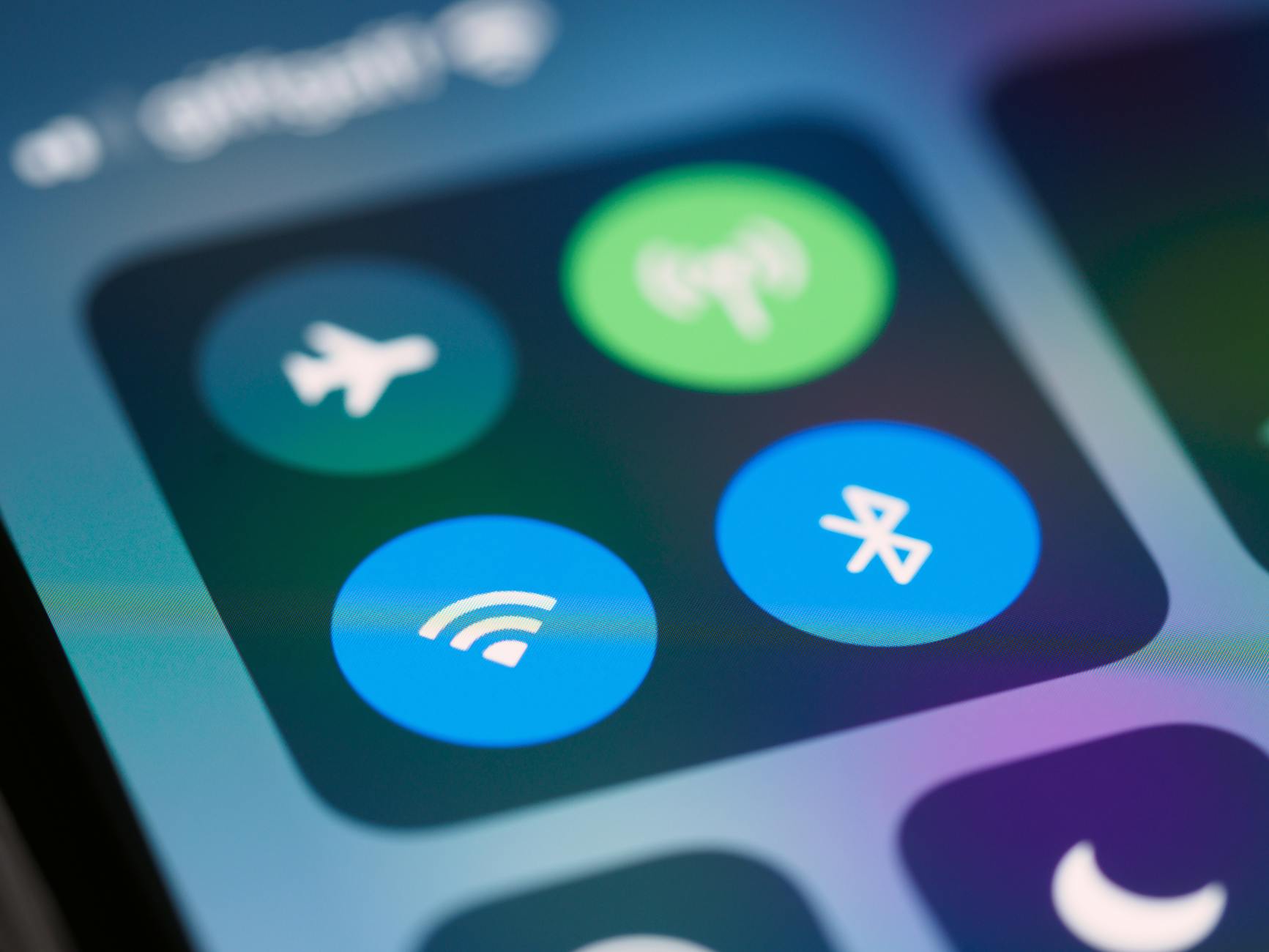
Photo by Brett Jordan
This image illustrates the control panel vibe you see during troubleshooting. It helps remind you what is at stake when Bluetooth keeps turning on after reboot.
Final Thoughts: Take Control of Your Connectivity
Bluetooth being on by default after a reboot is more annoying than dangerous, but it can waste power and complicate connections. The key is to identify the cause and choose a precise fix rather than a broad reset. Start with simple steps, then move to targeted checks for automations, device connections, and app behavior. A calm, methodical approach will usually restore normal startup behavior without sacrificing the benefits of Bluetooth when you actually need it.
If you’ve walked through this guide and still face the issue, you’re not out of options. A factory reset, performed with data backed up, often resolves stubborn glitches. In many cases, though, the root cause lives in a routine you forgot you created or a device that keeps trying to reconnect. With the right steps, you’ll regain control over Bluetooth on your smartphone and keep it off until you want it alive.
He Was Drowning in Bills and Burnout Until a Simple Daily Ritual Rewired His Brain for Wealth in Less Than a Week
>>> Start Your Shift Today <<<
