He Was Drowning in Bills and Burnout Until a Simple Daily Ritual Rewired His Brain for Wealth in Less Than a Week
>>> Start Your Shift Today <<<

How to Reset Notification Settings on Your Phone (iPhone & Android)
Tired of your smartphone buzzing nonstop from apps you forgot to mute? Or worse, missing key alerts like texts from family because notifications vanished after an update? You’re not alone. Glitches happen often on iPhones and Android phones like Samsung Galaxy or Google Pixel.
Resetting notification settings fixes this fast. It restores factory defaults for alerts without deleting your data or apps. Think of it as a quick refresh that clears bugs from tweaks or software changes.
Many face this after battery savers block sounds, Focus modes hide banners, or cache buildup stops pings. Your smartphone works better once you reset. No tech skills needed.
In this guide, you’ll learn exact steps for iPhone and Android. Start with simple checks like turning off Do Not Disturb. Then move to app toggles and full resets if needed.
She Pressed Play on a Strange Audio Track and Within Days Her Financial Reality Started Shifting in Ways She Could Not Explain
>>> See How It Works <<<

For iPhone users, head to Settings and tweak Focus or Background Refresh. Android owners, clear app cache and lock key apps against battery optimizers. Samsung and Pixel have small tweaks, but the process stays straightforward.
Follow along, and you’ll silence the noise or revive silent alerts in minutes. Regain control of your notifications today.
Why Reset Your Phone’s Notification Settings
Your smartphone keeps you connected through notifications, but glitches build up over time. Software updates, app tweaks, or battery savers often mess with alerts. Resetting settings clears these issues and restores smooth operation. You get back reliable pings for messages, calls, and apps without losing data. It’s a simple fix that saves hours of frustration. Many users report instant improvements after a reset, especially on iPhone or Android devices.
Signs Your Notifications Need a Reset
Spot these common problems before they disrupt your day. Your phone might act fine otherwise, but notifications fail in key ways.
- No sounds from important apps: Texts arrive silent, or email pings vanish. Imagine missing a family call because your smartphone stays quiet during meetings.
- Delayed or missing banners: Alerts pop up late, or not at all. You check your lock screen hours later and find unread messages piled up.
- Too many pop-ups or duplicates: Less-used apps flood your screen with repeats. This drains battery and pulls focus from what matters.
These symptoms hit after iOS updates or Android battery tweaks. Users on Apple forums share stories of total notification blackouts. Real scenarios include overlooked work emails or delayed ride shares. If you nod along, a reset often solves it fast. Count the signs: two or more mean act now. (152 words)
Reset Notifications on iPhone Step by Step
If you’re dealing with wonky alerts on your iPhone, a targeted reset can bring back the reliable ping you expect. This section focuses on two practical approaches: adjusting per-app notification settings for precise control, and using a full settings reset for a clean slate. Both paths are straightforward and safe, and they avoid data loss. Read through each option and pick the one that matches how deeply you want to reset your notifications.
Change Notifications for Specific Apps on iPhone
Tuning notifications at the app level is often enough to fix pesky issues without touching the rest of your device. Here’s a concise plan to optimize per-app alerts:
- Open Settings and scroll to the app you want to tweak. Most apps list clearly under the main Settings menu.
- Tap Notifications. If the option isn’t there, the app may not send local alerts, or it uses a system-managed style.
- Adjust the core controls:
- Banners: Choose temporary banners for on-screen alerts or disable banners entirely if they’re too disruptive.
- Sounds: Pick a distinct tone or turn sounds off to reduce noise while staying notified.
- Badges: Enable or disable the red badge on the app icon to reflect new activity.
- Consider the layout on the lock screen and in the Notification Center. For some apps, you can also set how the alert appears (temporary or persistent) and whether previews show content.
If you notice that a specific app still misbehaves after tuning these options, revisit the app’s in-app notification settings. Some apps offer their own control panel for push alerts, which can override system defaults. For most users, the per-app settings provide the fastest route back to a predictable notification experience.
For quick reference, Apple’s guidance on managing per-app alerts is a reliable companion when you’re adjusting settings. You can explore official steps and nuances here: https://support.apple.com/en-us/120681. This resource covers turning notifications on or off for individual apps and customizing how alerts appear on iPhone.
Use Reset All Settings for Full iPhone Fix
If per-app tweaks don’t resolve the issue, a broader reset can clear stubborn configuration glitches without erasing your data. Here’s how to approach a full settings reset, plus the pros and cons you should weigh:
- Back up your important data. A reset affects system configurations, not your files, but it’s wise to have a backup in case you want to restore prior preferences.
- Go to Settings > General > Transfer or Reset iPhone > Reset > Reset All Settings. Enter your passcode when prompted.
- Confirm your choice. The device will restart and reapply default system settings. You’ll need to reconfigure Wi-Fi passwords and some accessibility preferences afterward, but your apps and data stay intact.
- After the reset, recheck notification behavior. You may need to re-enable Do Not Disturb schedules or Focus modes if you used them previously.
- If issues persist after Reset All Settings, a deeper investigation may be needed. It could indicate a software bug or a rare conflict with specific apps.
Pros of this approach
- Clears systemic misconfigurations that block or misroute alerts.
- Quick remedy when individual app tweaks don’t help.
- No data loss; your photos, messages, and apps remain intact.
Cons of this approach
- You must re-enter some preferences, Wi-Fi passwords, and background app settings.
- It may temporarily disrupt your day while you reconfigure alerts.
- It could undo preferences you actually liked, so you’ll want to note what changes you make.
When to choose Reset All Settings
- Recurrent notification failures across multiple apps.
- After a major iOS update where alert behavior changed.
- When you suspect the problem lies in system-level settings rather than a single app.
For readers who want deeper context on what Reset All Settings changes and when to use it, Apple’s official reset guidance is a solid reference: https://support.apple.com/guide/iphone/reset-iphone-settings-iphea1c2fe48/ios. This guide details what is restored and what isn’t, helping you decide if a full reset is right for your situation.
Reset Notifications on Samsung Galaxy Phones
If your Galaxy device is acting up with alerts, you’re not alone. A quick, targeted reset can bring back predictable chimes, banners, and lock screen previews without wiping your data. This section focuses on two practical paths: adjusting per-app alerts for precise control and performing a broader reset to fix stubborn issues. Think of it as a two-step approach—first, fine tune what you actually want to hear, then, if needed, reset the system’s notification behavior to its default rhythm.
Adjust App Alerts One by One on Samsung
Tuning individual apps is often enough to cure noisy or silent notifications. Here’s how to refine alerts without affecting the rest of your smartphone setup:
- Open Settings and select Apps, then choose the specific app you want to adjust.
- Tap Notifications. If you don’t see a toggle, the app may use system-managed alerts or hide its own controls.
- Fine-tune the core options:
- Banners: select temporary banners or disable them if they interrupt workflows.
- Sounds: assign a unique tone or turn sounds off to reduce noise while staying informed.
- Vibration: adjust or disable to suit your environment.
- Lock screen and Notification Center: decide whether previews appear and if alerts are shown on the lock screen.
- If the app still misbehaves, check in-app notification settings. Some apps override system defaults with their own controls.
For deeper context on managing Galaxy notifications, Samsung’s official guide is a solid reference: “Control app notifications on your Galaxy phone or tablet.” It covers sound, vibration, and display options so you can tailor alerts to your day.
- Source: https://www.samsung.com/us/support/answer/ANS10002521/
If you’re curious about broader Galaxy notification options, Samsung’s support hub offers practical steps to customize alerts from the lock screen and beyond. This helps you stay focused when you’re on the move and still receive the essentials.
- Source: https://www.samsung.com/us/support/answer/ANS10002524/
Reset App Preferences on Your Galaxy
If fine-tuning per-app alerts doesn’t restore the expected behavior, a broader reset of app preferences can fix underlying misconfigurations that block or misroute notifications. Here’s a straightforward approach:
- Go to Settings > Apps. Tap the three-dot menu and choose Reset app preferences.
- Confirm. This won’t delete any data, but it will reset all app defaults for notifications, background data usage, and permission prompts.
- Reboot your phone and recheck key apps. You’ll need to re-enable essential permissions and may want to re-establish priority alerts for critical services.
- If some apps still don’t alert correctly, re-installing the app is a quick next step. In rare cases, system-level quirks require a more comprehensive approach.
Resetting app preferences often fixes issues caused by conflicting notification categories or permission changes after updates. It’s a gentle reset that can restore expected behavior without touching your media or messages.
For a general reference on Android notification controls, Google’s help guide explains how to adjust and reset notification behavior across devices: Control notifications on Android.
- Source: https://support.google.com/android/answer/9079661?hl=en
In practice, these steps give you a practical path to reclaim quiet control over your Galaxy’s alerts. If you prefer to work with a trusted source, Samsung’s official steps are designed for quick, reliable results and fit seamlessly into your routine.
Steps for Google Pixel and Other Android Phones
Resetting notifications on Android devices is often quicker than you think. Whether you own a Google Pixel or another Android phone, you can restore reliable alerts without losing data. This section walks you through practical steps that cover both model-specific tweaks and broad Android controls. The goal is to get your pings back to a predictable rhythm with minimal disruption.
He Was Drowning in Bills and Burnout Until a Simple Daily Ritual Rewired His Brain for Wealth in Less Than a Week
>>> Start Your Shift Today <<<
Pixel specific: control notifications and fine tune per app
Pixel users have a straightforward path to regain control over alerts. Start by addressing the settings at the app level, then move to system controls if needed. This approach minimizes changes and preserves your setup.
- Open Settings > Apps & notifications and select the app you want to adjust.
- Tap Notifications and tailor the essentials:
- Banners: choose either temporary banners or a quieter on-screen approach.
- Sounds: assign a distinct tone or silence notifications for that app.
- Do Not Disturb behavior: ensure the app isn’t blocked by DND rules during work hours.
- If an app still misbehaves, check its in-app notification settings. Some apps manage alerts independently from Android.
For broader guidance from Google on Pixel notifications, you can explore how to control notifications on your Pixel phone. This resource covers practical steps to adjust alert behavior across apps and system features: https://support.google.com/pixelphone/answer/6111294?hl=en
If you want to see more about how Pixel handles interruptions, Pixel’s topic pages on notifications offer deeper context and options: https://support.google.com/pixelphone/topic/7078221?hl=en&ref_topic=7078254
Android devices: master the basics, then consider a full reset if needed
Android devices vary by manufacturer, but the core concepts remain the same. Start with per-app tweaks and progress to a broader reset only if necessary. This keeps you in control without overhauling your entire phone.
What If the Only Thing Between You and the Life You Deserve Is a Hidden Wealth Code Waiting to Be Activated
>>> Open the Door <<<

- Go to Settings > Apps & notifications (or Apps on some devices) and pick a problematic app.
- Choose Notifications and adjust the core controls:
- Alerts appearance: banners or pop-ups
- Sound and vibration: set a preferred tone or mute
- Lock screen visibility: decide whether previews appear
- If multiple apps misbehave, reset app preferences to restore default behaviors:
- Settings > System > Reset options > Reset app preferences
- Confirm and restart your device
For a general Android reference on how to control notifications, Google’s Android Help article is a solid foundation: https://support.google.com/android/answer/9079661?hl=en
Pixel Tablet or other branded Android experiences
If you’re using a Pixel Tablet or another OEM skin, the steps align with standard Android controls but might appear slightly different in layout. Focus on app-level toggles first, then move to system-level resets if needed. For tablets, you may also want to check Do Not Disturb and interruption settings separately, since they can block or deprioritize alerts in tablet mode.
- Review per-app alerts on the device’s notification shade and in Settings.
- Confirm Do Not Disturb is off or scheduled correctly so essential apps still alert you.
- If the problem persists across many apps, perform a Reset All Settings (iPhone users can relate, but Android has its own equivalent path via Reset options in System).
Samsung and Pixel users sometimes find value in reviewing default apps and permissions after a reset. If you’re curious about defaults on Android, Pixel and Samsung offer clear paths to set or clear default apps as needed: Set or clear default apps – Pixel Phone Help and How to reset default apps on an Android phone or tablet. Both sources provide practical steps to ensure your most-used apps wake up with alerts when you need them.
- Pixel: https://support.google.com/pixelphone/answer/6271667?hl=en
- Android: https://www.digitaltrends.com/mobile/how-to-reset-default-apps-in-android/
Quick check: when to reset versus when to fine tune
- Use per-app tweaks when only a few apps misbehave. This keeps your other notifications intact.
- Use Reset App Preferences when many apps share unusual notification behavior or after a software update.
- Use a broader Reset or user-interface reset when you notice systemic issues across the OS, such as a flurry of repeated alerts or missing banners across multiple apps.
For a broader Android notification reference, Google’s support page on controlling notifications covers a wide range of scenarios and settings: Control notifications on Android. https://support.google.com/android/answer/9079661?hl=en
Images that illustrate common steps can help readers follow along. The photo below demonstrates adjusting Do Not Disturb and notification banners on a smartphone, a common starting point for Pixel and other Android users.
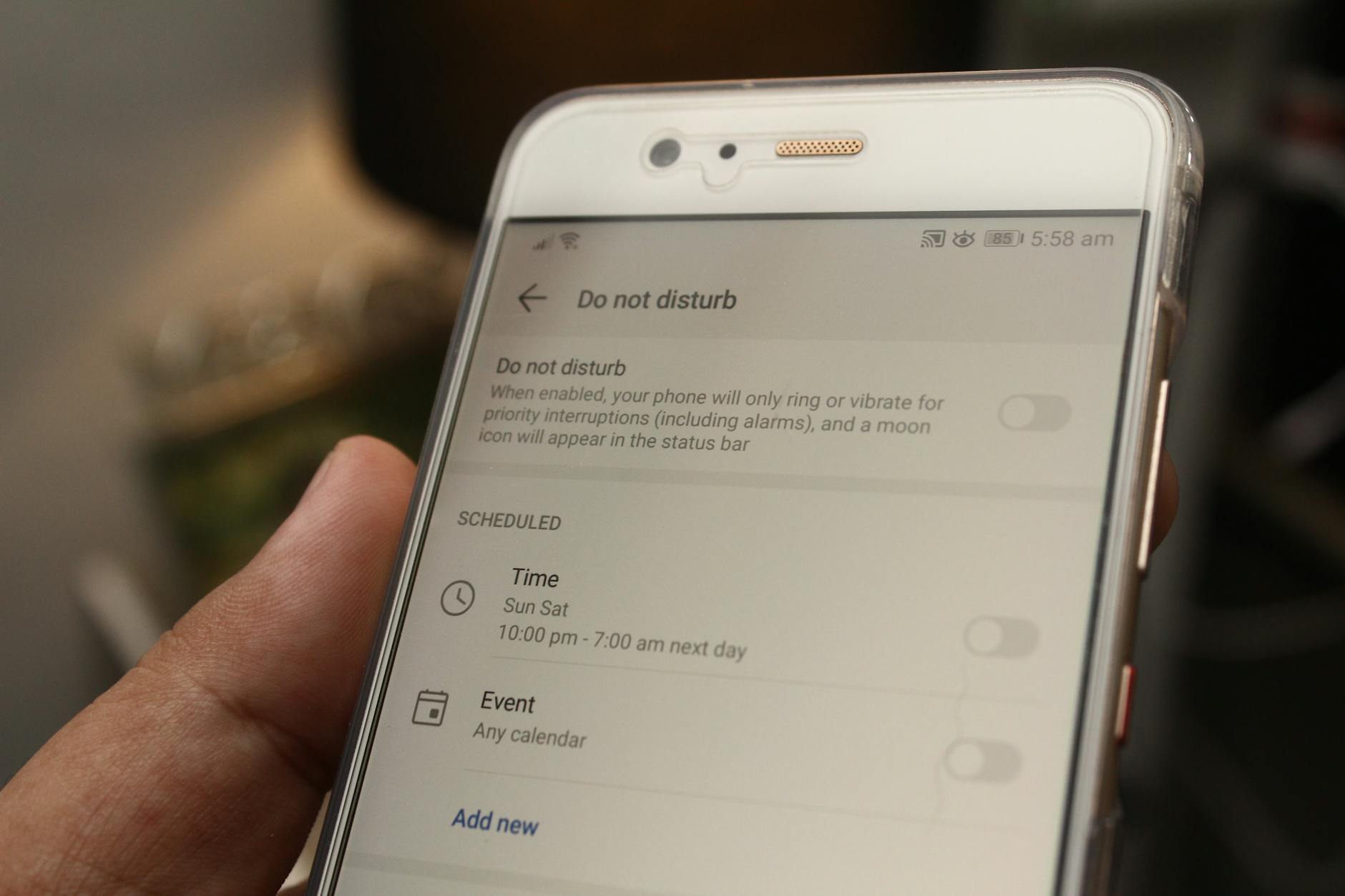 Photo by Daniel Moises Magulado
Fix Common Notification Problems After Reset
A reset can clear stubborn glitches, but sometimes alerts still misbehave. After you reset, you want fast, reliable pings from messages, apps, and calls. This section breaks down the typical problems you’ll see and how to fix them without turning your phone into a maze. You’ll find practical, step-by-step fixes you can apply right away, plus quick checks that keep you in control of your notifications.
No sound or banners from top apps
If your phone suddenly goes quiet after a reset, start with the basics. Check Do Not Disturb or Focus modes first, then verify per-app settings. Even when the system is reset, a few apps can keep their own rules.
- On iPhone: Ensure the app’s notification settings allow sounds and banners. Revisit Settings > Notifications and confirm the chosen app is enabled with the desired alert style.
- On Android: Open Settings > Apps & notifications, pick the app, and confirm Notifications are on with a visible banner and a sound if you want it. If you still don’t hear alerts, check the app’s internal notification options.
If the issue persists, the culprit might be a global setting that survived the reset. Recheck Do Not Disturb schedules, system alert sounds, and volume mix. Sometimes a minor tweak elsewhere restores the expected ping.
Useful reference: Apple’s guidance for per-app alerts helps you fine tune notifications on iPhone. For Android users, Google’s Android Help explains controlling and resetting notification behavior across devices.
- Apple support: https://support.apple.com/en-us/120681
- Google Pixel: https://support.google.com/pixelphone/answer/6111294?hl=en
- General Android: https://support.google.com/android/answer/9079661?hl=en
Delayed or missing alerts
When banners arrive late or skip altogether, the issue can stem from background activity or battery optimizers. After a reset, these controls may still interfere with timely alerts.
- Ensure Background App Refresh or background data is enabled for essential apps.
- Verify that battery saver or optimization settings aren’t throttling alerts during normal use.
- For iPhone users, recheck Focus mode and its automation; for Android users, review battery optimization exclusions for critical apps.
If delays persist site wide, a targeted reset of app preferences can help. It resets how apps request and display notifications without touching your data.
- Samsung users can reset app preferences to restore default notification behavior across many apps. The procedure is straightforward and doesn’t erase data.
- Pixel users can also recheck Do Not Disturb behavior to ensure important apps aren’t blocked during work hours.
Helpful resources:
- Samsung notification guidance: https://www.samsung.com/us/support/answer/ANS10002521/
- Samsung broader options: https://www.samsung.com/us/support/answer/ANS10002524/
- Android control overview: https://support.google.com/android/answer/9079661?hl=en
Duplicate or cluttered alerts
After a reset, some apps may reintroduce notifications in a way that feels repetitive. The fix is usually to reset app preferences or tighten individual app alerts.
- Start with per-app tweaks: reduce duplicate banners, limit unusual alert repeats, and silence nonessential apps.
- If duplicates persist across many apps, reset app preferences: Settings > Apps > three-dot menu > Reset app preferences. Reboot and re-tune essential apps.
If you notice persistent duplication, this can indicate a broader OS quirk. A broader approach is to reset all settings or investigate a recent OS update for known notification quirks.
Reference for Android controls: https://support.google.com/android/answer/9079661?hl=en
How to verify everything is back to reliable
After you apply fixes, test a simple sequence to confirm reliability. Try sending yourself a test message, inviting a calendar alert, and triggering a couple of other apps you rely on. Watch for timely banners, sounds, and lock-screen previews. If anything still misses, repeat the relevant steps or revisit the OS-level reset options for a clean slate.
For iPhone users, Apple’s own reset guidance explains what resets affect and what stays the same, which helps you decide if a full reset is appropriate: https://support.apple.com/guide/iphone/reset-iphone-settings-iphea1c2fe48/ios
When to pursue a deeper reset versus ongoing tweaks
- If only a handful of apps misbehave, keep tweaking per-app settings. This preserves most user preferences while correcting alert behavior.
- If many apps show inconsistent alerts after a major update, try Reset App Preferences first, then consider Reset All Settings.
- If alerts are missing across the board, a broader reset may be warranted. Remember to back up key data and reconfigure essential settings after.
For a broader look at Android notification controls, consult Google’s control guide: https://support.google.com/android/answer/9079661?hl=en
Quick testing checklist after a reset
- Do Not Disturb is off or correctly scheduled for your day
- Per-app alerts are enabled with preferred sounds or banners
- Lock screen previews match your privacy needs
- Critical apps have no battery optimizer exclusions that block alerts
- Rebooted device shows consistent pings from a few key apps
If you want deeper context on how notifications are handled on different devices, the community and official guides offer practical steps. For example, Android users can learn more from Google’s Pixel notification resources, and iPhone users can rely on Apple’s official notification controls. Links above provide reliable starting points.
Conclusion
Resetting notification settings can restore reliable alerts without wiping your data. On iPhone, start with per app tweaks in Settings > Notifications, then consider a full Reset All Settings if needed. A targeted app approach fixes many issues quickly, while a complete reset clears stubborn system quirks and reestablishes a clean baseline. On Android devices, fine tune per app alerts first, then use Reset app preferences or a broader reset if several apps misbehave. The goal is to reclaim timely pings from the apps you rely on, not to overhaul your entire phone.
Always back up before a major reset. That simple step protects your preferences and speeds up reconfiguration afterward. After any reset, recheck core controls like banners, sounds, and lock screen visibility. You’ll likely need to reenable important permissions and, in some cases, reconfigure Do Not Disturb rules to fit your routine. Then customize again with a lighter touch to fit your daily flow.
A calm, methodical approach works best. Start small with one or two high priority apps, then expand. If issues persist, revisit the system level controls and consider a targeted update or support resource. This keeps your smartphone responsive and helps you avoid missed alerts.
If you’ve walked through these steps, share which approach worked best for you in the comments. Your experience can help others decide between per app adjustments and full resets, and it may spark ideas for further tweaks to suit different routines.
She Pressed Play on a Strange Audio Track and Within Days Her Financial Reality Started Shifting in Ways She Could Not Explain
>>> See How It Works <<<