He Was Drowning in Bills and Burnout Until a Simple Daily Ritual Rewired His Brain for Wealth in Less Than a Week
>>> Start Your Shift Today <<<

The safest and easiest way to set up your phone for travel abroad is to check roaming, plan your data use, and lock down security before you leave. A few minutes with your smartphone now can save you from surprise charges, bad hotel Wi-Fi, and the headache of losing access to banking, maps, or messages once you land.
That setup also helps you avoid simple mistakes, like leaving roaming on by accident or skipping a backup before a long flight. If you want your phone to work the moment you arrive, and stay secure while you’re away, the first steps matter most.
Check your carrier, plan, and roaming options first
Before you leave, confirm what your carrier actually includes abroad. A phone that works at home can behave very differently once it connects to a foreign network, and the billing rules can change just as fast.
A few minutes in your carrier app or website can save you from the most common travel phone surprises. Look for roaming settings, international passes, country-specific coverage, and any limits on data, calls, or texts.
There Is a Frequency That the Wealthiest Families Have Used for Generations and Most People Will Never Know It Exists
>>> Open the Door <<<

Find out if your current plan includes international coverage
Start with your carrier app or account portal. Most major providers list roaming options, international add-ons, and travel pricing in the plan details or add-ons section. If the information is unclear, call support before you leave and ask which countries are covered, what speeds you get, and whether your plan changes once you cross a border.
Pay close attention to the fine print. Some plans include roaming only in certain regions, while others require you to buy a daily travel pass. That pass can be helpful for short trips, but it can also get expensive if you leave it running for several days.
Common charges to watch for include:
- Daily travel passes that renew each day your phone connects abroad
- Per-minute calls for voice calls, even when data is covered
- Per-text charges in countries where texting is not included
- Background data use from email, cloud backups, and app refreshes
A plan that looks cheap at home can become expensive abroad if data keeps running in the background.
Also check whether your destination has any special limits. Some carriers treat certain countries as part of a regional bundle, while others charge extra outside that list. If you’re traveling across multiple countries, this detail matters even more.
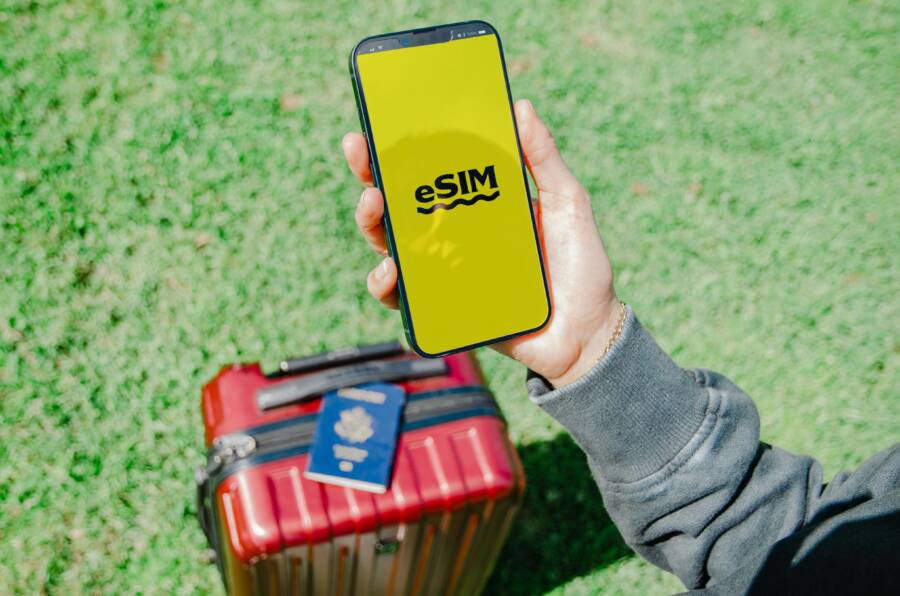
Compare roaming with a local SIM or eSIM
Roaming is the easiest option because your number stays active and you do not need to change cards or settings. That convenience is useful for short trips, airport layovers, or business travel where you want your phone working right away.
A local SIM or eSIM often costs less for longer stays. It can also give you better local rates for data and calls, plus stronger coverage in some areas. The tradeoff is setup time. You may need to buy it after arrival, verify your identity, or install an eSIM profile before you go.
A simple way to compare the options is to look at four things:
If your trip is short, roaming may be the cleanest choice. If you need data every day for maps, rides, and messaging, a local SIM or eSIM is often the better fit.
Confirm your phone is unlocked and ready to switch networks
An unlocked phone can work with different carriers. A locked phone is tied to your current carrier, which can block a local SIM or eSIM from another provider. If you plan to switch networks abroad, this is one of the first things to check.
You can usually confirm your status in your phone settings or by asking your carrier support line. If the phone is still locked, request an unlock before you travel. Do this early, because carrier approval can take time.
Dual SIM phones add another layer of flexibility. With a dual SIM setup, you can keep your home line active for calls or texts while using a travel SIM or eSIM for data. That helps if you need to receive bank codes, stay reachable on your regular number, or separate work and travel use on the same device.
Before you leave, test that both lines work the way you expect. A quick check at home is much easier than sorting it out at the airport with no signal.
Choose the right data setup for the trip
The best data setup depends on how long you are away, how much you use your phone, and how much risk you want to take on with roaming charges. For some trips, your home plan is enough. For others, a local SIM or eSIM gives you more control and lower costs.
The safest move is to plan around your actual habits, not the idea of “light use.” A smartphone can burn through data faster than most travelers expect, especially when maps, photos, messaging, and background apps all run at once.
Estimate how much data you will need each day
Start with your daily habits, then add a little cushion. If you only check messages and use maps for short trips, your needs may stay low. If you upload photos, stream music, or make video calls, your usage climbs fast.
There Is a Frequency That the Wealthiest Families Have Used for Generations and Most People Will Never Know It Exists
>>> Open the Door <<<
A simple way to estimate is to break your day into tasks:
- Navigation uses data every time you search, reroute, or load traffic updates.
- Messaging usually stays light, unless you send lots of photos or voice notes.
- Photo uploads can use far more data than a text message or email.
- Streaming music or video can drain a plan quickly, especially on higher quality settings.
- Cloud sync may run in the background without much warning.
Video calls, hotspot use, and automatic cloud backups can use much more data than expected.
That matters because many travelers overestimate how little they need. A few short clips, a map refresh, and a backup can equal hours of normal texting. If you plan to use your smartphone for work, family calls, or content uploads, choose a larger data buffer than you think you need.
Set data limits, alerts, and app restrictions before departure
Most phones let you set data warnings and hard limits in the settings menu. Turn those on before you leave, so the phone can alert you before charges rise too high. On many devices, you can also restrict background data for apps that don’t need constant access.
It also helps to review auto-play and auto-update settings. Video apps often start playing as soon as you open them, and app stores may download updates over mobile data unless you stop them. Those small settings changes can save money without making the phone hard to use.
A few settings are worth checking first:
- Data warning and limit alerts so you get a notice before you hit your cap
- Background data restrictions for email, social apps, and cloud services
- Auto-play controls for video feeds and social platforms
- App update settings so large downloads wait for Wi-Fi
- Photo backup options so uploads only happen when you choose
If you use an iPhone or Android phone, the exact menu names differ, but the goal is the same. Cut waste, keep the basics working, and leave room for the apps you actually need.
Download offline tools while you still have reliable Wi-Fi
Before you leave home or the hotel, save the things you may need without data. Offline access is one of the best safety backups for any traveler, because it keeps important information close even when the signal drops.
Start with offline maps for the cities or regions on your route. Then save language packs, trip confirmations, boarding passes, and hotel details. You should also keep key contact details in more than one place, such as your phone notes, email, and a secure password manager if you use one.
Useful items to download ahead of time include:
- Offline maps for airports, hotels, transit, and walking routes
- Language packs for translation apps you trust
- Boarding passes and reservation confirmations for flights, trains, and hotels
- Emergency contacts for family, your bank, and local support numbers
- Copies of IDs or travel documents if you store them securely
This setup helps when Wi-Fi is weak, roaming fails, or your data plan runs low. It also gives you a backup path if your smartphone battery dies and you need a printed copy or another device to check details.
Lock down your phone so it stays safe abroad
A secure phone is just as important as a charged one when you travel. If someone gets access to your device, they can reach email, banking, travel bookings, and saved logins in minutes. Set the lock screen, recovery tools, and account protection before you leave, because those are hardest to fix after a loss.
Use strong passcodes, face ID, and auto-lock settings
A long passcode is much harder to guess than a basic four-digit code. A six-digit code is better, but a longer passcode gives you more protection if someone watches you type it or tries common combinations. That matters at airports, train stations, and hotel lobbies, where phones are easy to spot and easy to steal.
Set your screen to lock quickly when the phone is idle. A short auto-lock time reduces the window for anyone to pick up your device and open it before it sleeps again. Even a one-minute delay is safer than leaving it open for several minutes.
Face ID or fingerprint unlock is still useful, but treat it as convenience, not your only defense. If the phone is stolen, biometrics can fail under pressure, after a restart, or when the battery runs low. Your passcode is the real backstop.
A good setup looks like this:
- Long passcode for the main lock screen
- Face ID or fingerprint for quick everyday access
- Auto-lock at a short interval so idle phones do not stay open
- Lock screen notifications limited so private messages do not show in public
If someone can guess your passcode in a few tries, your phone is easier to break into than many people think.
A smartphone holds more than contacts. It often contains maps, payment apps, cloud photos, and saved sessions for email or social media. That is why the lock screen should be the first line of defense, not an afterthought.
Turn on tracking, remote lock, and backup features
Before you leave, make sure tracking and remote security tools are active. On Apple devices, that usually means Find My. On Android phones, it’s Find My Device or a similar service from the phone maker. These tools can help you see where the phone was last located, lock it remotely, or erase it if recovery is no longer likely.
Set up the features while you still have full access. If you wait until the phone is lost, you may not have the login, code, or spare device you need to turn them on. The same rule applies to location sharing with a trusted contact. Share access with someone who can help if your phone disappears or stops responding.
Use these settings before departure:
- Turn on device tracking and location services.
- Confirm remote lock and remote erase are enabled.
- Test the feature once, so you know it works.
- Add a trusted contact who can check your location if needed.
- Back up your phone to cloud storage or a computer.
Backups matter as much as tracking. If you lose the phone, a recent backup can save photos, notes, contacts, and app data. That makes the difference between a nuisance and a full reset.
There Is a Frequency That the Wealthiest Families Have Used for Generations and Most People Will Never Know It Exists
>>> Open the Door <<<
Avoid risky public Wi-Fi and use a VPN when needed
Airport and hotel Wi-Fi can be useful, but it is rarely the safest choice for private tasks. Public networks often have weak controls, shared access, and fake hotspots that copy real network names. If you connect to the wrong one, someone else may be able to watch your traffic or push you to a fake login page.
Use mobile data for sensitive tasks when you can. Checking email, opening a banking app, or signing into accounts is safer on your own connection than on a random network. If public Wi-Fi is the only option, use a trusted VPN and connect only to networks you recognize.
A VPN does not fix every risk, but it does add a layer of privacy on public networks. Pick a provider you trust before the trip, install it at home, and test it once. That way, you are not choosing a service in a rush after landing.
Keep this simple rule in mind:
- Use mobile data for banking, payments, and password resets.
- Use trusted Wi-Fi only when you need it.
- Use a VPN on public networks, especially in airports, cafés, and hotels.
- Avoid logging in to important accounts on open networks without protection.
If the connection feels uncertain, wait until you have a safer one. A few minutes of delay is better than dealing with a stolen login later.
Protect your accounts with two-factor authentication and recovery codes
Your phone is not the only thing that needs protection. Your email, banking, and messaging accounts should still be reachable if the phone is lost or wiped. Two-factor authentication adds a second check, which helps block thieves from signing in even if they know your password.
Before you travel, confirm how each key account works if your device disappears. Some apps rely on text codes, while others use an authenticator app or a security key. If you only use one phone for every login, losing it can lock you out at the worst possible time.
Recovery codes are worth saving before the trip. Many services give you backup codes when you enable two-factor authentication. Keep them somewhere separate from the phone, such as a printed copy in your luggage or a secure password manager on another device.
Focus on the accounts that matter most:
- Email, because it resets other passwords
- Banking and payment apps, because you may need to verify transactions
- Messaging apps, because they often hold travel plans and contact details
- Cloud storage, because photos and files may be tied to account recovery
If your phone is gone, recovery becomes much easier when you already have a second way in. That is why setup before departure matters so much. A few minutes now can save hours of account lockout later.
Prepare key apps, payments, and emergency access before you go
Get your most important apps, payment tools, and emergency details ready before departure. Once you land, the last thing you want is to discover that your banking app needs a new sign-in, your wallet app won’t open, or your hotel address is trapped in a note you can’t reach offline.
A little prep keeps your smartphone useful when plans change, signals drop, or you need help fast. It also reduces the number of small problems that can turn into big ones.
Update and organize the apps you will actually use
Clean up the apps on your phone first. Remove the ones you don’t need, then update the ones that matter most, like maps, messaging, banking, translation, airline, and ride apps. Fewer apps mean less clutter, fewer notifications, and less background data use.
Sign in to every important app before you leave. That includes travel apps, email, and any service you may need for verification or account recovery. If an app asks for a password reset or a code, it’s much easier to fix at home than in a taxi line.
Test each app while you still have reliable Wi-Fi and your normal phone number. Open maps, send a message, check your airline booking, and sign into your bank app once. If something breaks, you can solve it before travel day.
A short pre-trip check can look like this:
- Delete unused apps you won’t need abroad.
- Update the apps you rely on every day.
- Log in again to confirm your passwords still work.
- Turn on any travel-specific settings, like offline mode or saved locations.
If an app matters for your trip, test it at home first. Problems are easier to fix before you board.
Set up payment methods, wallet apps, and backups
Check that your cards work for international use and that your bank knows you are traveling. Some banks flag overseas activity, which can block a purchase until you confirm it. Also make sure contactless payments, wallet apps, and card verification are ready on your device.
If you use Apple Pay, Google Wallet, or your bank’s mobile app, open them before you go and confirm your cards are active. Then make one small test purchase if you can. That simple step can save time at a station, shop, or restaurant.
Bring at least one backup payment method. A second card, a different bank card, or a small amount of local cash gives you options if one payment method fails. That backup matters if your main card is damaged, declined, or locked by fraud systems.
A good travel setup usually includes:
- Primary card for normal spending
- Backup card stored separately
- Wallet app already signed in and tested
- Small cash reserve for places that do not accept cards
Save emergency information where you can reach it offline
Store emergency contacts, hotel details, embassy information, medical notes, and copies of key travel documents in a place that still works without signal. If your phone loses service, those details should still be open in airplane mode or offline storage.
Keep the most important items in more than one place. Save them in secure notes, download copies to your phone, and keep a backup in email or cloud storage if you can access it from another device. Include passport photos, booking confirmations, emergency numbers, and any medical information that first responders might need.
Make sure you can find these details fast:
- Emergency contacts for family, work, and travel companions
- Hotel name, address, and phone number
- Embassy or consulate contact details
- Medical conditions, allergies, and prescriptions
- Copies of passport, visa, insurance, and flight bookings
If your smartphone goes offline, this information should still be there. That backup can save time, reduce stress, and help you act quickly when plans fall apart.
Use these final phone checks on travel day
Do one last pass before you leave. A few small checks can stop roaming mistakes, dead batteries, and missing backups before they turn into real travel problems. Your phone should be ready to connect, stay charged, and keep your key data close at hand.
Test your SIM, eSIM, roaming, and Wi-Fi settings
Switch airplane mode off and on once, then watch how the phone reconnects. That quick reset helps confirm your SIM or eSIM is active, your network settings are correct, and your device can find a signal again. If you use dual SIM, check that the preferred data line is selected for travel, because the wrong line can send data through your home plan.
Then open a browser or app that needs internet access. A map, messaging app, or email inbox works well for this test. If the phone connects to Wi-Fi but not mobile data, fix that now instead of waiting until you land.
Also confirm your roaming setting is aligned with your plan. Turn roaming on only if it is included in your travel package or approved by your carrier. If roaming is off by default and your plan needs it, enable it before departure so the phone does not fail when you need it most.
A quick final check can include:
- Turning airplane mode off and on to reset the connection
- Confirming the correct SIM or eSIM is active for data
- Making sure Wi-Fi connects normally
- Checking that roaming matches your carrier plan
- Opening one app to verify mobile data works
A phone that looks ready in settings can still fail in transit, so test the connection before you leave home.
If anything feels off, fix it while you still have stable Wi-Fi and access to support. That is much easier than sorting out a dead connection in an airport queue.
Charge, pack, and back up your device one more time
Fully charge your phone before you head out. Long travel days drain batteries fast, especially when the screen stays on for boarding passes, maps, rides, and messages. Pack the right charging cable, plus a plug adapter if your destination uses a different outlet type.
Take one last backup before departure. Use cloud backup or a computer backup so your contacts, photos, and app data are current. If the phone gets lost, stolen, or damaged, that backup can save a lot of stress later.
A small power bank is also worth packing. It helps during long flights, train rides, layovers, and tour days when outlets are hard to find. Keep it in your carry-on, because checked bags are not a good place for batteries.
Before you leave, make sure you have:
- A full battery
- Your charging cable
- The right adapter for your destination
- A recent cloud or computer backup
- A compact power bank for long days
If you cover these basics, your smartphone is far less likely to fail at the wrong time. That leaves you free to focus on the trip, not the tech.
Conclusion
A well-set-up phone makes travel abroad easier, safer, and less expensive. If you handle roaming, data limits, security, and offline backups before departure, your smartphone is ready when you land.
The main goal is simple: avoid surprise charges, keep access to your accounts, and stay connected even when Wi-Fi is weak or unavailable. A few smart settings before you leave do most of the work for you.
Check roaming, choose the right data option, secure the device, and save offline backups before your next trip.
There Is a Frequency That the Wealthiest Families Have Used for Generations and Most People Will Never Know It Exists
>>> Open the Door <<<