There Is a Frequency That the Wealthiest Families Have Used for Generations and Most People Will Never Know It Exists
>>> Open the Door <<<

Ever wondered how to capture studio like sound with just a pocket device? Your smartphone has more potential than you think, and you can turn everyday moments into clear, broadcast ready audio with simple tweaks. This guide shows you how to get reliable results without special gear.
Smartphones are powerful tools for on the go recording, but noise, distance, and wrong settings can ruin the take. The key is understanding the basics: mic quality, environment, and the right app. With the right steps, you can produce crisp voice, clean music, and clean ambient sounds that feel near perfect.
What you’ll learn here matters for daily life, from recording quick interviews to capturing a podcast episode or a song demo. You’ll discover smart app choices, practical setup ideas, and practical recording techniques. We’ll cover placement, clipping avoidance, and how to use basic editing to polish your tracks.
We’ll also look at gear options that fit a budget, such as inexpensive mics and simple accessories that dramatically improve sound. You’ll see how to balance convenience with quality, so you never feel stuck with low fps audio again. By the end, you’ll have a reliable, repeatable workflow for capturing high quality audio with a phone, wherever you are.
Thousands of People Were Struggling With Money Until They Discovered This One Ancient Secret Hidden in Sound
>>> Unlock It Now <<<

This guide keeps things practical and approachable. It emphasizes clear steps you can follow today, with quick wins and a plan to level up over time.
Why your phone can capture high quality audio today
Modern smartphones are more capable than most people assume. The combination of better microphones, smarter processing, and streamlined recording apps means you can get studio-like results in everyday scenarios. In this section, you’ll learn why a phone is not a limiter but a powerful on the go recording tool. You’ll also see how small tweaks can make a big difference in readability and warmth, with practical examples you can try today.
Smartphone mics are capable of studio-like results
Your phone’s built-in mics can deliver clear voice when you place them correctly and manage noise. A good rule of thumb is to position the phone at the level of your mouth, angled slightly toward you, not directly in front of you. This reduces plosive sounds and helps the mic pick up your natural voice without excessive breath noise. Quiet rooms with soft furnishings naturally help, but even in casual spaces you can do a lot by timing breaths and keeping a consistent distance. If there’s a fan or HVAC hum in the background, turn it off or relocate briefly to a calmer spot. Simple practices like these can produce intelligible speech and a coherent soundstage that feels closer to a studio take. For a quick reference on how phones compare for mic quality, see practical comparisons among mobile mics in real-world setups from industry tests and reviews.
What affects sound quality on a phone
Several building blocks shape how your phone sounds. The mic design determines how sensitive and directional the pickup is. Preamps amplify the tiny mic signal, and their noise floor sets how clean the recording will be at low levels. The analog-to-digital converter (ADC) then converts that signal into a digital file, influencing dynamic range and readability. Digital noise reduction and smart processing can reduce background hiss or room echo, but overdoing it can flatten the voice and reduce warmth. The goal is a natural balance: clear, present voice with a touch of air and presence, not a sterile buzz. When you understand these parts, you can adjust placement, distance, and app settings to minimize issues without adding gear. For deeper dives into mic design and ADCs, reputable sources explain how these components interact in mobile recording gear and chips used in real world devices.
Best use cases for phone audio
A phone is the easiest tool for certain tasks, and you can still achieve excellent results with minimal setup. For interviews, placing the phone close to the speaker and using a quiet room yields readable dialogue with minimal post work. Voice notes benefit from speaking clearly and keeping sessions short; you’ll get crisp syllables and fewer misrecognized words. For podcasts or field clips, a phone can capture natural conversation and ambient texture if you avoid harsh environments. If you’re aiming for the best possible sound, consider a lightweight external mic or a dedicated recorder for longer sessions. In those cases, the phone remains a capable backup or a quick capture device. For more about practical podcast workflows on phones, see industry guidance and user-tested approaches from podcasting experts.
Links for further reading:
- How to Record a Podcast on Your Phone: 6 Steps (Android and iOS) — Riverside
- The best mobile microphones for recording with a phone — Engadget
- Interview recording tips for cell phones — Rev
Notes for building out sections:
- Tie in real-world examples: a quick café interview (phone close, wind cover if outside), a quick voice memo in a busy office, a podcast segment in a controlled room.
- Emphasize simple, repeatable steps readers can implement today: test distance, avoid direct wind, consider a light screen or foam cover, and pick a quiet environment.
- Maintain a friendly, confident tone that speaks to everyday creators, from students to hobbyists to professionals.
External links integrated naturally:
- For practical podcasting with a phone, read this step-by-step guide on Riverside: https://riverside.com/blog/how-to-record-a-podcast-on-your-phone
- See how mobile mics compare in real world tests: https://www.engadget.com/the-best-mobile-microphones-for-recording-with-a-phone-154536629.html
- Quick tips for phone interviews and field recording: https://rev.com/blog/nail-phone-interviews-with-a-call-recorder
If you’d like, I can tailor these subsections to align even more closely with your brand voice and add specific examples from your typical shooting scenarios.
Set up for success before you record
Before you press record, a few careful setup steps can save you hours in editing and give you consistently better results. This section breaks down practical actions you can take on your phone to create a solid foundation. The goal is to remove common pitfalls like unexpected noise, poor gain levels, and rough room acoustics. With a straightforward checklist, you’ll capture clearer dialogue, crisper musical ideas, and more usable takes right away.
Choose the right app for your needs
Your phone comes with built in recording apps, but third party options often unlock features that matter for real world results. Start by weighing these practical tradeoffs:
- Built in apps: Simple to use, quick to start, and reliably stable. They’re great for quick voice memos, casual notes, or when you’re in a hurry.
- Third party apps: They often add gain control, multi track capabilities, and more flexible editing. Look for:
- Gain control or input level metering, so you don’t clip or record too quietly.
- Multi track or at least easy layering to build a rough demo without switching devices.
- Simple editing tools like trimming, fades, and basic EQ or normalization.
For iPhone users, apps from the App Store range from lightweight to robust studio starters. Android users can choose from a broad ecosystem of voice recorders and mobile DAWs. In practice, a simple workflow works: start with a reliable app that lets you monitor input levels, then use a second app if you need more precise editing or multi track work. If you’re unsure where to begin, a popular baseline approach is to test a dedicated phone app that offers gain control and straightforward editing, then switch to a more feature rich option if you outgrow the basics. For broader guidance and app comparisons, see industry-focused reviews and hands on testing from reputable sources such as Riverside’s practical podcasting guidance and mobile mic comparisons. Riverside: 11 Best Audio Editing Apps for 2025
Short on time? Start with a solid built in app for quick captures, then revisit with a higher capability third party app if you decide you need more control. The key is to know what features matter most for your use case—voice notes, interviews, podcasts, or music ideas—and pick accordingly.
Set sample rate, format and gain basics
Understanding a few numbers can dramatically improve what you end up with on playback. Keep it simple and practical.
- Sample rate and bit depth: These determine how accurately your sound is captured. Higher values give more detail but create larger files. A common, safe default is 44.1 kHz with 16 bit, which is widely compatible for most voice work and casual music demos. If you’re recording for video, 48 kHz is a good match.
- Mono vs stereo: For most spoken word tasks like interviews, voice memos, and narration, mono is enough and yields smaller files with clear intelligibility. If you’re recording music takes or ambient textures where stereo space matters, use stereo.
- Gain basics: Set the input level so your loudest passages stay well below clipping, but not so low that you’re turning up the gain in post. A practical method is to aim for peaks around -6 dB on your phone’s meters during the loudest moment in your take.
In plain terms, think of sample rate as how finely your ears capture detail, and gain as how loud your mic is allowed to be before it distorts. Start with 44.1 kHz/16 bit mono for most voice tasks. If you’re capturing a duo performance or ambiance where space matters, switch to stereo after a quick test. For Android and iPhone workflows, it’s worth confirming the default settings in your chosen app and adjusting to a standard you can consistently reproduce in future takes. If you want deeper reading on how sample rate and bit depth affect mobile recordings, see practical guides from reputable sources focused on mobile audio, like Android and iPhone recording tips. For a practical Android guide, this article is a good place to start: “How to Record Good Quality Audio on Android” by Boris FX. How to Record Good Quality Audio on Android
Minimize interruptions and plan your environment
Noise is the enemy of a clean recording. Set up a quiet workflow before you hit record.
- Put the phone in airplane mode to avoid call and text interruptions. If you must stay reachable, silence notifications instead.
- Close non essential apps that could drain the processor or fire off alerts.
- Choose a quiet, non echoing room. Soft surfaces help; drapes, carpets, and cushions absorb sound. If you’re outside or near traffic, consider a wind screen to minimize breathy pops.
- Battery and storage matter: ensure you have enough battery for the session and free storage for the recording. A full storage folder can derail a take mid session.
In practice, you’ll often get the best results by recording in a small, quiet room with a single soft source of sound. If you’re on the move, a quiet hallway or a room with minimal hard surfaces can work, but be mindful of reflections. For tips on reducing background noise and cleaning up phone recordings in post, see expert guides and tutorials from trusted studios and software makers. This resource provides practical steps to clean up phone recordings after the fact: “How to Clean Up Audio from a Phone Recording” by Marco Alessi. How to Clean Up Audio from a Phone Recording
Battery life and storage limitation notes:
- Turn off features you don’t need during the session, such as Bluetooth if you aren’t using wireless gear.
- If you’re near the limit, consider pausing to offload files to a cloud drive during a break.
- A small, inexpensive power bank can be a lifesaver for longer sessions.
Prepare the environment and tools
A little physical setup goes a long way toward cleaner takes and fewer retakes.
- Stable surface: Place your phone on a steady surface. A light tripod or small stand helps avoid handling noise.
- Microphone protection: A light pop filter or foam windscreen can reduce plosives and breath noise, especially if you’re speaking directly into the mic.
- Room adjustments: Soft textures reduce echo. If you can, add a rug, a curtain, or a wall hanging to absorb reflected sound.
- Basic accessories: A simple lavalier or compact USB mic, connected to your phone, can provide a clearer signal with less proximity noise. If you’re using a handheld device, a small stand helps keep your line of sight stable and reduces handling noise.
If you want practical guidance on how to choose a simple external mic and how to set it up with your phone, you can explore mobile mic comparisons and setup guides from reputable outlets. For example, reading about how phones compare to dedicated mics in field tests can help you decide when a small add on makes sense. If you’re curious about how to optimize setup for a quick podcast or voice demo, check out industry guidance and real world testing on mobile recording workflows. For more on practical app choices for podcasting on phones, see Riverside’s step by step guide to recording a podcast on your phone. How to Record a Podcast on Your Phone
Putting this together, your pre record setup becomes a repeatable routine. You’ll know exactly what to check and what to adjust, whether you’re at home, in a cafe, or outdoors. The goal is consistency so you can focus on what you say, not how it sounds.
External reading to round out your prep:
- Quick tips for phone interviews and field recording: Rev’s interview tips and best practices. Nail Phone Interviews with a Call Recorder
- A practical overview of reducing background noise in mic recordings: Riverside and other industry tips. How to Reduce Background Noise in a Mic Recording
If you’re ready, we can tailor these subsections to align with your brand voice and add concrete examples from your everyday shooting scenarios. The next section will dive into actionable steps you can implement today to start recording with confidence.
Recording techniques to maximize quality
Great audio comes from smart, repeatable techniques you can use anywhere. In this section, you’ll learn practical methods to squeeze the most clarity, warmth, and consistency from your phone recordings. We’ll cover microphone placement, room treatment, outdoor considerations, and how to monitor levels to avoid surprises. Think of these as the core habits that separate decent recordings from broadcast-ready takes.
Microphone placement and distance
Where you place the mic and how close you are to it has the biggest impact on tone, loudness, and naturalness. A good starting rule is to position the phone at about mouth level, angled slightly toward you. This helps capture clear speech while reducing plosives and breath noise.
- Speaking voice with a single person: keep a consistent distance around 4 to 6 inches (10 to 15 cm) for close work, or about 8 to 12 inches (20 to 30 cm) if you need more room ambience. Shorter distances boost presence and intelligibility; longer distances add air and reduce harsh edges.
- Close-up visuals or storytelling: if you’re delivering a script or a performance, 2 to 4 inches (5 to 10 cm) can produce intimate clarity. Use a light foam windscreen to tame pops.
- Proximity and tone: getting closer increases bass and warmth up to a point, then you’ll start to flatten the voice and emphasize sibilance. If you hear harshness or popping, ease back 1–2 inches and adjust the angle slightly.
A practical approach is to test three distances during a quick read and compare. Record short 10-second clips at each distance and pick the one that sounds natural in your space. For additional context on mic placement and how close is ideal, see expert guidance from videography and podcasting sources.
Tip: if you’re outdoors or near a fan, bring the mic closer to reduce room noise, but stay mindful of wind pops. A simple windscreen or dead cat helps maintain clarity without muffling the voice.
Control room acoustics and reduce echo
Echo and reflective surfaces can ruin a clean capture. The simplest way to fight this is to create a small, controlled sound space. Rugs, cushions, and curtains absorb reflections and soften the room’s character.
- Start with soft furnishings: place a thick rug on the floor, add a curtain or tapestry on a bare wall, and throw cushions on a chair. These items break up hard reflections and reduce flutter echoes.
- Avoid bare, flat surfaces: glass, bare plaster, or metal can bounce sound back into the mic. If you can’t cover a surface, add a movable screen or a bookshelf with varied textures to diffuse the sound.
- Gentle placement adjustments: position yourself slightly off-axis from a wall, rather than directly in a corner where bass buildup can occur. If the room still sounds slippery, a small portable acoustic panel can make a noticeable difference without overhauling the space.
If you need stronger results, consider lightweight acoustic panels or portable vocal booths. The goal is to soften reflections without deadening the liveliness of the room. For hands-on tips and demonstrations, many creators share quick room fixes that work in the moment, showing how small changes yield big gains.
External resources offer deeper dives into echo reduction and practical room treatment. For example, a practical guide explains how rugs, cushions, and curtains contribute to a balanced sound, while a quick YouTube tutorial demonstrates easy, no-cost tricks to reduce reverb in under an hour.
Wind and outdoor recording tips
Outdoor audio brings energy and context, but wind can ruin a take in seconds. A windscreen is the first line of defense, and a lightweight dead cat can be worth its weight in clean recordings.
- Use a windscreen or dead cat: even light gusts can cause high-frequency noise and popping. A furry windscreen helps diffuse wind over the mic’s surface and reduces harshness.
- Shield the mic from gusts: angle the mic away from the wind source and keep it in a slight shielded position when possible. If you’re holding the phone, use a small hand shield or shelter to reduce direct wind exposure.
- Manage wind pops: speak with a steady, controlled breath and avoid sudden gusts directly toward the mic. Short, crisp phrases tend to ride wind better than long, windy lines.
- Practical setup outdoors: position the phone under a shade or a small canopy if you can. A light scarf or jacket over the device can act as a makeshift windbreak, while still allowing your voice to register clearly.
If you’re planning frequent outdoor recordings, investing in a compact windscreen designed for cell phones can pay off quickly. Real-world reviews show that these accessories vary in effectiveness, so test a few with your typical wind conditions. For reference, you can explore product options and buyer feedback from reputable outlets and manufacturers.
For additional guidance on outdoor recording equipment and best practices, you can consult consumer reviews and field-tested tips from industry outlets. They often compare how different windscreens perform in real world scenarios.
Monitoring levels and avoiding clipping
Keeping levels in check is essential to prevent distortion and preserve dynamic range. The simplest approach is to watch your input meters during recording and aim for peaks that stay well below the maximum.
- Set a safe target: during the loudest moment in your take, aim for peaks around -6 dB in your app’s meter. This provides headroom for unexpected peaks and reduces the risk of clipping.
- Never rely on post-production to fix clipping: once the audio is distorted, it’s hard to repair without noise or artifact introduction. It’s easier to re-record than to chase a clean fix later.
- Pause when levels are too high: if you see your meter hitting red, stop the take, adjust the distance, or back off the gain. Short pauses to reset can save a lot of time in editing.
- Use automatic gain control with care: some apps offer gain stabilization or auto gain. If you use it, test how it responds to loud moments. If it’s too aggressive, switch to manual gain control and monitor levels yourself.
- Regularly test your setup: run a quick test before important takes. Record a 5–10 second sample that includes your loudest moment and review it right away. If you hear clipping, adjust and re-test.
- Keep a consistent workflow: note your preferred distance, mode, and gain, so you can reproduce optimal results in different environments.
Monitoring is easier when you have a quick routine. For readers who want deeper insights, there are guides that explain clipping in detail and offer practical prevention strategies. These resources are written for creators who want reliable, repeatable results every time they press record.
External links and further reading
- For a practical overview of avoiding digital clipping and maintaining clean level management, check out expert guides from production blogs. They outline common clipping scenarios and clear fixes that fit a phone workflow.
- If you’re building a habit of checking levels, a LinkedIn post and a few industry articles offer concise, actionable tips for real-time monitoring and post-recording checks.
- A quick resource on how to set levels and avoid clipping while recording provides a step-by-step approach you can apply in seconds.
Short recap you can apply today
- Position the mic at mouth level, 4 to 6 inches for most spoken word tasks.
- Soften room reflections with rugs, curtains, and cushions.
- Use a windscreen when outdoors and shield the mic from gusts.
- Watch levels actively and keep peaks around -6 dB to stay in the safe zone.
Want quick starting points? Try this simple setup: a quiet room with a rug, a phone held at mouth level 6 inches away, a light windscreen if you’re outside, and manual gain set to keep peaks around -6 dB. Record a quick test, listen back, and adjust the distance or wind protection as needed. You’ll hear the difference in minutes, not hours.
She Pressed Play on a Strange Audio Track and Within Days Her Financial Reality Started Shifting in Ways She Could Not Explain
>>> See How It Works <<<

Gear and apps that boost quality
Today’s smartphones can deliver surprisingly strong audio, but smart gear and well chosen apps push quality from good to great. This section outlines practical options you can buy or install to improve clarity, warmth, and control in a wide range of recording scenarios. You’ll learn what to pick, how to use it, and where it makes the most sense to invest.
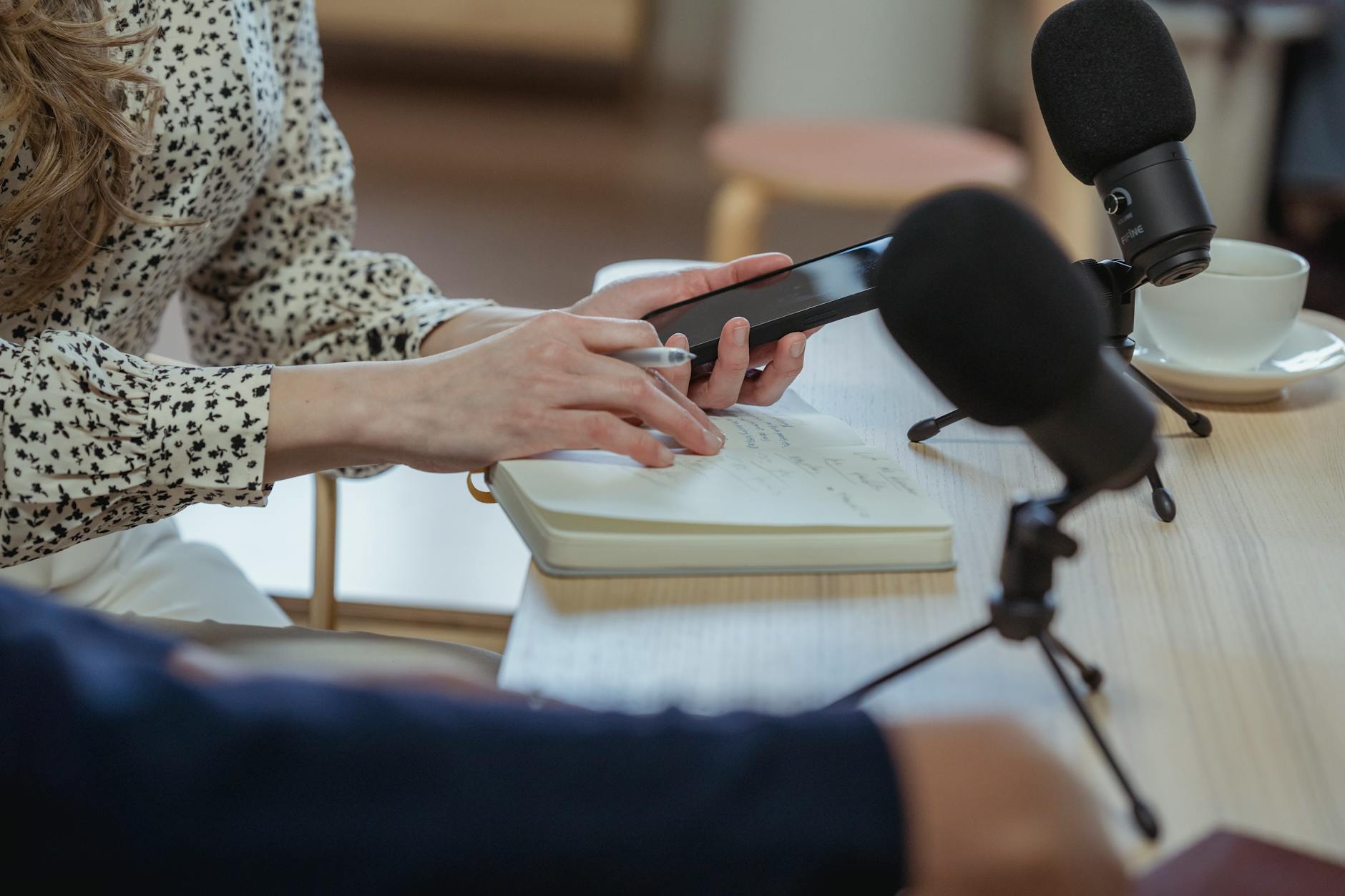 Photo by George Milton
External mics that work with phones
External mics consistently raise the ceiling for phone recordings. Here are reliable options by category, along with quick notes on compatibility and best use cases.
- Lavalier mics (clip-ons): Ultra portable and hands-free, ideal for interviews, podcasts, and on-the-go reporting. They plug into your adapter or directly into USB-C/Lightning with the right cable. Look for omnidirectional or cardioid patterns to manage room noise.
- Shotgun mics: Highly directional and great when you want to minimize side sounds in busy environments. They work best when you can point the mic toward the speaker from a short distance. Many shotgun mics connect via a small TRS-to-TRRS adapter or USB-C, making them a clean fit for phones.
- Compact USB mics: USB-C or USB-A mics that go straight into the phone with an adapter. They’re straightforward, generally plug and play, and often provide better signal-to-noise than native mics at the same price.
What to consider when choosing
- Compatibility: Check if the mic uses TRS, TRRS, or USB and whether you need an adapter. Some options require a powered USB interface or a dedicated USB-C/Lightning adapter.
- Use case: Lavalier for mobility and dialogue, shotgun for directionality in noisy spaces, USB mics for desktop-like clarity without extra gear.
- Price ranges: You can start as low as a modest budget for lavaliers and USB mics, with mid-range options delivering noticeably cleaner sound. If you’re recording regularly, investing in a reputable mic with solid neighborhood noise rejection pays off over time.
- Plug and play: Many modern mics are designed to work with phones without extra apps or software, but some benefit from a dedicated app for gain control or monitoring.
For real world guidance and comparisons, see Engadget’s roundup of mobile mics and best options for phones. It highlights how different mics perform in typical field conditions and helps you pick confidently. The best mobile microphones for 2025
If you’re exploring clip-on mics or USB options, you’ll find practical reviews and buying guides useful for quick decisions. For instance, BestReviews offers structured comparisons that can save you hours of research. 10 Best Microphone For Smartphone For Video Recording 2025 in the US | There’s One Clear Winner | BestReviews.guide
Want to see quick, concrete options? Amazon’s catalog is full of compatible devices. Smartphone External Microphone
Tips for use
- Always test a quick dialogue clip after you attach a new mic to confirm gain and tone.
- Use a windscreen or foam cover in indoors to minimize breath noises when close mic technique is used.
Adapters and cables you need
Adapters unlock the most versatile phone rig. The right cable setup lets you mix mics, record at higher quality, and monitor while you record.
- TRS to TRRS adapters: Allow traditional 3.5 mm mics to plug into TRRS jacks on mobile devices. Useful for lavaliers and some shotgun mics.
- USB adapters and hubs: If your mic is USB, you’ll likely need a USB-C or Lightning adapter. Some setups also benefit from a compact USB hub to power devices or connect multiple mics.
- Grounding and power considerations: When using longer cables, grounding helps prevent hum. Keep power draw stable, especially with bus-powered USB mics.
- Monitoring with headphones: A dedicated headphone output or USB audio interface lets you listen in real time. This helps catch issues like hiss, clipping, or latency.
Practical notes
- If you use a TRS mic with a TRRS phone jack, a simple TRS to TRRS adapter often does the job. If your setup uses USB, confirm the device supports bus power and that your phone can supply enough current.
- For iPhone users, a common path is a USB-C or Lightning mic with a compatible adapter; for Android, USB-C mics are frequently plug and play.
- When possible, keep adapters short to minimize signal loss and interference.
Useful adapters and cables from reputable options include 3.5mm TRS to TRRS cables and USB-C/Lightning adapters designed for microphones. Real-world guides and retailers offer tested accessories to match your phone model and mic choice.
For quick reference on adapters, see Amazon and Movo options that focus on TRS to TRRS compatibility. 3.5mm TRS to TRRS Microphone Patch Cable Mic Cord and Movo MC3 Adapter
Power, grounding, and monitoring tips
- Ground loops can introduce hum; keep the mic and phone on the same power ground when possible.
- Monitor with headphones during recording to catch issues immediately.
- If you hear hiss, switch to a shorter cable or a higher quality adapter.
Apps for control and advanced editing
Apps can extend your phone’s audio capabilities far beyond what comes stock. Look for gain control, limiting, basic EQ, and a light post process that feels natural.
- iOS and Android cross platform options: Apps that handle gain control, clipping prevention, and non-destructive edits make a big difference.
- Gain and input metering: An app with visible meters helps you set levels accurately and avoid surprises in post.
- Simple post processing: Basic EQ, a touch of compression, and normalization can make dialogue sound more consistent across takes.
- Recording and editing workflow: A practical setup often uses one app for tracking and a second for editing and exporting.
Recommended practices
- Start with a solid recording app that shows input levels and allows manual gain control. Then consider a more feature rich app for multi track work if you need it.
- When comparing apps, favor ones with clear level meters, low-latency monitoring, and non destructive editing options.
Get inspired by a few seasoned sources that review mobile recording apps and offer practical workflow advice. Descript’s article on audio recorder apps is a solid starting point for understanding how these tools fit into a mobile workflow. 8 best audio recorder apps in 2025 For Android users, Riversides’s guide to the best recording apps is a practical reference. 7 Best Recording Apps for Android in 2025 For those exploring cross platform solutions, The Podcast Host has useful comparisons for Android. Best Audio Recording Apps for Android
Portable editing and processing plug ins can help you finish a take on the go. If you’re after a more robust desktop style edit, a tool like Descript gives you a powerful on the road editing environment that translates well to phone work.
Images and visuals
- Consider a photo showing a phone with an external mic connected, paired with a compact recorder for a practical setup. A caption could explain the setup in a sentence so readers can replicate quickly.
When a dedicated recorder is worth it
A dedicated portable recorder remains a strong option for certain scenarios. If you regularly work in the field, cover live events, or need to capture multiple sources cleanly, a standalone device can save time and improve reliability.
- Field interviews: A portable recorder with separate track handling reduces cross talk and makes editing easier.
- Live music or crowded events: External mics on a dedicated device often deliver better ADCs and more headroom than a phone can provide in tough acoustics.
- Battery life and file handling: Recorders designed for audio typically offer longer battery life and smoother file management. You’ll also avoid the phone’s background tasks consuming resources during long sessions.
Common scenarios where a dedicated recorder shines
- A café interview where you want clean dialogue with minimal room noise.
- A street performance where you need clean instrument and vocal takes with reliable power.
- A conference or panel where multiple mics are needed and easy switching between channels matters.
If you want a quick comparison, a recent guide contrasts dedicated recorders with phone-based recording for interviews and live events, highlighting battery life, microphone compatibility, and workflow benefits. The Best Portable Audio Recorders for Musicians and Journalists 2025
Key takeaways
- A dedicated recorder is worth considering when you need multi mic control, longer sessions, and simpler file handling.
- For quick field work, a phone with a good external mic can cover many tasks effectively, especially if budget or setup time is a constraint.
- Always test in real world conditions, especially in outdoor or echoey spaces.
Photographs and product imagery
- If you use images, show a portable recorder in a bag next to a phone with an external mic attached. A photo like this helps readers visualize a ready to record rig.
That covers the gear and apps that lift the quality of your phone recordings. The next section will walk you through setting up a fast, repeatable workflow to apply these tools consistently in your day to day projects. If you want, I can tailor these recommendations to your typical shoots and gear budget, so the advice feels even more practical for your setup.
Post production and sharing for clean audio
After you finish recording, a focused post process turns good takes into clean, broadcast-ready audio. This section lays out concise editing basics, simple noise control and EQ, practical export settings for various platforms, and smart organization plus backups. You’ll learn to preserve natural dynamics while removing artifacts, so your final pieces sound professional without sounding overprocessed.
Editing basics you need
Editing should feel invisible. The goal is to trim for flow, fade softly, and level the rough track so it sits comfortably in the mix. Start with a clean slate and work in small steps.
- Trim and splice with purpose: remove obvious breaths, long pauses, or stray noises, but keep natural speech patterns. Aim for edits that feel seamless to the listener.
- Fade in and fade out gently: short crossfades at the beginning and end of clips can prevent abrupt starts or endings that jar the ear.
- Rough leveling: bring clips to a consistent loudness, then back off on sections that spike. You want a steady listening experience from start to finish.
- Preserve human feel: avoid over editing. Tiny adjustments that keep breath and pacing intact make the result sound more like a real conversation.
A practical approach is to make a first pass for timing and then a second pass for transparency. If you’re working on a smartphone, many editing apps offer trims, fades, and normalization in one workflow. For additional guidance on basic editing techniques, see resources from trusted editing communities and app reviews.
Internal links and suggested reads:
- For practical app options and editor workflows, check out expert roundups of mobile editing apps and features.
Noise reduction and EQ at a basic level
Clean up the background without stripping the voice of life. A gentle noise gate or a light equalizer can make everything clearer without sounding artificial.
- Noise gate basics: set a threshold just above the background hum so quiet room noise falls away while the voice remains audible. Use a slow attack and a soft release to avoid choppy changes.
- Gentle equalization: a subtle cut around 300–500 Hz can remove muddiness, while a tiny boost around 3–6 kHz can add clarity to consonants. Avoid broad boosts that make the voice sound harsh.
- When to apply EQ: use EQ sparingly. If the room tone is weak or the mic pickup is dull, a small adjustment is better than a full tonal overhaul.
- Preserve naturalness: listen in context with the rest of the track. If you hear artificial brightness or an overly clean timbre, back off the EQ and rely on better mic placement or mild noise reduction.
If you want a quick reference, many creators find that starting with a light high shelf on the upper mids adds air without making the voice whistle. For deeper dives, you can explore practical guides and reviews that compare common smartphone editing tools and their EQ behaviors.
External reading to expand your knowledge:
- A practical overview of popular audio editing apps for mobile devices.
Export settings for different platforms
Different destinations call for different file formats and bitrates. Choosing the right export profile helps you balance sound quality with file size and compatibility.
Thousands of People Were Struggling With Money Until They Discovered This One Ancient Secret Hidden in Sound
>>> Unlock It Now <<<
- WAV vs MP3: WAV is lossless and ideal for archiving or passing through workflows, while MP3 is universally compatible and smaller in size. For podcasts, MP3 at 192 to 256 kbps is common; for video projects, 128 kbps can suffice for voice with smaller file sizes.
- Podcasting needs: export in a stable, widely supported format like MP3 at 192–256 kbps, mono or stereo depending on content, with a consistent sample rate (44.1 kHz typically enough).
- Video and social media: video platforms often accept AAC MP4 with a bitrate around 128–256 kbps for voice, but higher quality can improve perceived clarity when viewers watch without external audio.
- Metadata and naming: include episode numbers, titles, and date in the file name. If possible, embed basic metadata for easier organization later.
File size considerations:
- A 30-minute stereo MP3 at 192 kbps runs around 30 MB; at 128 kbps it’s roughly 28 MB. WAVs for the same duration can be around 25–30 times larger.
- When in doubt, export a small test clip at the target platform’s recommended spec to verify playback and compatibility before exporting the full project.
External resources provide deeper guidance on formats and best practices for podcasts and multimedia publishing, helping you choose formats that balance quality and hosting needs.
Suggested reading:
- The definitive guide to audio formats for podcasts and how they affect sound quality and hosting costs.
Organization and backup
A tidy archive saves time and prevents data loss. A structured system makes it easy to find and reuse takes across projects.
- Label files consistently: use a clear naming scheme like “YYYYMMDD_ProjectName_TakeNumber_Speaker.wav” to quickly locate material.
- Preserve originals: keep the raw recordings untouched. Work on copies to avoid accidentally overwriting the source.
- Cloud backups: store copies in the cloud and on a local drive. Automate backups when possible so nothing slips through the cracks.
- Quick archive habits: maintain a simple folder structure (Projects > Year > ProjectName > Raw, Processed, Exports) and routinely prune duplicates.
- Regular checks: schedule a monthly review of older files to re-encode or re-tag metadata as needed. This keeps your library usable as formats and playback devices evolve.
A reliable backup routine is essential. In addition to local copies, use a cloud service with versioning so you can roll back to earlier edits if needed. For broader context on preserving digital audio over time, explore best practices from archival-focused sources and reputable storage providers.
External reading to consider:
- Best practices for digital audio preservation and organized back ups.
Putting it all together, you’ll have a streamlined post production flow that keeps your audio clean and ready for distribution. The goal is consistency and clarity, so every episode or audio clip sounds thoughtful andprofessional. If you’d like, I can tailor these subsections to align with your brand voice and add concrete examples from your typical shooting scenarios.
Conclusion
You can achieve clear, broadcast-like audio with just a smartphone when you focus on placement, environment, and simple controls. Practice quick tests in different spaces, tune gain by eye or meter, and add a light windscreen or soft furnishings to cut reflections. The key is building a repeatable workflow you can use anywhere, from a cafe interview to a quiet room demo. I welcome your thoughts, case studies, or questions as you apply these ideas to your own projects.
Starter checklist (three simple steps you can try today)
- Sit in a quiet space, place the phone at mouth level, 6 inches away, and record a 10 second test.
- Add a light windscreen if outdoors, and soften the room with a rug or curtain.
- Monitor levels and keep peaks around -6 dB for clean, natural sound.
She Pressed Play on a Strange Audio Track and Within Days Her Financial Reality Started Shifting in Ways She Could Not Explain
>>> See How It Works <<<