There Is a Frequency That the Wealthiest Families Have Used for Generations and Most People Will Never Know It Exists
>>> Open the Door <<<

When you track runs, rides, or hikes on a fitness map, you want the path to look honest and steady. But location jumps can throw off your pace, distances, and even how your workout is recorded. This guide shows fast, practical fixes you can try right away.
First, you’ll learn quick checks to run before a workout. A simple phone restart, ensuring you have a strong GPS signal, and updating the fitness app can make a big difference. We’ll also cover common causes like weak satellite reception, background app limits, and sensor drift, so you know where the errors come from and how to address them.
Next, you’ll see step by step actions to improve map accuracy during and after workouts. You’ll discover settings to adjust in your phone and in the app, along with practical tricks that help your GPS stay locked on the route. By understanding how GPS, sensors, and app behaviors interact, you’ll gain a clearer map line and more reliable data.
Finally, we’ll share long term habits that keep location tracking precise. Consistency matters: regular calibrations, keeping software up to date, and choosing the right map type for your activity all add up. With these targets in mind, you’ll spend less time cleaning up data and more time focusing on your training, backed by maps you can trust.
She Pressed Play on a Strange Audio Track and Within Days Her Financial Reality Started Shifting in Ways She Could Not Explain
>>> See How It Works <<<

Key takeaway: accurate location tracking comes from smart setup, quick checks, and steady habits that work together across your phone and fitness app.
Why location jumps happen on fitness maps
When you look at your training map, you want a clean line that matches your effort. But at times GPS data wiggles, showing jumps or zigzags. This section breaks down why those jumps happen and what you can expect in everyday workouts. Understanding the basics helps you decide when to trust your map and when to tweak settings for better accuracy.
 Photo by Norma Mortenson
GPS signal basics and drift
Global Positioning System data starts with satellites circling the Earth. Your phone hears signals from several satellites at once and uses their timing to estimate position. In simple terms, think of satellites as bright stars and your phone as a shopper trying to triangulate its exact spot by using multiple light beacons. The more reliable signals you can lock onto, the steadier your position.
Jumps occur for a few common reasons. In tunnels, under dense tree canopies, or beside tall buildings, some satellites become hard to hear. The phone then stitches together the best signals it can grab, which may produce a short misread. When you move from open sky into shade or a narrow street, the satellite view changes quickly, and the resulting position on the map can jump a little. These aren’t effort errors; they’re the physical limits of how satellite signals travel and are received. For more context on how environmental factors affect GPS accuracy, see reports on GPS fidelity in challenging environments. GPS fidelity in forested and urban areas and related studies offer a deeper look.
Tip: when you pause or slow to a stop, your GPS line may briefly appear to jump as the device recalibrates its best estimate. This is normal and usually settles within a few seconds.
Sensor fusion and motion data
Your phone doesn’t rely on GPS alone. It blends data from multiple sensors to track movement. The accelerometer detects speed and direction changes, while the gyroscope helps understand the device’s orientation. The phone also uses GPS data to place you on the map. When all these sensors tell a similar story, the path looks smooth.
Problems arise when sensors disagree. Imagine you’re sprinting through a busy area and then slip into a tree-lined street. The accelerometer might still read rapid movement even as GPS signals weaken, or the GPS reading shifts while the accelerometer indicates a steady pace. The combination can create a momentary zigzag or a tiny leap in your route. In plain terms, if one sensor drifts or lags while another thinks you’re somewhere else, the map may show a jump until the readings align again.
You don’t need to know the math behind sensor fusion to grasp the idea. Think of it as a jury of sensors voting on your location. When they are in agreement, the verdict is steady. When they disagree, the map wobbles until a clear consensus emerges. For readers curious about the science, research on smartphone GNSS and IMU fusion provides deeper insight into how these systems work together in real time. Rigorous Performance Evaluation of Smartphone GNSS/IMU Sensors for ITS Applications
Environments that trigger jumps
Certain environments consistently push GPS readings off line. Here are concrete scenarios you’re likely to encounter:
- Running under a city overpass. The tall structure reflects and blocks satellite signals, which can cause brief loss of accuracy. The map may show your route as a straight line through the overpass rather than tracing your actual path beneath it.
- Riding through a dense tree canopy. Leaves and branches scatter GPS signals, reducing the number of usable satellites. The result is a choppier line as the device searches for the best available fix.
- Entering a tunnel. In a tunnel, GPS often drops out entirely. Some devices switch to inertial data from the accelerometer to estimate movement, which can produce a jump when the fix returns to GPS after exiting.
- Starting a workout indoors near windows. If you begin indoors but near a window, signals can be partial or noisy. The map might bounce as the device switches between indoor and outdoor signal conditions.
- Transitioning between urban canyons and open areas. Moving from a narrow street lined with buildings to an open plaza can create a momentary misalignment as satellites become visible again and the device recalibrates.
In practice, you’ll see these effects as short, abrupt shifts or zigzags on the map. They’re not signs you’re losing your workout; they’re the GPS system doing its best with imperfect data.
To learn more about how trees and obstacles affect GPS readings, explore studies that examine GNSS performance in challenging environments. The effects of nearby trees on the positional accuracy of GNSS receivers in a forest environment and related urban forest research offer practical context.
In the next subsection, we’ll connect these basics to how you can tune your phone and app to reduce the impact of jumps on your fitness maps. You’ll find simple checks you can perform before a workout and quick tweaks that help your map line stay steady even when signals shift.
Quick checks to fix location jumps before you work out
Before you lace up and hit the pavement, a few fast checks can keep your map honest. These quick steps help ensure your phone’s GPS is ready to track you accurately. If you follow them consistently, you’ll spend less time correcting data after workouts and more time focusing on your training.
Restart, update, and permissions
Start with the basics to clear any temporary glitches. First, restart your device to refresh system processes that might block GPS data. Then, update the fitness app and the operating system. App updates often include fixes for location tracking, while OS updates improve how the phone handles sensors and permissions.
Next, review location permissions. Make sure the app is allowed to use your location while the app is in use, and enable background access where necessary. This helps maintain an accurate line if you pause or switch apps during a workout. If you use Android, granting “High accuracy” can improve results in busy environments; on iPhone, ensure Precise Location is enabled for the fitness app. For more troubleshooting steps, see the Android GPS help articles from major apps like Strava and MapMyFitness, which walk you through enabling permissions and checking for conflicting settings. Troubleshooting Android GPS Issues | Android GPS Troubleshooting | Troubleshooting iOS GPS Issues
Calibrate GPS and adjust power settings
If your app supports it, calibrate the compass or GPS directly in the device settings or within the app. Compass calibration helps the app place you more accurately when you change directions quickly.
Avoid aggressive battery saver modes that block location services. These can shut off GPS in the background or throttle updates, which leads to jittery lines once you start moving again. Instead, opt for balanced power settings that keep location services active during workouts. If you want a simple how-to, Google Maps offers straightforward steps to improve location accuracy on Android and iOS. Find & improve your location’s accuracy in Google Maps For more on calibrating a device compass, see practical guides like How to Calibrate Compass on your phone or tablet. If you’re curious about iOS specific tips, look at how to calibrate location on iOS devices for better results. Calibrate location on iOS devices
Set location mode to high accuracy
Set your phone to a high accuracy location mode. On Android devices, enable High Accuracy so the system uses GPS, Wi-Fi, and cell towers to determine your position. On iOS devices, turn on Precise Location for the fitness app to access highly accurate coordinates during your workout.
- Android: Enable High Accuracy in Settings > Location > Mode > High accuracy. This ensures the app gets the best available data from satellites and networks.
- iOS: Go to Settings > Privacy > Location Services, select your fitness app, and enable Precise Location.
Why this matters: high accuracy reduces the likelihood of sudden jumps when you start moving or pass through areas with mixed signals. It gives the app a stronger, more consistent fix on your path. If you want to explore best practices from reliable sources, see guides on Android location practices and how to enable precise tracking. Enable High Accuracy Location Tracking on Android | How to Calibrate Google Maps App to Be More Accurate
How to adjust map data and app settings for better tracking
Setting up your phone correctly can make a big difference in how accurately your fitness map shows your route. This section walks you through practical adjustments you can apply to map data and app settings. The goal is simple: fewer jumps, more trustworthy data, and a smoother path from start to finish.
 Photo by Eric Sanman
There Is a Frequency That the Wealthiest Families Have Used for Generations and Most People Will Never Know It Exists
>>> Open the Door <<<
Choose the right map app and allow background location
To keep your route steady, start with an app known for solid GPS integration. Look for fitness or mapping apps that explicitly support background location updates. This is crucial when you switch between apps or briefly pause your workout. In practice, you want an app that can keep tracking even when the screen turns off or you open another app.
- Pick apps with strong GPS handling, such as those widely used for running, cycling, or hiking. These apps are more likely to maintain a consistent fix on your path.
- Ensure the app can run in the background. If the phone locks the screen or you switch tasks, the GPS data should continue flowing.
- Enable background location for the app on both Android and iOS. On Android, check that the app has background location permission and high accuracy enabled. On iPhone, grant precise location for the fitness app so you get the most accurate coordinates during your workout.
For deeper guidance on enabling background location, see Android background location permissions resources and iOS permission basics. Helpful references include Android’s background location documentation and iOS permission routines.
- Android background location: https://developer.android.com/develop/sensors-and-location/location/permissions/background
- iOS permission basics: https://support.google.com/fit/answer/9488336?hl=en&co=GENIE.Platform%3DiOS
Manage app permissions and privacy controls
Permissions control how much data your app can access and when it can access it. Fine tune these settings so location data stays active during workouts without draining battery or sharing more than you intend.
- Android: In Settings, locate Location, then App permissions. Allow the fitness app to access your location all the time or while the app is in use, depending on your preference. If you notice it stops tracking when you switch apps, review the background location toggle and the device’s battery optimization settings.
- iOS: Open Settings, Privacy, Location Services. Find your fitness app and set it to “While Using the App” or “Always” if you want background tracking. Also check that Precise Location is turned on for higher accuracy.
Concrete steps you can follow:
- On Android, go to Settings > Location > App permissions and assign High accuracy for the fitness app. This helps the app pull from GPS, Wi‑Fi, and cell signals to improve fixes.
- On iOS, go to Settings > Privacy > Location Services, select the fitness app, and enable Precise Location. This is important for routes that require quick directional changes.
- If you’re unsure about permissions, refer to official guides for managing Android and iOS location access. Android permissions guidance: https://support.google.com/android/answer/6179507. Google Fit users can also check Android and iPhone permission settings in their help sections: https://support.google.com/fit/answer/9488336?hl=en&co=GENIE.Platform%3DiOS
Keep GPS active and avoid risky settings
High‑quality location data often comes from keeping GPS active and avoiding aggressive power saving. Some phones automatically throttle location or shut it off to save battery. That can ruin a workout as soon as you start moving.
- Avoid enabling extreme power saver modes that disable background location. If your device offers a battery saver option, choose a balanced setting that keeps location services on during workouts.
- Make sure location services stay on throughout the session. It’s common for the map to briefly bounce when you start a run or ride if the GPS turns off and back on.
- If your display tends to sleep quickly, consider using a longer screen timeout or a screen that stays on while you log the route. This helps reduce gaps when you’re actively tracking.
Practical references and best practices you can consult include background location usage guidelines for Android and Apple device behaviors. For Android, you can review background location usage best practices: https://developers.google.com/maps/documentation/navigation/android-sdk/background-location-usage. For iOS, turning on location services properly can be found in general setup guides: https://support.google.com/fit/answer/9488336?hl=en&co=GENIE.Platform%3DiOS
In addition, you’ll want to ensure battery optimization doesn’t interfere with tracking. If needed, disable automatic battery optimization for your fitness apps. Practical considerations and steps are available in various support articles, including how to manage location permissions and disable battery optimization on some devices: https://support.google.com/android/answer/6179507 and related platform guides.
Takeaway: keep GPS enabled, avoid aggressive power saving during workouts, and let the map run long enough to log the full route. If you want a deeper dive into best practices for background location, the Android background location permissions page is a good starting point: https://developer.android.com/develop/sensors-and-location/location/permissions/background
Quick checks after you finish a workout
After you complete a session, review the route for any obvious jumps. If you notice multiple zigzags, you might need to adjust one of your settings for the next session. A simple restart of the device, updating apps, and verifying permissions before your next workout can prevent many issues.
Thousands of People Were Struggling With Money Until They Discovered This One Ancient Secret Hidden in Sound
>>> Unlock It Now <<<

- Check that the app still has background location access and that high accuracy remains enabled.
- Confirm that your device BIOS and app version are up to date.
- If you still see odd lines in your map, consider calibrating the compass or resetting the route in the app. For Android users, the location permissions guide provides a clear checklist to reverify settings as needed: Manage location permissions for apps (Android) https://support.google.com/android/answer/6179507
By following these steps, you’ll reduce location jumps and gain more consistent, trust-worthy paths on your fitness map. You’ll train with confidence, knowing the data reflects your actual effort. For further reading on GPS reliability in varying environments, see studies on GNSS performance in urban and forest settings, and how sensor fusion impacts accuracy.
Techniques to improve accuracy during workouts
Accurate tracking makes your workouts more valuable and motivating. The right combination of placement, gear, and app features helps you capture honest effort without chasing perfect lines. Below are practical techniques you can apply before and during every session to keep your map data reliable.
Best phone placement and movement
Where you keep your phone matters as much as how you move. A steady reading comes from a stable position that avoids signal-blocking pockets or bags. Consider these practical options:
- Armband or upper-arm mount: Keeps the device at chest height, close to your body’s center of movement, reducing sway that can confuse readings.
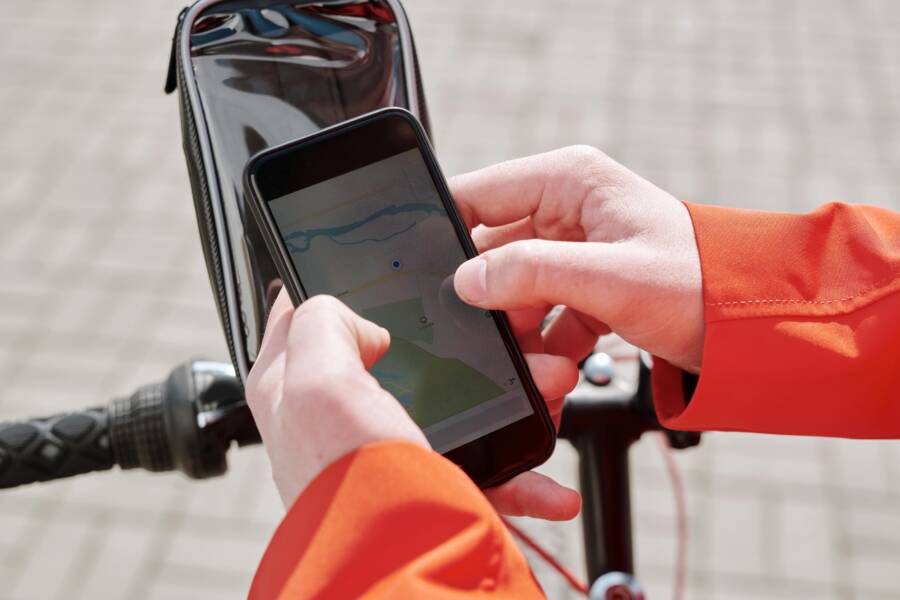
- Bike or running handlebars mount: Places the phone in your line of sight while keeping it secure from jostling and sweat.
- Secure pocket alternatives when running or cycling: If you must use a pocket, choose a snug zipped compartment rather than loose jean pockets that can bounce.
When you’re mid workout, keep the phone in motion-friendly positions. Avoid slings, loose belts, or holsters that rub against your body or rub against fabric. Maintaining a consistent orientation helps the GPS and sensors stay calibrated. A reliable mounting setup makes it easier to glance at pace and distance without breaking stride.
For best stability, test a few options before longer sessions. A good armband with a stable strap and a 360-degree rotation feature can reduce readout errors while you focus on form. If you want a quick shopping guide, here are widely recommended options to consider:
- The 10 Best Phone Armbands For Running In 2025
- No More Bouncing—These Phone Armbands Keep Your Stuff Secure
Images can illustrate how mounting looks in real life. Photography of a runner with a secure armband typically shows the device at mid-bicep height, clear of shirt sleeves and movement-causing folds. Photo by Andrea Piacquadio
Use wearables or external GPS devices
Smartwatches, chest straps, and dedicated GPS devices can dramatically improve accuracy, especially when your phone’s GPS is weak in certain environments. A few reliable pairing and syncing habits help you maximize benefits:
- Smartwatch or GPS-enabled watch: Acts as a dedicated receiver, keeping data continuous as you move between activities or screens.
- Chest strap heart rate monitor: Many straps include precise timing and stable data feed that complements GPS, especially in fast transitions or variable terrain.
- Sync routes afterward: Most apps let you import or adjust a route after the workout, which helps when the wearable captures a cleaner path than the phone did in the moment.
Simple pairing steps are usually quick: enable Bluetooth, put the wearable in pairing mode, select the device in the app, and confirm the connection. After a workout, you can merge or compare routes to ensure the path aligns with effort. For readers seeking more guidance, explore fitness-watch reviews and chest-strap recommendations that emphasize GPS accuracy and reliability.
If you’re new to wearables, start with a popular running watch or a chest strap that partners well with your preferred app. You’ll often find better results when the wearable stays connected and the phone simply records supplementary data. For deeper dives, consider credible gear roundups and testing articles that compare watches, chest straps, and phone integration.
Images that show a runner wearing a smartwatch or chest strap can help visualize this section. Photo by Andrea Piacquadio
Data smoothing and path correction features
Many fitness apps include features that tidy up raw GPS data without masking real movement. These tools help your map line look clean and honest at the same time. Key features to know:
- Data smoothing: Reduces noisy fluctuations by averaging nearby readings, producing a steadier line without erasing short bursts of genuine movement.
- Pause detection: Recognizes true stops and rest periods, preventing small jitters from creating spiky segments when you pause or slow down.
- Route snapping: Aligns your path to nearby roads or trails when signals drift, so the line follows actual paths rather than stray dots.
Applying these features can deliver a smoother, more readable map while keeping movement true. Use them sparingly and test how they affect your data after a session. For example, route snapping can be very helpful in urban canyons where GPS often wanders, but you’ll want to confirm it doesn’t erase legitimate detours.
If you want practical guidance on smoothing and snapping, check out resources that explain how location data can be refined and then applied to real-time tracking. These techniques are common across many fitness and location-based apps and are useful whether you’re running, cycling, or hiking.
Images are optional here, but a generic tracking screenshot or map image can help illustrate how a cleaned route looks. Photo by Eric Sanman
Recommended reads and examples on data smoothing and road snapping:
- How to Smooth Your Location Data & Snap to Roads
In practice, these features act like a gardener pruning a hedge: remove the jagged edges while keeping the overall shape of your route. When used wisely, they give you a cleaner map without erasing honest movement. For more technical insight, explore how similar data smoothing works in geolocation services and app integrations.
Images to reinforce the idea of clean lines and stable routes can be included where relevant. No image is necessary if it doesn’t fit your layout.
External resources cited in this section provide further context on data smoothing and road snapping for developers and athletes alike, and they can be a good reference if you want to go deeper into the topic.
- How to Smooth Your Location Data & Snap to the Nearest Road
Note: a few apps offer pause detection and auto snapping as built-in features. If you rely on these, test them across different environments to ensure they reflect your actual activity.
Takeaway: harness wearables for stable data, use data smoothing and snapping to keep the map clean, and calibrate pause detection so resting periods don’t skew your route.
Long term fixes and smart habits
Smart, repeatable routines keep your fitness map reliable over weeks and months. This section outlines long term habits that reduce location jumps, improve data quality, and make tracking feel effortless. Think of these as a maintenance plan for your phone, wearables, and apps so your map stays honest even as hardware and software evolve.
Regular updates and sensor maintenance
Keeping your devices, apps, and sensors up to date is one of the simplest ways to improve accuracy. Software updates often include GPS fixes, improved sensor fusion, and better power management. Set a regular schedule to check for updates and install them promptly.
- Update cadence: enable automatic updates where possible, then perform a manual check every month for major releases.
- Wearable firmware: many wearables push firmware updates that enhance GPS performance and battery life. Check the companion app for new versions and follow the manufacturer’s install steps.
- Sensor cleanliness: dust, sweat, and skin oils can affect sensors over time. Wipe the device gently with a soft cloth, especially around the back antenna and the areas near the camera or sensors if applicable.
- Permissions and background access: after updates, reverify that the fitness app has the right location permissions and can run in the background. This helps maintain a stable GPS fix during long workouts.
If you want practical steps on Android and iPhone updates, here are reliable references to help you stay current without overhauling your setup. Keeping firmware and app versions current reduces the chance of curious data quirks after a long pause between sessions. For Android users, ensure you’re using High Accuracy and that background location remains enabled when needed. For iPhone users, keep Precise Location enabled for the fitness app. Helpful guidance includes Android GPS troubleshooting and iOS location basics.
- Android GPS Troubleshooting
- How Location Accuracy improves location
- Calibrate location on iOS devices
Tip: schedule a quick update check after a weekend long run or a new device purchase. Small, consistent updates over time pay off with steadier maps and fewer post-workout data cleanups.
Test in different environments and keep a simple log
Long term success comes from seeing how changes behave across real conditions. Regularly testing in varied environments helps you understand when jumps are environment driven or due to a device setting.
- Open spaces: start with a broad, clear sky to establish a baseline.
- Urban areas: tall buildings, reflections, and multipath effects test how well your setup resists signal woes.
- Indoors near windows: mild signal shifts can reveal how quickly your device switches between indoor and outdoor fixes.
Keep a simple log so you can compare results over time. Record the date, the environment, the app used, the map type, and any settings you changed. Note specific moments when jumps appeared and how long they lasted. This not only shows patterns but also helps you decide which tweaks to apply next.
- Create a small table or note template like:
- Date
- Environment (open, urban, indoor)
- App and map type
- Settings adjusted
- Jump incidents (yes/no) and approximate duration
- Observations or mood of the route
A concise log makes it easy to spot repeat trouble spots. Over weeks, you’ll notice which environments consistently cause electrons to misbehave and which tweaks consistently hold the line. For deeper guidance on testing GPS accuracy, explore field testing approaches and GNSS performance studies in varied environments.
Respect privacy while tracking
Tracking location responsibly protects you and builds trust with readers. It also helps you stay calm about data sharing while you pursue accurate maps.
- Turn off sharing when you don’t need it. Disable automatic sharing of live routes to social apps or friends unless you intend to broadcast your workout.
- Review app privacy settings. Check what data an app collects, how long it’s stored, and who can view it. Adjust preferences to keep only what you truly need for your workout.
- Use local storage when possible. If an app supports offline maps or local route saving, prefer those options to reduce cloud-based data exposure.
- Regular privacy audits: at least every few months, skim the app’s privacy labels and permission prompts. Revoke permissions you no longer use or need, and disable background data if it isn’t essential.
Organizing privacy controls around GPS helps you stay focused on training. If you want to read more about how major platforms approach health and fitness privacy, you can consult established resources that summarize data practices in health apps and how to grant or restrict permissions on Android and iOS.
- Health and Fitness Apps Privacy Overview
- How location privacy settings work on Android
- How location tracking works with Google Fit data
- Privacy-respecting health and fitness apps
In practice, a quick privacy review before a workout is a small friction that pays off in cleaner data and reduced worry. It also keeps you in control of what gets logged and shared.
External links are provided to help you implement these privacy practices with confidence. Always ensure you’re using trusted sources and updated guidance from the platforms you rely on. For example, Apple and Google offer official privacy and permission documents that clarify how to protect your data while still getting accurate location data.
Takeaway: long term accuracy comes from consistent updates, deliberate testing across environments, and clear privacy boundaries that keep data in the right hands at the right times. A steady routine here means fewer surprises when you check your post-workout map.
Conclusion
Small changes add up to big gains in map accuracy. By combining smart setup, quick pre workout checks, and steady habits, you can greatly reduce location jumps on your fitness map. Keep your smartphone’s location settings on high accuracy, use background location when needed, and pair your phone with a reliable wearable for the best results. Stay curious about how environment and device behavior affect tracking, and your maps will become a trusted training partner.
Checklist to finish the article
- Confirm high accuracy location mode is on for your smartphone
- Ensure the fitness app has background location permissions
- Calibrate GPS or compass if your app supports it
- Use a stable phone mount and test placement before long sessions
- Keep software and wearables updated; log results after workouts
What If the Only Thing Between You and the Life You Deserve Is a Hidden Wealth Code Waiting to Be Activated
>>> Open the Door <<<
