There Is a Frequency That the Wealthiest Families Have Used for Generations and Most People Will Never Know It Exists
>>> Open the Door <<<

Is your phone’s brightness jumping around too aggressively, ruining a movie or your outdoor view in an instant? This guide explains what auto brightness does, why it can feel annoying in daily use, and what you can do to calm it down without turning off the feature completely.
You’ll learn quick fixes that work across most devices, plus platform specific steps for Android and iPhone. We’ll cover common causes like sensor issues, software quirks, and display settings, then move into deeper troubleshooting if the problem sticks after updates or resets. By the end, you’ll know exactly how to retrain the sensor, adjust related features, and prevent future brightness surprises.
In plain terms, expect practical steps you can try today. We’ll show you how to test in real life scenarios, such as moving from a dim room to bright outdoors or watching a bright video, and how to decide when to keep auto brightness on or switch it off for good. This guide is built for everyday smartphone users who want a steady, comfortable viewing experience without guessing what lights will do next.
Why auto brightness changes too aggressively on smartphones
Auto brightness is meant to keep your screen comfortable and readable without you fiddling with sliders constantly. In practice, the feature can feel overzealous, snapping from dim to loud as you move through different lighting. Understanding how it works helps you diagnose why it jumps and what you can do to smooth it out.
There Is a Frequency That the Wealthiest Families Have Used for Generations and Most People Will Never Know It Exists
>>> Open the Door <<<
How phone sensors determine brightness
Ambient light sensors sit in plain sight on most smartphones, often tucked near the front camera or at the edge of the display. They measure the light around you and feed that information to the device’s brightness controller. The system reads how bright or dim the surroundings are and then decides how bright the screen should be for comfortable viewing.
Think of it as a tiny mood ring for your phone’s display. If you step from a dark room into a sunlit room, the sensor detects the surge in light. The brightness controller lifts the screen brightness so you can see clearly. If you linger in a bright space, the screen stays high; if you move back to a darker area, it dims again.
Sometimes the sensor readings are influenced by stray light. A dirty or blocked sensor can misread the environment, causing the phone to ramp brightness too quickly or stay bright longer than needed. In simple terms, a clean sensor helps the phone respond to real lighting, not a misleading reflection or piece of grime. For a deeper dive on how ambient light sensors work, you can explore expert overviews like this guide on ambient light sensing and its uses in smartphones, which explains the fundamentals the way a product designer would describe them. https://www.minew.com/what-is-an-ambient-light-sensor/
Common triggers for rapid brightness shifts
Auto brightness can jump for several everyday reasons. Here are concrete scenarios you’ll recognize, along with practical fixes you can try:
- Moving from a dark room to a bright outdoors space. The sensor detects the sudden light surge, and the screen climbs quickly. If the phone keeps dimming or jumping after you re-enter the shade, it may be reading a glare or a reflection instead of true ambient light. Clean the surface around the sensor and screen; ensure nothing blocks the sensor when you cradle the phone against your face. If you’re curious about how this behavior is discussed in real world usage, see user reports and troubleshooting threads like “Screen Brightness Fluctuates While Watching Videos After Android Update” from Google Pixel Community. https://support.google.com/pixelphone/thread/331030550/screen-brightness-fluctuates-while-watching-videos-after-android-update?hl=en
- Watching HDR content. HDR videos can prompt the display to jump to higher brightness to preserve dynamic range, then snap back once the scene ends. This can feel abrupt, especially on phones with aggressive tone mapping. If you notice the jump during video playback, try disabling HDR streaming or enabling a steadier picture mode in the video app’s settings.
- Reading on a bright dashboard or near a sunny windshield. The surrounding glare can fool the sensor into overcompensating. A simple fix is to manually adjust brightness for the ride and rely on the auto setting only when you’re moving through varied light, not in a fixed, high-glare environment.
- Using a bulky case or screen protector that covers the sensor. If the sensor is partially blocked, it won’t read the environment accurately, causing erratic brightness changes. Check that the case has a clear path for light to reach the sensor and remove any accessories temporarily to test the behavior.
- Software learning features that try to guess your preference. Some devices include adaptive brightness that learns your habits over time. While this helps in the long run, it can overshoot during rapid light changes. If you notice the phone seems to “predict” wrong after updates or on new apps, you can reset the learning data or temporarily disable the feature to see if the problem improves. For a broader view of how users encounter adaptive brightness in real life, you can reference discussions about aggressive auto brightness on various devices, including iPhone models and Android variants. https://www.cnet.com/tech/mobile/if-your-phones-auto-brightness-is-irritating-you-adjust-these-settings-now/
- Inconsistent sensor calibration after system updates. An update can reset or alter how brightness is handled, leading to more noticeable jumps until you recalibrate or adjust settings again. If you recently updated your device and brightness started acting up, rechecking brightness settings and testing in common lighting scenarios helps confirm whether the issue is temporary or policy-driven by the update. For user experiences and troubleshooting threads, see discussions on software-induced brightness changes from major updates. https://android.stackexchange.com/questions/3366/how-does-the-automatic-brightness-settings-work
- A true brightness limit set by the device’s policy. Some phones cap brightness more aggressively at certain times (like in battery saver mode) to extend life. In those cases, you may see a jump when the system exits a power-saving state. If you’re curious about how brightness policies interact with power modes, check official support pages from the device maker or credible tech resources explaining brightness behavior under battery-saving conditions. https://www.cnet.com/tech/mobile/if-your-phones-auto-brightness-is-irritating-you-adjust-these-settings-now/
- External lighting changes during a short window. A fast transition from shaded to sunlit is one of the most common reasons for a noticeable jump. If the phone isn’t matching your eyes quickly enough, you can temporarily override auto brightness with manual brightness control during the transition and refine the auto setting over time.
- Sensor cleanliness and exposure to dust, oils, or fingerprints. A quick wipe around the front of the device can remove invisible films that distort readings. If you notice frequent jumps after cleaning, recheck the sensor area to confirm nothing else is covering it.
- Front camera opening design and proximity sensors. Some devices use a combination of readings from multiple sensors to decide brightness. Any misalignment, obstruction, or case edge near the camera can influence the perceived brightness, especially in transitional lighting.
If you want to dive deeper into why these triggers happen and how manufacturers approach brightness management, the Android Stack Exchange thread linked above offers a practical discussion about the mechanics behind automatic brightness settings. https://android.stackexchange.com/questions/3366/how-does-the-automatic-brightness-settings-work
By understanding these triggers and keeping the sensor area clean, you can reduce abrupt jumps and enjoy steadier viewing. If you’re repeatedly seeing dramatic shifts in bright environments, it may be worth trying a quick reset of the brightness learning data or temporarily turning off adaptive brightness to test how your phone behaves with fixed settings. For broader consumer guidance on adjusting auto brightness, this CNET piece provides practical steps you can apply right away. https://www.cnet.com/tech/mobile/if-your-phones-auto-brightness-is-irritating-you-adjust-these-settings-now/
Note: The external links above are included to provide additional context and practical troubleshooting steps. They complement the guide and are not required to read to benefit from the section.
Fast fixes you can try now to calm auto brightness
Auto brightness should adjust the screen to be comfortable, but it can feel jumpy in real life. These quick, practical steps help you regain control without turning off the feature entirely. Follow these fixes in order and test after each one to see what works best for your device and your eyes.
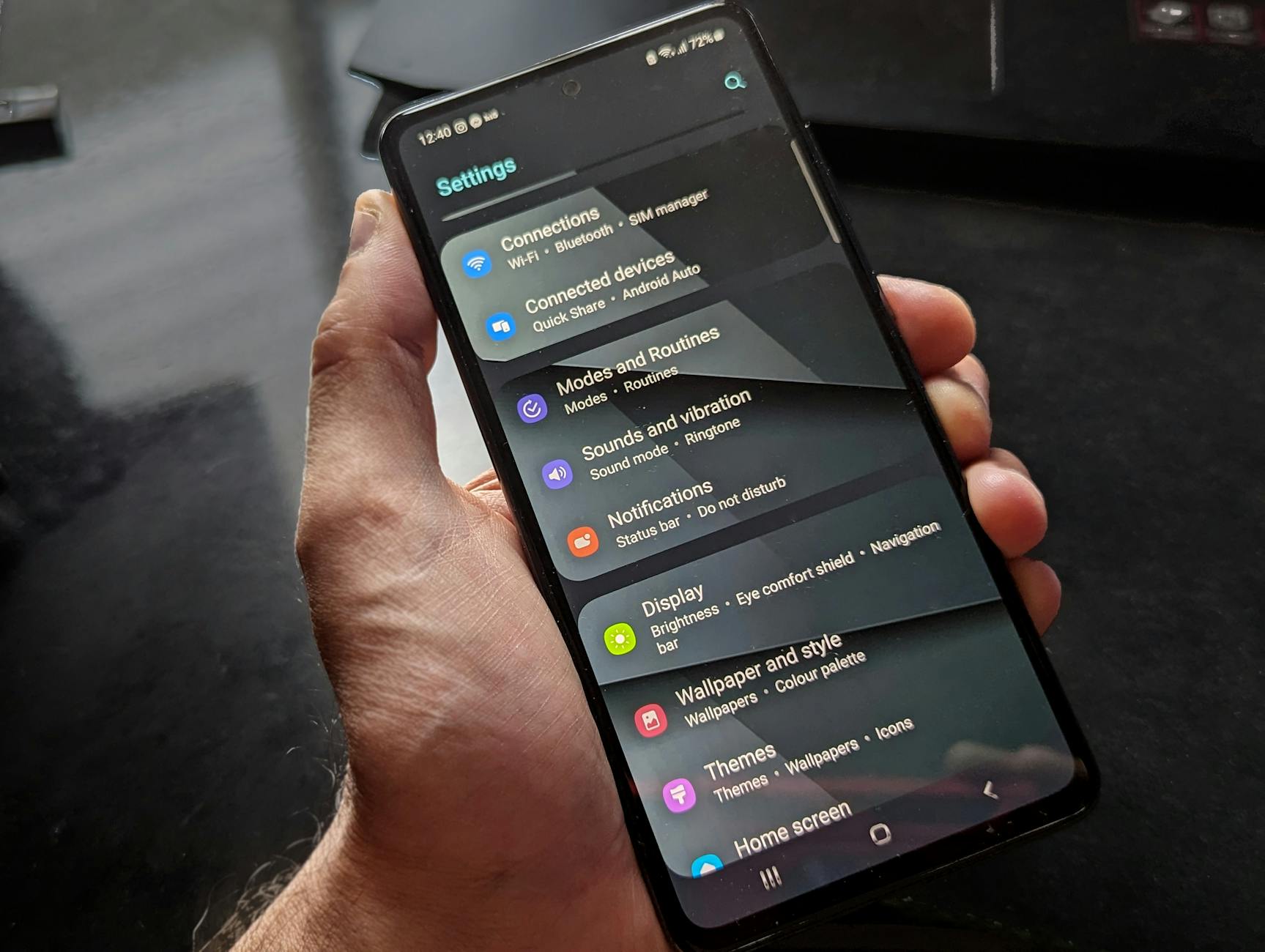 Photo by Watford London Media
Turn off adaptive brightness and test
Disabling adaptive brightness gives you a baseline to compare against. Here’s how to do it on Android and iPhone, plus how to test in real life lighting.
- Android
- Open Settings > Display.
- Look for Adaptive brightness, Auto brightness, or a similar toggle.
- Turn the switch to off. If your device uses a separate slider for brightness, keep it at a comfortable level you set manually.
- Test in different lighting:
- In a dim room, note if the brightness stays steady.
- In a bright room or outdoors, check if it remains stable or slowly adjusts.
- Return indoors to see if it holds the chosen level.
- iPhone
- Open Settings > Display & Brightness.
- Tap Auto-Brightness to turn it off.
- Set a manual brightness level that feels comfortable for most environments.
- Test by moving between lighting conditions:
- Dim living room to bright sunlight outside.
- Return to a shaded room and observe if the brightness returns to the same level.
- Testing tip
- After testing, you may want to re-enable adaptive brightness to see if the feature adapts to your pattern without the jumps. If you prefer, you can leave it off for apps with wide brightness swings like video streaming, then turn it back on for everyday use.
- Quick note
- Turning off adaptive brightness can change how apps and videos look. If you notice issues, re-enable it and fine tune other brightness settings.
If you want more context on why this helps, this guide explains how adaptive brightness works and when turning it off makes sense. https://www.asurion.com/connect/tech-tips/turn-off-auto-brightness-iphone-android/
Clean sensors and remove obstructing cases
Gunk or a blocked sensor can trick your phone into thinking the environment is brighter or darker than it is. A clean sensor leads to more accurate readings and steadier brightness.
- Locate the sensor area
- Most phones hide the ambient light sensor near the top of the front display or near the front camera. A quick visual check can reveal if something sits directly in front of the sensor or if the design puts it in a trough or notch.
- Clean gently
- Use a microfiber cloth. Lightly wipe the area around the sensor and the glass above the display. If there is finger oil or dust, a gentle circular motion helps.
- Check for obstructions
- Remove any bulky case or screen protector that could cover the sensor or edge near the camera. Reattach only after you’ve tested the behavior again.
- Re-seat or reorient a slim protective film if you must use one and test once more.
- Cautions
- Avoid liquids, sprays, or harsh cleaners near the sensor. They can damage coatings or seep into gaps.
- After cleaning, test brightness in a few lighting scenarios to confirm the sensor reads correctly again.
- Quick checks you can do
- Take the phone away from your face and observe brightness in a bright environment.
- Put the case back on and test again to see if the obstruction reappears.
If you want more detail on sensor cleaning practices, see a practical guide from a major electronics provider. https://www.sony-asia.com/electronics/support/articles/SX675704
- Related tip
- If you suspect the proximity sensor or ambient light sensor, a quick test is to hold the phone to your face in a call. If the screen stays on unexpectedly, there could be sensor misreadings. This topic is explored in user forums that discuss sensor behavior after updates. https://www.youtube.com/watch?v=tzc1gn75ceg
Set a stable manual brightness and test across lighting
A consistent brightness level helps you decide if the issue is with auto brightness or a deeper problem. Here’s how to run a controlled test.
- Establish a manual baseline
- Open the brightness control and set a comfortable level that works both indoors and in typical outdoor light.
- Leave auto brightness off for this test.
- Test across common environments
- Move from a dim room to a bright room, then outdoors, and back indoors.
- In each location, observe whether brightness stays at the same level or drifts. Note any sudden jumps.
- Interpret the results
- If brightness remains steady across environments, the issue might be tied to auto brightness algorithms or sensor issues rather than a fundamental display fault.
- If you still see jumps, you may need deeper troubleshooting such as resetting brightness learning data or checking for updates that affect display behavior.
- Next steps after testing
- If the manual test works, you can decide to keep auto brightness off in daily use. If you prefer auto brightness but dislike the jumps, consider re-enabling auto brightness and testing the device in more varied settings for a longer period. This helps the system learn your environment without abrupt shifts.
- Practical reminder
- Some apps have their own brightness or video tone mapping settings. When you disable auto brightness, you may need to adjust those app-specific options for the best viewing experience. For further context on how brightness interacts with video and default app behavior, you can explore this user-focused article. https://www.cnet.com/tech/mobile/if-your-phones-auto-brightness-is-irritating-you-adjust-these-settings-now/
Additional reading and testing tips
- If you’re curious about how different devices handle brightness under battery saver modes, a credible guide explains the tradeoffs and how to tune it for a steadier picture. https://www.cnet.com/tech/mobile/if-your-phones-auto-brightness-is-irritating-you-adjust-these-settings-now/
- For a deeper dive on how to locate and verify ambient light sensors on various phone models, check out this practical overview. https://www.youtube.com/watch?v=n3vk2ibeZw0
- If you want a broader discussion about automatic brightness behavior after software updates, you’ll find community threads and troubleshooting insights that help with similar cases. https://android.stackexchange.com/questions/3366/how-does-the-automatic-brightness-settings-work
Taking these steps often resolves most jumping issues without sacrificing the convenience of auto brightness. If the problem persists after trying these fixes, you might need a deeper diagnostic from the device maker or a professional repair service. For more balanced guidance on when to keep auto brightness on or off, this practical article is a good read. https://www.asurion.com/connect/tech-tips/turn-off-auto-brightness-iphone-android/
—
Note: The external links above provide additional context and practical troubleshooting steps. They complement the guide and are not required reading to benefit from the section.
Platform specific steps for Android and iPhone
Tuning auto brightness can feel like chasing a moving target. The goal here is to calm the jumps without giving up the convenience of auto brightness. Below are concise, step by step instructions tailored to Android and iPhone. After each set of changes, run quick tests in real-life lighting to confirm the results.
 Photo by Andrey Matveev
Android step by step to reduce auto brightness aggressiveness
Start with the most straightforward controls. A clean setup reduces stray readings and makes the display behavior more predictable.
- Open Settings > Display.
- Locate Adaptive brightness, Auto brightness, or a similar toggle.
- Turn Adaptive brightness off to establish a manual baseline. If your device uses a brightness slider, set a comfortable level that works across most environments.
- Check related options:
- Dark Mode or Theme: Some devices reduce screen luminance in dark modes for comfort, which can influence how brightness feels in transition.
- Battery saver or power-saving modes: These can cap brightness to extend battery life. If enabled, test brightness after disabling or adjusting this mode.
- App-specific overrides: Some apps request full control over display settings. Verify that no app is forcing brightness changes in the background.
- Quick test plan:
- Move from a dim room to a bright area and back.
- Watch a bright video in a well-lit room and then in a darker corner.
- Re-enable Adaptive brightness after testing to see if the device learns a pattern without abrupt jumps.
If you want deeper context on how Android handles brightness under various conditions, this official guide on managing screen settings is helpful: https://support.google.com/pixelphone/answer/6111557?hl=en
Additionally, some users report that calibration and learning behaviors vary after system updates. If the issue resurfaces, consider resetting brightness learning data or trying a short period with auto brightness disabled to observe the baseline behavior. Learn more about adaptive brightness concepts from user discussions and expert sources: https://support.google.com/pixelphone/thread/335198122/adaptive-brightness-error-or-feature?hl=en
iPhone step by step to stabilize brightness
iPhone users can achieve steadier brightness by adjusting not just Auto-Brightness but also the color and tone controls that influence perceived brightness.
- Open Settings > Display & Brightness.
- Turn off Auto-Brightness to set a stable manual level.
- Review related features:
- True Tone: This adapts color and warmth to lighting; it can affect perceived brightness with ambient changes.
- Night Shift: Shifts color temperature. Warmer tones can feel dimmer even if the numeric brightness is the same.
- Set a comfortable manual brightness level that works indoors and outdoors.
- Quick test plan:
- Step from a bright room to outdoors and back in varying light.
- Observe brightness stability with True Tone and Night Shift toggled off, then re-enable if you prefer those features.
- Test videos and bright UI elements to ensure colors remain natural without glare.
If you want official guidance on brightness and color balance on iPhone, Apple provides detailed steps here: https://support.apple.com/guide/iphone/adjust-screen-brightness-color-balance-iph60ba71065/ios
For quick Control Center adjustments and how to enable or disable brightness options, refer to Apple’s Control Center and Display settings overview: https://support.apple.com/en-us/109351
He Was Drowning in Bills and Burnout Until a Simple Daily Ritual Rewired His Brain for Wealth in Less Than a Week
>>> Start Your Shift Today <<<

If you rely on accessibility features, there are quick toggles to manage brightness and color while keeping comfort in mind: https://support.apple.com/guide/iphone/quickly-turn-accessibility-features-on-or-off-iph3e2e31a5/ios
Testing guidance:
- Move through environments with frequent lighting changes, like indoor rooms with lamps and sunny windows.
- Revisit after a night of usage to see if the adjustments hold across different days and temperatures.
Smartphone usage often involves quick transitions. Keep an eye on how each setting affects apps that jump brightness for video or gaming, and adjust as needed.
—
Note: The external links above provide additional context and practical troubleshooting steps. They complement the guide and are not required reading to benefit from the section.
Deeper troubleshooting if the problem persists
If the quick fixes don’t settle the brightness behavior, it’s time to investigate more thoroughly. This section walks you through structured, practical steps you can take to isolate the cause, whether it’s software, hardware, or a combination of both. Treat this as a diagnostic playbook you can follow over a weekend to avoid guesswork and keep your smartphone viewing comfortable.
Software updates and reset options
Keeping the operating system current is often the simplest path to stability. Software updates fix bugs, tighten sensor handling, and refine how the brightness controller responds to real-world lighting. To check for updates, open your device’s settings and look for System or Software Update. Install any available updates, then reboot and test brightness in a few real-life lighting scenarios. If updates are pending, apply them and re-test, as many brightness quirks are resolved by a fresh software release.
If you want to avoid heavy changes, you can first reset only the display-related settings. On most devices, this is non-destructive and preserves your apps and data. Look for Reset options under Settings > System or General > Reset. Choose to reset display, brightness, or app defaults. This clears learned brightness behavior and restores factory defaults for the display controller without touching your files.
As a last resort, a full factory reset wipes the device clean and reinstalls the original software. This step should only be used after backing up everything you value. Before you reset, back up photos, messages, and app data to the cloud or a computer. After the reset, restore your data carefully and test brightness in common conditions before reinstalling apps one by one.
- Backup reminders: use cloud backups or local transfers to secure contacts, media, and app data. Verify successful backups before proceeding.
- When to consider factory reset: if multiple updates and resets fail to stabilize brightness, or if you suspect a corrupted system partition is driving erratic behavior.
If you’d like deeper context on how updates influence brightness behavior and how to reset display settings without data loss, see practical guidance from trusted sources. For example, a broad look at adjusting auto brightness settings and related options can be found here: https://www.cnet.com/tech/mobile/if-your-phones-auto-brightness-is-irritating-you-adjust-these-settings-now/
Safe mode and app checks
Safe Mode is your easiest way to determine if third party apps are at fault. In Safe Mode, the device runs only essential system apps, which helps you see whether brightness moves fade when non-essential software isn’t active. If the problem disappears in Safe Mode, a recent app or service is likely causing the issue. If it remains, the root cause is probably system-level.
- Android
- Power off the device, then press and hold the Power button to restart.
- When the logo appears, release and press and hold the Volume Down button until the home screen loads.
- Your screen should display Safe Mode in a corner. Use the phone normally and monitor brightness.
- If the issue is gone, start by uninstalling recently added apps one by one, testing after each removal to identify the culprit.
- iPhone
- iPhones don’t have a dedicated Safe Mode, but you can mimic a similar condition by disabling all background app refreshes and turning off features that rely on real-time sensor data.
- To isolate apps, you can perform a manual test by resetting settings (Settings > General > Transfer or Reset iPhone > Reset > Reset All Settings) and then reintroducing apps gradually while testing brightness.
If you want more formal guidance, this Pixel support resource explains problem apps and the Safe Mode approach for identifying culprits: https://support.google.com/pixelphone/answer/2852139?hl=en&sjid=16911438374090510819-AP
If you suspect the issue is tied to a specific platform, consider checking device community discussions for your model. For iPhone, a discussion thread on automatic brightness behavior can provide practical, model-specific insights: https://discussions.apple.com/thread/251354816
Tip: after testing in Safe Mode, re-enable all apps and observe brightness again. If the problem returns, a lingering system-level change might be at play, and it might be worth pursuing a software refresh or factory reset with data backup.
Battery health and hardware considerations
Battery health can influence how a device handles brightness. In some cases, a worn battery or related power management issues cause the system to cap or adjust brightness more aggressively to conserve energy. Checking battery health is quick and can reveal early signs of stress that affect display behavior.
- Check battery health
- On Android, open Settings > Battery > Battery Health or Usage. Look for health indicators and any recommendations. If your device offers a “Battery health” or “Battery status” view, review it for issues.
- On iPhone, go to Settings > Battery > Battery Health. If the maximum capacity is significantly degraded, you may notice other symptoms along with brightness instability.
- Consider hardware issues
- A faulty ambient light sensor or proximity sensor can misread the environment, causing the system to misjudge how bright the screen should be. If you notice erratic brightness despite clean sensors and updated software, a hardware fault may be at play.
- Other hardware concerns include a swollen battery or damaged display assembly, which can influence overall brightness behavior and device performance.
If you suspect a hardware fault, it’s wise to contact the device maker’s support or a certified technician for a diagnostic. For a broader look at battery health and its impact on display performance, you can read here: https://support.apple.com/en-us/100634
Common signs of sensor trouble include brightness jumps that occur in consistent lighting, or brightness staying too dim in bright environments. If you see these patterns after a hardware test, a replacement sensor or service visit might be required. For a practical overview of ambient light sensor issues and what to expect in repairs, this guide may help: https://support.google.com/pixelphone/thread/282927084/problem-with-ambient-light-sensor-and-proximity-sensor?hl=en
When to seek professional help
- You’ve exhausted software routes and the symptoms persist across resets.
- You notice other sensor-related anomalies, like the screen not dimming in dark rooms or not responding to proximity during calls.
- You observe bulging battery signs or screen anomalies that could indicate hardware damage.
A reliable diagnostic from a professional can save time and prevent further damage. If you want quick context on common sensor and brightness issues that professionals encounter, you can explore this repair-focused resource: https://www.ifixit.com/Answers/View/398479/After+screen+replacement,+proximity+sensor+is+not+functioning
If the device uses a service plan or extended warranty, check eligibility before paying out of pocket. For general guidance on deciding when to repair or replace, this article offers a balanced perspective: https://www.asurion.com/connect/tech-tips/turn-off-auto-brightness-iphone-android/
Prevention tips to avoid aggressive auto brightness in the future
Auto brightness is meant to make your screen comfortable with minimal manual fiddling. But if you’ve ever watched a bright video or stepped from a dim room to the outdoors and felt the display snap too hard, you know why prevention matters. In this section, we’ll outline practical habits and settings to keep auto brightness steady over time. You’ll learn sensor care, case considerations, and smart usage patterns that reduce abrupt jumps while keeping the feature in your toolkit.
Sensor care and case management
Clean sensors regularly and keep cases from blocking them. A clean ambient light sensor reads the real environment, not reflections or grime, which helps prevent unnecessary brightness swings.
- Reiterate sensor cleaning frequency and best practices
- Aim to clean the front of your phone every couple of weeks, or more often if you handle the device in dusty or greasy environments. A quick wipe with a microfiber cloth around the top edge and camera area is usually enough.
- When you wipe, use gentle circular motions and avoid liquids that could seep into crevices. If you must, use a lightly damp cloth and dry immediately.
- After any major cleaning, test brightness in a few lighting scenarios to ensure readings are accurate again.
- Best practices for keeping cases from blocking sensors
- Check that your case has a clear path for light to reach the ambient sensor. Some bulky or textured cases sit too close to the screen and shade the sensor.
- If you notice jumps after swapping cases, re-test with the case removed. If the brightness stabilizes, you’ve pinpointed the obstruction.
- When applying a screen protector, make sure it does not cover the sensor. A misaligned film can create the same issue as a blocked case.
- How to check sensor visibility
- Take a quick glance at the top front area of the device under bright light. If you see any edge or film covering the sensor, remove and reapply the case or protector.
- Perform a simple test in the room you use most: enable manual brightness for a moment, then return to auto and observe whether the device reads the environment correctly.
- What to do if you replace the case or screen protector
- After replacing, test in several lighting conditions to confirm the sensor reads correctly again. If you see new jumps, consider a different case that leaves a clear window for the sensor.
- If the new case still blocks the sensor, you may need a larger cutout or a minimalist design. In some cases, temporarily removing accessories while testing helps you identify the root cause.
For further practical guidance on sensor care, see discussions and how-to guides from experienced technicians and manufacturers. For example, a detailed overview of cleaning practices and sensor visibility is available from reputable sources like major electronics guides and device makers. https://www.sony-asia.com/electronics/support/articles/SX675704
A quick note on proximity and ambient light sensors: some devices use several sensors to decide brightness. If one sensor is partially blocked, it can still misread the scene. A straightforward check is to remove obstructions and test in both bright and dim environments. If the problem persists, you may need professional help to verify sensor health. Useful background discussions can be found in user forums and official support threads. https://support.google.com/pixelphone/thread/335198122/adaptive-brightness-error-or-feature?hl=en
If you’re curious about broader sensor behavior and repairs, you can explore practical guidance from repair-focused resources and community knowledge bases. https://www.ifixit.com/Answers/View/746034/Can+I+clean+the+Ambient+Light+Sensor+with+ispropyl
- Quick takeaway
- Clean sensors regularly, verify nothing blocks the sensor when you switch cases or screen protectors, and re-test brightness after any hardware change. This small habit pays off in steadier auto brightness.
Smart usage patterns and related features
Smart usage patterns can reduce the frequency and severity of brightness jumps. Think of auto brightness as a riding companion that learns your environment, not a stubborn sensor that needs constant nudging. You can shape its behavior with thoughtful settings and a simple maintenance routine.
- Embrace dark mode for longer stretches
- Dark mode reduces overall light output in many apps and system menus. It can calm overall screen brightness when you’re in dim environments, making auto adjustments less abrupt after a reading session or in a movie.
- Balance color settings with True Tone or Night Shift
- True Tone (or its equivalents) and Night Shift adjust color temperature to match lighting. While not changing brightness directly, these features influence perceived brightness and contrast. When enabled, they can soften transitions and reduce eye strain during rapid lighting changes.
- Limit auto brightness reliance in apps with wide swings
- Some video and photo apps push a different brightness curve. If you notice jumps during streaming or gaming, you can set those apps to use a fixed brightness or a dedicated mode that minimizes auto adjustments while you watch or play.
- Create a simple, repeatable checklist
- Use this quick routine to keep brightness stable:
- Enable dark mode where appropriate.
- Turn on True Tone or Night Shift, then test in both indoor and outdoor lighting.
- If you notice jumps during video, try using app-specific brightness controls for that content.
- When moving between lighting conditions, use manual brightness temporarily, then re-enable auto after a short period.
- Periodically review app permissions to ensure no app is forcing brightness changes in the background.
- Use this quick routine to keep brightness stable:
- Practical example
- You’re commuting from a dim train car to a sunlit street. With dark mode on and True Tone enabled, your smartphone reduces the perceived glare, which tempers the auto-brightness reaction. If you then start a bright video, you can temporarily switch to manual brightness for the duration and return to auto afterward without a jarring jump.
- Reference points from trusted guides and user discussions
- Apple’s guidance on color balance and brightness shows how True Tone and adaptive brightness interact on iPhone. https://support.apple.com/guide/iphone/adjust-screen-brightness-color-balance-iph60ba71065/ios
- A broader discussion on managing auto brightness across devices can help you compare approaches and find a workflow that fits your smartphone routine. https://www.cnet.com/tech/mobile/if-your-phones-auto-brightness-is-irritating-you-adjust-these-settings-now/
- Quick test you can run weekly
- Pick a standard route or room lighting, then note brightness behavior for 15 minutes with and without adaptive features. If the transitions feel smoother with True Tone/Night Shift turned on, keep them enabled. If you still see jumps, temporarily disable adaptive brightness in favor of a stable manual baseline and reassess later.
- When to rely on manual brightness
- If you frequently find yourself in highly variable lighting or you use apps that brighten scenes aggressively, manual brightness can offer steadiness. You can re-enable auto brightness later to let the system learn your patterns without constant swings.
Across both sensor care and usage patterns, the goal is consistent: fewer abrupt changes and a more predictable viewing experience. For readers who want a deeper dive into how ambient light sensors behave across popular models, a practical overview is available through accessible guides and manufacturer resources. https://support.google.com/pixelphone/thread/217959334/auto-brightness?hl=en
She Pressed Play on a Strange Audio Track and Within Days Her Financial Reality Started Shifting in Ways She Could Not Explain
>>> See How It Works <<<

- Final note
- Small, regular adjustments beat large, repeated resets. By keeping sensors clean, choosing case designs that don’t obstruct readings, and applying thoughtful display settings, you can prevent aggressive auto brightness while preserving the convenience it offers.
External resources and references are included to support practical steps and provide additional context. They complement the guide and are not required reading to benefit from this section.
Conclusion
Tackling aggressive auto brightness starts with quick wins you can try today, then moves to platform specific steps and finally deeper troubleshooting if needed. For most readers, disabling adaptive brightness briefly and testing across a few real world scenes confirms whether the issue is sensor related or app driven on your smartphone. If the quick fixes don’t settle the behavior, follow Android or iPhone steps to recalibrate, reset related settings, and check for updates. Keep monitoring brightness over time, and don’t hesitate to revisit this guide for refreshers as software and hardware evolve.
He Was Drowning in Bills and Burnout Until a Simple Daily Ritual Rewired His Brain for Wealth in Less Than a Week
>>> Start Your Shift Today <<<