Thousands of People Were Struggling With Money Until They Discovered This One Ancient Secret Hidden in Sound
>>> Unlock It Now <<<

Feeling overwhelmed by the week ahead is normal, but your phone can take the edge off. This guide shows how to design a simple, reliable weekly planning system on your smartphone that fits your real life. You’ll see how to blend calendars and tasks so commitments, deadlines, and reminders all stay in view.
A clear weekly plan starts with a straightforward setup. We’ll map your goals for the week and break them into bite sized tasks that fit your routine. The goal is to reduce decision fatigue, so you can focus on what matters most without hunting for information across apps.
Core steps keep this system practical: choose a primary calendar and a task list, then align every item with a time block or deadline. Use time blocking to protect focus slots, and keep recurring tasks tidy with simple templates. You’ll learn quick entry methods that let you capture ideas on the go, so nothing slips through the cracks.
By design, this approach travels well across devices, so your plans stay current whether you’re at home or on the move. It’s built to be flexible, letting you adjust priorities as your week shifts. With a well tuned setup, you gain clarity, confidence, and a smoother path from planning to doing, all in one place on your smartphone.
He Was Drowning in Bills and Burnout Until a Simple Daily Ritual Rewired His Brain for Wealth in Less Than a Week
>>> Start Your Shift Today <<<

How to Design a Weekly Planning System on Your Phone (Smartphone Friendly)
A focused weekly plan starts with a simple rhythm. By capturing tasks quickly, then sorting them by value, you’ll clear mental clutter and move from intention to action faster. This section covers two essential practices you can implement right away on your smartphone to build a reliable weekly planning system.
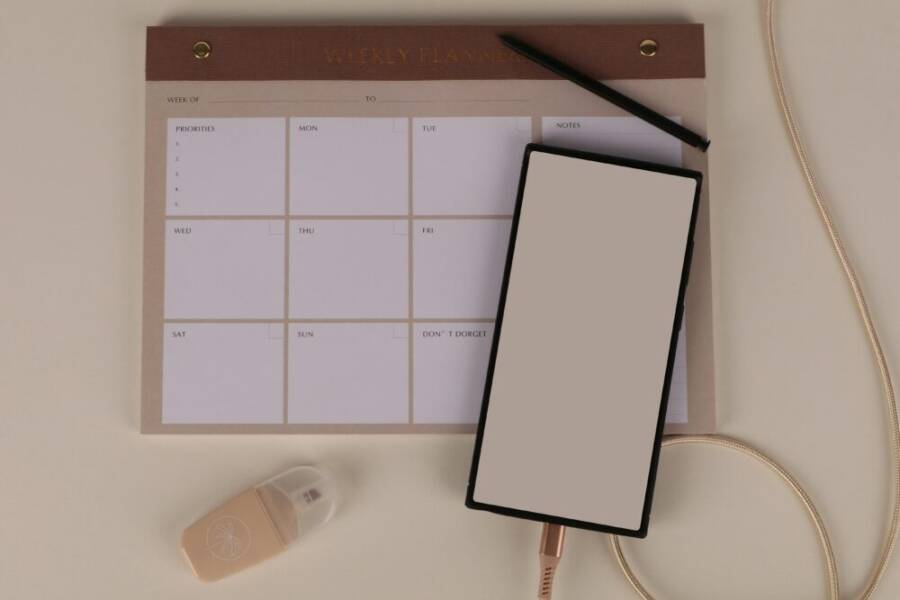
 Photo by Ann H
Capture All Your Tasks Fast
Quick capture is the foundation of a dependable weekly plan. Use your phone to snap thoughts the moment they appear, before they slip away. Phone notes, voice memos, and quick-text apps are your first line of defense against forgotten ideas. For fast entry, keep a single capture method that you trust, and make it a daily habit to dump anything that arises into that hub.
Apps like TickTick shine for instant lists and quick capture. You can type a task, dictate it, or snap a quick note, and the app will organize it with due dates and reminders. The goal is to reduce mental load at the end of the day, so you wake with a clear slate and a ready plan. A 60-second daily capture ritual is often enough to prevent overwhelm, especially when you couple it with simple templates and recurring tasks. For more on quick capture, see TickTick’s overview and quick-entry capabilities: TickTick: A To-Do List and Calendar to keep you organized. You can also explore the Google Play version for rapid input: TickTick:To Do List & Calendar – Apps on Google Play.
Prioritize What Counts Most
Once tasks exist in your capture hub, the next step is to decide what actually deserves your attention this week. Adapt the Eisenhower matrix for your phone to separate urgent from important items, and tasks you can delegate or defer. The key is to visualize where each item fits in real time, on a small screen and in short, decisive moments.
In practice, you can use Notion or Superlist to sort tasks into four quadrants and drag items into slots that align with your week. For example, a work project with a looming deadline sits in Urgent and Important. A routine email follow-up belongs in Important but Not Urgent. A gym session could be scheduled in the week as a Non-Urgent but Important task, set for a specific time block. You get clarity on what moves the needle, without drowning in busywork. To explore ready-made Eisenhower setups, check these templates: Eisenhower Matrix Template and Eisenhower Matrix Template. You can also find free versions here: Free Eisenhower Matrix templates.
As you practice, aim to pick 1 to 3 top tasks each day that truly move your week forward. That keeps your phone from becoming a pile of half-baked plans and ensures every day starts with momentum. For a concrete example, you might place the week’s top three tasks in your calendar as time blocks, and add supporting tasks as sub-items within the same list for easy reference.
End of the week, review what moved from the top list to done, and adjust. This cadence builds confidence and creates a reliable feedback loop that informs next week’s picks.
If you want more actionable techniques to refine your weekly planning on a smartphone, I’ve found these resources helpful:
- TickTick overview and quick-entry features: https://ticktick.com/?language=en_us
- Google Play TickTick listing for rapid task input: https://play.google.com/store/apps/details?id=com.ticktick.task&hl=en_US
- Notion Eisenhower matrix templates: https://www.notion.com/templates/eisenhower-matrix?srsltid=AfmBOoqGja2wc4dZS0LnBPQT9YIcP91OwhMaURO_57l-IShS_sk4jA1O
Pick Apps That Fit Your Weekly Planning Style
Choosing the right planning apps is about matching features to your weekly rhythm. Some weeks demand quick capture and simple reminders, others benefit from deeper time tracking and AI help. The goal is to fuse your calendar and task lists into one clear, always-accessible system on your smartphone. Below are two focused approaches that help you design a weekly planning flow you can actually stick to.
Best Free Options for Beginners
Starting with a solid free setup lowers the barrier to consistency. For many newcomers, a reliable task list paired with a calendar is all you need to gain clarity and momentum. TickTick offers straightforward, fast capture and basic task management that scales with your needs. You can type tasks, dictate them, or drop in quick notes, and it will organize items with due dates and reminders. The free tier encourages a daily 60-second capture ritual, which helps you clear mental clutter and start each day with a concrete plan. For more about TickTick’s core features and how free users can get the most from them, see TickTick: A To-Do List and Calendar to keep you organized. You can also explore the Google Play version for rapid input with TickTick: To Do List & Calendar.
Google Tasks provides a lightweight, no-frills option that integrates naturally with Gmail and Google Calendar. It makes quick capture effortless and offers reliable sync across devices, so your tasks stay visible whether you’re on a phone or a computer. The free tier covers essential task capture, due dates, and reminders, making it a strong baseline for a beginner weekly plan. To understand how Google Tasks works and how to get started, check Learn about Google Tasks and the Google Tasks support page. For quick insights, you can also review common user questions and tips from community discussions.
- TickTick basics: quick entry, due dates, reminders, and simple organization
- Google Tasks basics: seamless capture, cross-device sync, calendar integration
- Free tier realities: enough for consistent weekly planning, with optional paid upgrades if you outgrow them
Relevant links:
- https://ticktick.com/features?language=en_us
- https://ticktick.com/?language=en_us
- https://play.google.com/store/apps/details?id=com.google.android.apps.tasks&hl=en_US
- https://support.google.com/tasks/answer/7675772?hl=en
Advanced Tools with AI Help
If you want extra power without overcomplicating your setup, AI-assisted tools can speed up planning and summarization. Rize focuses on time tracking and task insights, turning your weekly work into a measurable footprint. It helps you see where your time goes and how to reallocate focus next week. Taskade AI adds intelligent summaries and context to your task lists, so you get quick overviews of project progress and next steps without sifting through long notes. Extras like automatic summaries can save you time during weekly reviews, letting you spot bottlenecks and adjust priorities fast. Try incorporating AI to draft daily briefings from your week’s agenda, then tune the results to your personal style.
What If the Only Thing Between You and the Life You Deserve Is a Hidden Wealth Code Waiting to Be Activated
>>> Open the Door <<<

When you pair AI with your core setup, keep a simple rule: AI should reduce your workload, not create new tasks to manage. Use AI-generated summaries to inform your weekly review, then decide which items truly deserve time blocks. This keeps your smartphone-based system crisp and actionable, not cluttered with auto-generated noise. As you experiment, maintain a lean starter template for AI outputs and refine it as your weeks evolve.
Set Up Your System in Simple Steps
A reliable weekly planning system on your smartphone starts with a clean template and a simple review rhythm. This section walks you through two focused steps: building a reusable weekly framework, and locking in a regular schedule to plan and reflect each week. You’ll keep goals, daily tasks, and habits aligned across your calendar and task list, so you stay focused without hunting for information. The goal is consistency you can maintain while on the move, using a familiar setup that fits your real life.
Create Your Weekly Template
Design a weekly template that captures the core elements you need every week. Start with sections like goals for the week, a daily tasks list, and a habits tracker. Include space for key priorities, recurring tasks, and time blocks for deep work. For example, you could create a Notion weekly planner template that includes a top goals area, Monday through Sunday task lists, and a habits row at the bottom. TickTick also supports quick capture and a weekly view, so you can see all tasks and time blocks at a glance. Use a single capture method on your smartphone to keep ideas in one place, then push items into the template as they come up. See Notion’s Weekly Planner templates for layout ideas and practical formats: https://www.notion.com/templates/category/weekly-planner?srsltid=AfmBOorVtcuY5H_edYwl4dAmdVyXcwxiJg5ju2F0MDJpT8ag2lutIdd
He Was Drowning in Bills and Burnout Until a Simple Daily Ritual Rewired His Brain for Wealth in Less Than a Week
>>> Start Your Shift Today <<<
Your template should include these building blocks:
- Goals for the week: 2–3 outcomes to achieve
- Daily tasks: 5–8 targeted actions spread across days
- Time blocks: reserved slots for deep work and meetings
- Habits: a simple row to check off consistency
- Review notes: a short space to capture what worked and what didn’t
Keep the template lightweight. The aim is to reduce decision fatigue, not create a maze of sections. If you use TickTick, you can mirror the weekly layout with a Week View that shows all tasks by day, making planning feel natural on a phone screen: https://help.ticktick.com/articles/7055782149730861056
If you prefer a broader plan, explore the top weekly planner templates to mix and match sections that fit your life: https://www.notion.com/templates/category/best-weekly-planner-templates?srsltid=AfmBOooDPbmbvf7LK2P0p0eLVFCwSjAPDv9A1xbCaJ8_uGv_GsUEy1Lh
Schedule and Review Each Week
Set a predictable cadence for planning and reflection. On Sundays, review the coming week and slot major tasks into your calendar as time blocks. This creates a backbone you can rely on during busy days. On Fridays, perform a quick review: what moved forward, what stalled, and why. Use those insights to adjust your plan for next week.
Your weekly rhythm should be simple: capture new tasks during the week, categorize them into Urgent and Not Urgent or Important and Not Important, and then assign them to specific days. Notion and TickTick both support easy drag-and-drop adjustments so you can shift priorities without losing context. For inspiration, try an Eisenhower matrix setup within Notion or other templates to visualize what truly deserves attention: templates for Eisenhower Matrix can be found here: https://www.notion.com/templates/eisenhower-matrix?srsltid=AfmBOoqGja2wc4dZS0LnBPQT9YIcP91OwhMaURO_57l-IShS_sk4jA1O
End each week with a concise retrospective. Answer: What mattered most? What would you do differently next week? Keep this short to stay consistent. Over time, the pattern becomes a reliable force that reduces planning friction and speeds you from planning to doing. If you need a quick boost for input on the go, TickTick’s Week View provides a clear snapshot of your week’s actions and time blocks: https://ticktick.com/?language=en_us
If you want extra guidance, a few ready-made resources can help you refine your process without overcomplicating things: TickTick weekly planning features: https://help.ticktick.com/articles/7055782149730861056; Notion Eisenhower templates: https://www.notion.com/templates/eisenhower-matrix?srsltid=AfmBOoqGja2wc4dZS0LnBPQT9YIcP91OwhMaURO_57l-IShS_sk4jA1O; Additional Notion weekly planner ideas: https://www.notion.com/templates/category/weekly-planner?srsltid=AfmBOorVtcuY5H_edYwl4dAmdVyXcwxiJg5ju2F0MDJpT8ag2lutIdd
A practical micro-example: assign your top 1–3 tasks each day as time blocks in your calendar, then add supporting tasks as sub-items. On Friday, review what moved to done and what carried over. This keeps momentum intact and guides your decisions for the next week. For a fast start, try pairing your phone’s calendar with TickTick’s quick-add features so your planning flow stays in one place: it’s a smart move for anyone juggling multiple apps on a smartphone.
Daily Habits and Fixes to Keep It Going
A solid weekly planning system only works if you can keep it going. Small, repeatable habits on your smartphone prevent overload and forgetfulness from derailing your plans. The goal is consistency, not perfection. Build a few easy keystones you can rely on every day and your weekly plan stays in view, not in a drawer of forgotten drafts.
Handle Roadblocks Without Quitting
Overload and memory slips are normal. The fix is to make quick, reliable shortcuts part of your daily routine. Create a single capture hub on your phone for new ideas, tasks, and reminders. Use one tactile method—voice memo, quick note, or a dedicated capture app—so you never scramble to remember why you opened your phone. Turn that capture into a time block or a task the moment you finish a short ritual.
Habit stacking helps you build momentum: pair a new task with an existing routine. For example, after you finish your morning coffee, log your top 3 tasks for the day. This tiny cue keeps the habit simple and consistent. If you ever feel bogged down, revisit your top three weekly priorities and reallocate as needed. Habit stacking apps can simplify this flow. Check out how others use these tools to stay on track: The Best Habit Stacking Apps and a quick look at rapid input with TickTick: TickTick: To Do List & Calendar – Apps on Google Play. For deeper ideas on flexible stacking techniques, see Moore Momentum’s guide to habit stacking.
Conclusion
Designing a weekly planning system on your smartphone boils down to three steady habits: capture, prioritize, and schedule. You start by building a single capture hub for quick ideas and tasks, then sort them into what actually moves your week forward. From there, you block time in your calendar and keep a lightweight template that ties goals, daily tasks, and habits together.
The real payoff comes from a simple weekly rhythm. Review every Sunday to slot major tasks as time blocks and use Fridays for a brief retrospective. This cadence minimizes decision fatigue, boosts focus, and makes your plan feel doable on a busy phone screen. When you keep your system lean, you gain clarity and momentum without extra clutter.
Choose one app that fits your flow and set up the core template this week. The goal is consistency, not perfection, so keep entry fast and reviews brief. As you stick with it, your weeks become smoother and your actions align with your priorities.
If you try, share your results with readers. A quick note about what you learned and what you’ll adjust helps others start small and finish strong. Here’s to better weeks ahead.
She Pressed Play on a Strange Audio Track and Within Days Her Financial Reality Started Shifting in Ways She Could Not Explain
>>> See How It Works <<<
