There Is a Frequency That the Wealthiest Families Have Used for Generations and Most People Will Never Know It Exists
>>> Open the Door <<<

Ever feel like your phone and tablet are speaking two different languages when you try to get things done? You’re not alone. Small friction adds up, turning quick tasks into mini quests across screens.
This guide shows how to pair your devices so they act as one productive team. Expect practical tips that save you time, reduce switching between apps, and keep your ideas flowing. You’ll learn simple tricks for common actions like sharing content, continuing work where you left off, and keeping files in sync.
No matter your setup, these steps work with iOS, Android, and mixed ecosystems. We’ll cover fast, reliable methods that fit real life, not a tech checklist you’ll forget. By the end, you’ll have a clear path to a smoother cross-device workflow.
Think of your smartphone as the hub that keeps everything in reach. When used well, it makes your tablet feel like an extension of your day, not a separate device you dread switching to. This intro outline sets up each method you can try this week to reclaim time and boost focus.
He Was Drowning in Bills and Burnout Until a Simple Daily Ritual Rewired His Brain for Wealth in Less Than a Week
>>> Start Your Shift Today <<<

Why Pair Your Phone and Tablet for Daily Wins
Pairing your phone and tablet turns two devices into a coordinated toolset rather than two separate gadgets. When they work together, you move faster, stay organized, and keep ideas flowing without constantly switching apps or redoing steps. Think of your phone as the command center and your tablet as the large, comfortable workspace. Together, they can handle tasks more efficiently than either device alone.
Seamless content sharing and continuity
Your primary win comes from smooth content transfer between devices. Want to start an email on your phone and finish it on your tablet? Drag-and-drop, quick share, or cloud-synced drafts make this effortless. This continuity reduces friction and keeps momentum high. For example, you can capture notes on the fly with your phone and expand them on a bigger screen later. This kind of cross-device collaboration is exactly what many teams report as a core productivity boost, especially in mobile-first workplaces. For deeper reads on how mobile collaboration pays off, see: The 7 Benefits of Mobile Collaboration and How Mobile Devices are Benefiting Productivity.
Real-time syncing that keeps work in flow
Real-time syncing means changes you make on one device appear on the other within seconds. That keeps files, tasks, and calendars aligned without manual syncing or version confusion. You can edit a document on your tablet while on a video call running on your phone, and the latest version stays in sync. This reduces duplicate work and helps you keep a single source of truth across both devices. If you’re curious about how this translates to everyday practice, you’ll find practical explanations in How Mobile Devices are Benefiting Productivity and How Mobile Technology Boosts Productivity in the Workplace.
Faster decisions with parallel views
When you can view related apps side by side on a tablet while monitoring notifications on your phone, decisions come quicker. For example, you might reference a project brief on the tablet while updating a task board on the phone. This parallel workflow minimizes context switching and helps you stay in a decision-making rhythm. It’s the difference between reacting to a request and proactively planning the next step.
Consistent apps, consistent habits
Cross-device pairing works best when you use the same apps across devices or apps that sync well with each other. If your notes, calendars, or task managers support cloud sync, you can keep a consistent habit without re-entering information. The result is a reliable pattern you can repeat daily, turning small routines into steady productivity gains. If you want a broader view of tablet benefits in office work, consider the three benefits of using a tablet for the office.
Enhanced collaboration with fewer interruptions
With the right setup, your phone and tablet can handle quick collaboration tasks without pulling you out of your flow. You can share a document link, edit a slide together in real time, or annotate a screenshot and send it back instantly. By cutting average task time, you decrease interruptions that derail focus. This is especially true in teams that rely on quick, mobile-friendly collaboration. For insights on how tablets boost productivity, see 4 Ways Tablets Can Boost Employee Productivity.
Practical tips to start pairing today
- Keep essential apps in sync: choose a calendar, note app, and file service that syncs across platforms.
- Use quick-share and clipboard synchronization where available, so text and images flow smoothly between devices.
- Set up notifications to stay on top of critical items without constant context switching.
- Create a simple folder structure for cross-device documents so you can locate items quickly on either device.
Real-world examples and quick wins
- When preparing a presentation, jot ideas on your phone during a commute, then finalize slides on the tablet after breakfast.
- While traveling, capture photos on the phone and transfer edits to a tablet for retouching or uploading to a cloud album.
- In a repair shop or studio, reference a service guide on the tablet while recording notes on the phone for a customer report.
Considerations for choosing your pairing approach
- Ecosystem compatibility: If you’re using iOS and macOS or Android and Chrome OS, there are well-supported cross-device features that make pairing easier.
- Internet access: Cloud syncing helps when devices aren’t on the same network, but a solid local Wi-Fi setup can speed things up.
- Security and privacy: Use app-level authentication and device-level backups to protect sensitive data as it moves between devices.
- Battery management: Pairing is most effective when both devices stay ready. Plan charging and idle power usage to avoid interruptions.
How to get started with minimal friction
- Pick one cloud-based note or task system you’ll use on both devices.
- Enable cross-device syncing for notes, calendars, and files.
- Test a simple workflow: take a note on the phone, open it on the tablet, and mark it complete on the tablet.
- Tweak notifications so you’re alerted without being overwhelmed.
Extra insights and credible sources
- Cross-device collaboration has clear benefits for flexibility and productivity. See discussions on mobile collaboration and productivity gains in sources such as The 7 Benefits of Mobile Collaboration.
- For a broader look at how mobile devices boost workplace productivity, helpful observations are found in How Mobile Devices are Benefiting Productivity and How Mobile Technology Boosts Productivity in the Workplace.
By pairing your phone and tablet, you create a dual-screen mindset that reduces friction and speeds up daily tasks. The more you rely on this pairing, the sharper your workflow becomes, turning small daily wins into lasting gains. As you try these ideas, you’ll likely discover new work patterns that fit your unique routine and environment. For many readers, this approach becomes a reliable backbone for efficient, cross-device work.
If you want more practical ideas on turning cross-device syncing into a daily habit, you can explore additional guidance here: The 7 Benefits of Mobile Collaboration, How Mobile Devices are Benefiting Productivity, How Mobile Technology Boosts Productivity in the Workplace, 3 Benefits of a Tablet for the Office, and 4 Ways Tablets Can Boost Employee Productivity.
Set Up iPhone and iPad with Continuity Magic
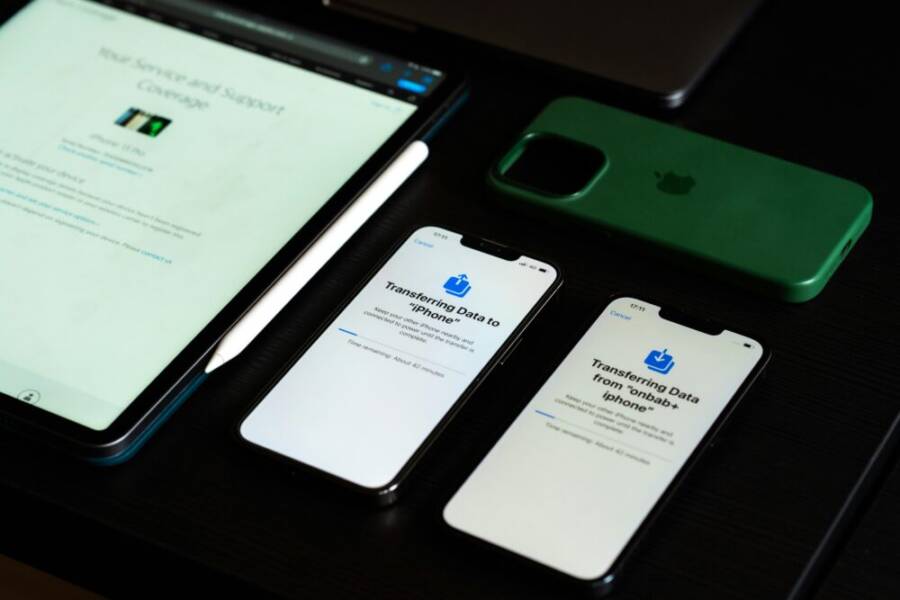
Turning your iPhone and iPad into a single, efficient duo starts with enabling Core Continuity features. When these options are on, your devices communicate in the background, making tasks like moving text, files, and even screen work feel natural. Below you’ll find concise steps to get everything running smoothly, plus quick notes on what each feature does for your workflow.
 Photo by Sami Abdullah
Enable Core Continuity Features
To unlock seamless cross-device work, start with three core settings: Wi-Fi and Bluetooth enabled, the same Apple ID signed in on both devices, and the Handoff toggle turned on. Each step is quick, but the payoff is long lasting.
- Wi-Fi and Bluetooth on: Continuity relies on a close network. Keep both radios active to ensure a reliable handoff between devices. If you frequently move between locations, consider enabling Personal Hotspot as a fallback when Wi-Fi is spotty.
- Same Apple ID across devices: Sign in with the same Apple ID on your iPhone and iPad. This unifies your contacts, messages, and app data, creating a consistent experience as you switch screens.
- Handoff toggle: Enable Handoff in Settings on both devices. This feature lets you start a task on one device and pick it up on the other. For example, begin an email on your iPhone, then continue on your iPad without losing your place.
Each feature carries a clear win. Wi-Fi and Bluetooth ensure proximity and reliability, the Apple ID unifies your ecosystem, and Handoff removes the friction of restarting tasks. Apple’s own guidance covers these steps in depth, including setup details for multiple devices. For a deeper dive, visit the official support pages: Use Universal Clipboard to copy and paste between devices, Continuity features overview, and Work across Apple devices with Continuity.
- Universal Clipboard setup is straightforward: copy on one device and paste on the other. It’s perfect for quick text, images, or links.
- Shared devices and seamless prompts improve the sense of a single workspace, not two separate gadgets.
Quick setup checklist you can follow now:
- Ensure both devices are on the same Wi‑Fi network when possible.
- Confirm both devices are signed in with the same Apple ID.
- Turn on Handoff on iPhone and iPad in Settings > General > Airplay & Continuity (or Airplay & Handoff).
- Test a simple copy and paste action between devices to verify Universal Clipboard.
If you want a broader overview of Continuity features and requirements, Apple’s official resource is a solid reference point. You can read more here: Continuity features and requirements for Apple devices and Use Continuity to work across Apple devices.
- Key takeaway: Start with proximity, then unify accounts, then enable cross-device task handoffs. A small initial setup yields big gains in everyday work.
Share Files and Extend Displays Easily
With continuity in place, sharing files and extending your workspace becomes second nature. Here are the main tools to enable fast transfers and bigger canvases.
- AirDrop for quick file sharing: Drag and drop files between iPhone and iPad without cables. It works well for photos, documents, and app data, making collaboration on the go effortless.
- Sidecar for a second screen: Turn your iPad into an extended display for your Mac, or use it as a dedicated canvas for drawing or annotations. Sidecar turns a tablet into a flexible extension of your main workspace.
- Universal Clipboard for copy-paste: Copy from one device and paste on the other in an instant. The clipboard stays in sync across devices for a short window, so you can move multiple items in one flow.
Practical quick-start steps:
- Enable AirDrop on both devices and set visibility to Contacts Only or Everyone, depending on your environment.
- Choose a file on your iPhone, select Share, and pick AirDrop to send to the iPad. Accept the transfer on the receiving device.
- On macOS, pair with Sidecar to turn the iPad into a second display for compatible apps. If you’re not on macOS, you can still use extended display concepts by keeping apps arranged across devices.
- Copy text or images on one device, then paste on the other using Universal Clipboard. A quick test is to copy a URL on the iPhone and paste it into a note on the iPad.
Why these tools matter for productivity:
- AirDrop eliminates the need for cables or cloud uploads for quick transfers.
- Sidecar expands your workspace, enabling more context in a single glance.
- Universal Clipboard reduces back-and-forth steps, letting ideas flow across devices without interruption.
For a deeper understanding of how Apple’s Continuity suite works with devices, check out Apple’s guides on Use Continuity to work across Apple devices and macOS Continuity features. These pages provide details on compatibility and step-by-step setup across different device families.
- AirDrop and file sharing can dramatically cut file transfer time in daily work.
- A larger, flexible workspace on a tablet allows you to keep reference materials open while drafting on a phone or laptop.
- Consistent cross-device clipboard actions prevent repeated typing and formatting.
Examples of real-world use:
- You’re reviewing a presentation on the iPad while keeping the project brief open on the iPhone. You can reference notes on one screen and edit on the other without switching apps.
- A client brief arrives by email on the iPhone. A quick AirDrop saves the document to the iPad for final edits with a larger display.
If you want even more practical ideas on turning cross-device syncing into daily habits, you can explore a few credible resources. For instance, The 7 Benefits of Mobile Collaboration and How Mobile Devices are Benefiting Productivity offer broader perspectives on how these tools translate into real work improvements.
- The 7 Benefits of Mobile Collaboration
- How Mobile Devices are Benefiting Productivity
- How Mobile Technology Boosts Productivity in the Workplace
By enabling these core features and using AirDrop, Sidecar, and Universal Clipboard, you create a fluid, cross-device workflow. Your iPhone and iPad stop feeling like two separate gadgets and start acting as a single, efficient system. As you adopt these tools, you’ll notice faster task completion, easier content sharing, and fewer interruptions.
If you’d like to explore more on how to optimize cross-device workflows, you can consult Apple’s official guidance on Continuity and related topics. These resources provide practical steps and recommendations that align with real-world use.
- macOS – Continuity
- Use Continuity to work across Apple devices
- Continuity features and requirements for Apple devices
Sources and further reading
- Use Universal Clipboard to copy and paste between your devices
- Copy text, images, photos, and videos on one Apple device and then paste the content on another Apple device with Universal Clipboard
- Continuity features overview
By following these steps and using the built-in tools, you’ll unlock a smoother, more integrated workflow across your iPhone and iPad. The result is less friction and more time spent on actual work, not device juggling.
Android Power: Link Phone and Tablet Seamlessly
Pairing your Android phone and tablet creates a smoother, faster workflow. When these devices talk to each other, you can share files, continue tasks, and control workflows without juggling apps. The goal is a frictionless bridge between small and large screens so ideas stay in motion. In this section, you’ll explore built-in sharing and a PC-like control option that makes Android devices behave as one system.
Use Built-in Sharing and Sync Tools
Android offers several native sharing and syncing features that make cross-device work effortless. Start with quick file transfers, then align your apps so your content stays in sync across devices.
- Nearby Share / Quick Share: This feature lets you send photos, documents, and links to nearby Android devices without cables. It appears as a Share option in most apps, and it shows nearby devices you can select to send content instantly. Enable it in Settings under Google > Devices and sharing if you don’t see it right away. For a quick walkthrough, see Google’s official guide on Use Quick Share on your Android device. This makes it easy to move a presentation draft from your phone to your tablet for final polish.
- Cloud-based auto-sync: Choose a cloud service that works across both devices for notes, docs, and frequently used files. When you update a document on one device, the version on the other updates automatically. This keeps your work in a single place and reduces duplicate edits.
- Chrome tab sharing and cross-device continuity: Chrome can sync tabs, history, and bookmarks across devices signed into the same Google account. Start a research tab on your phone and continue right where you left off on your tablet. If you rely on web apps and templates, this continuity saves seconds and keeps your thinking in one flow.
Why these tools matter for productivity:
- Quick Share eliminates cables and makes fast transfers possible while you’re on the move.
- Cloud syncing creates a single source of truth, so you’re always looking at the latest version.
- Cross-device tab sharing helps you stay in the middle of a task without losing context.
How to get started with minimal friction:
- Pick a cloud-based note or document system you’ll use on both devices.
- Enable cross-device syncing for notes, calendars, and files.
- Test a simple workflow: draft a note on your phone, refine it on your tablet, and mark it complete on the tablet.
- Turn on notifications that matter, so you’re alerted without constant interruptions.
Practical example:
- You’re preparing a report on your tablet. Copy a paragraph from a Chrome tab on your phone using Quick Share, then paste it into your tablet document. The transfer is fast, and you stay focused on the content rather than file juggling.
For deeper guidance, these sources provide broader perspectives on cross-device sharing and productivity gains:
- Use Quick Share on your Android device
- Quick Share: Fast and Seamless File Sharing – Android
- How to Send Files Between Android Devices and PCs With Nearby Share
Real-world benefits to expect:
- Faster content transfer between devices without cables or uploads.
- A larger display for editing while keeping references open on the other device.
- Fewer steps to move text, images, and links between your smartphone and tablet.
If you want more practical ideas on turning cross-device syncing into daily habits, explore resources that cover mobile collaboration and productivity gains. The 7 Benefits of Mobile Collaboration and How Mobile Devices are Benefiting Productivity offer broader perspectives on how these tools translate into real work improvements.
He Was Drowning in Bills and Burnout Until a Simple Daily Ritual Rewired His Brain for Wealth in Less Than a Week
>>> Start Your Shift Today <<<
There Is a Frequency That the Wealthiest Families Have Used for Generations and Most People Will Never Know It Exists
>>> Open the Door <<<
Key takeaways:
- Start with a reliable sharing method that works across devices.
- Keep your main files in a cloud system that both devices access.
- Use the same apps across devices whenever possible to maintain consistency.
Links and further reading
- Use Quick Share on your Android device
- Quick Share: Fast and Seamless File Sharing – Android
- How to Send Files Between Android Devices and PCs With Nearby Share
Try Phone Link for PC-Like Control
Phone Link brings a PC-like experience to your Android setup, letting your tablet mirror or extend phone functionality. It helps you manage notifications, access apps, and interact with your phone from a larger screen. This can be a real time-saver when you need to type long messages, quote from apps, or pull up photos without endlessly switching devices.
Setup and perks:
- Quick start: Install Phone Link on your tablet or connect it through your computer. Sign in with the same Microsoft account you use on your PC, then pair your Android phone by following on-screen prompts. Once connected, you’ll see phone notifications, messages, photos, and even some apps mirrored on the tablet.
- Screen mirroring: The mirroring feature lets you view and control your phone screen from the tablet. It’s handy for fast actions like replying to messages, checking app data, or grabbing a quick screenshot without grabbing the phone.
- App compatibility and performance: Phone Link works best with apps that support cross-device syncing or web-based equivalents. Some apps mirror accurately, while others may show limited controls. It’s a great way to maintain flow during long tasks that require current phone data.
What you gain in daily use:
- Reduced context switching: handle messages and notifications from a bigger screen while keeping your phone on hand for quick actions.
- Streamlined workflows: draft a reply on the tablet with your phone nearby for reference, then send it with a tap.
- Better multitasking: switch between phone and tablet tasks without losing your place, which helps maintain momentum during complex projects.
How to set it up in a few simple steps:
- Ensure both devices are on the same Microsoft account family and on the same network if you plan to use wireless mirroring.
- On your Android phone, install the Phone Link companion app if it isn’t preinstalled.
- On your tablet or PC, open the Phone Link app and start the pairing process. Follow the prompts to connect the two devices.
- Grant the necessary permissions for notifications, photos, and messages so you can access everything from the tablet screen.
Tips to maximize productivity with Phone Link:
- Use the notification mirror to triage important messages without grabbing the phone.
- Keep frequently used apps pinned on the tablet screen for quick access.
- Combine with cloud-based apps to keep files and notes in sync across devices, minimizing the need to re-enter data.
External guidance for broader context:
- How to Use Phone Link to connect your Android phone to Windows 10 or 11
- Microsoft support pages detailing setup, features, and troubleshooting
Real-world scenarios:
- You’re in a meeting and need to respond to a text. Mirror the phone to the tablet, type the reply on the larger keyboard, and send it without leaving the table.
- While reviewing photos for a project, open the gallery on the phone and drag a selection to the tablet for quick editing and sharing.
By adding Phone Link to your cross-device toolkit, you gain a dependable way to view and respond to phone activity from a more comfortable workspace. It complements built-in sharing by offering a different angle on how you work, especially when you want to keep your smartphone nearby but out of sight while you focus on tasks on the tablet.
If you want to explore more options for a cross-device workflow, you can check Microsoft’s guidance on Phone Link setup and features. You’ll find practical steps that align with real-world use cases and device configurations.
Cross-Platform Hacks for Mixed Devices
Moving between a phone and a tablet should feel like a single, fluid workflow, not a constant bout of app hopping. This section highlights practical ways to bridge the two screens with a handful of reliable apps. You’ll learn what each tool does best, where it shines, and where it might fall short in real life.
Top Apps to Bridge Phone and Tablet Worlds
These four to five apps are proven ways to connect your devices, each with its own sweet spot. They help you share files, control your ecosystem, and keep work flowing across screens. I’ve noted quick pros and cons to help you decide what to try first.
- Join by Joaoapps (cross-device sharing and automation)
Pros: Unifies notifications, clipboard, and file sharing across Android and desktop platforms. Good for sending text, links, and files without opening cloud apps. Cons: Some features require a paid license for full automation; setup can be a tad technical for absolute beginners.
Why it shines: Great if you want a lightweight bridge that doesn’t lock you into a single ecosystem.
Related reads: You can explore practical implementations in cross-device productivity guides that discuss multi-platform sharing and automation. - KDE Connect (native cross-device integration, strong on Linux and Android)
Pros: Deep integration for file transfer, clipboard sync, notifications, and remote control. Works well across multiple devices, especially in mixed OS environments. Cons: Some features feel more polished on Linux desktops; Android app can be less intuitive for first-timers.
Why it shines: A robust, open approach to bridging phone and tablet workflows, especially if you already use KDE or Linux on other devices. - LocalSend (secure, cross-platform file sharing)
Pros: Fast, secure transfers with offline-first design; works across iOS and Android, plus desktop environments. Cons: May require a one-time setup to ensure devices recognize each other on the same network.
Why it shines: Excellent for quick, cable-free transfers in a work session where you want to keep files in one place. - Nearby/File Sharing ecosystems (Android built-ins and ecosystem taps)
Pros: Easy, quick transfers between nearby devices without cables; minimal friction to start sharing. Cons: Best when both devices stay close; not always ideal over longer distances or across mixed environments.
Why it shines: Simple, no-fuss transfers that keep momentum during a meeting or on the go. - Cross-platform cloud and tab-synchrony tools (general category, e.g., cross-device notetaking and collaboration apps)
Pros: Sync across devices, keep a single source of truth for notes, tasks, and references. Cons: Requires ongoing cloud reliance; some features may lag on slower networks.
Why it shines: When you need the same notes, documents, and tasks to be accessible immediately on both screens, cloud-based cross-device apps shine.
External links for context and deeper dives:
- LocalSend on the App Store for a quick overview of cross-platform file sharing: https://apps.apple.com/us/app/localsend/id1661733229
- A roundup of cross-platform tools that work across iOS, Android, and other devices: https://www.idropnews.com/apps/8-cross-platform-apps-that-you-can-use-on-all-your-devices/246741/11/
- A broader look at cross-platform productivity apps that many readers rely on: https://www.reddit.com/r/macapps/comments/1f3502a/10_best_cross_platform_apps/
How to pick the right mix for your setup
- Start with a core file transfer tool. If you swap documents or media often, you’ll appreciate a tool that feels native to both devices.
- Add one clipboard-and-notes bridge. Copy text from your phone, paste on your tablet, and keep your latest research handy.
- Use a remote control or notification bridge only if you regularly switch tasks between devices. It can save time but may add initial setup steps.
- Try one cloud-based syncing app that works on both devices. A single, reliable cloud store keeps everything in sync without manual effort.
Practical tips to maximize effectiveness
- Keep 1–2 core apps in sync across devices. Don’t scatter too many tools; consolidation reduces friction.
- Test a simple, repeatable workflow: copy a note on the phone, paste on the tablet, and save to a shared folder. Do this for a week to build a habit.
- Maintain a stable local network when possible. Some tasks run faster with local sharing rather than cloud syncing.
Real-world scenarios to try
- You’re preparing a client brief on the tablet. Use a file transfer app to move the latest draft from the phone, then review and annotate on the larger screen without leaving the desk.
- A teammate sends a reference link to your phone. Use clipboard syncing to push the link to the tablet, where you can paste it into your project plan.
What to expect after a few days of use
- Reduced context switching. You’ll stay in the flow longer when files and notes appear on both screens without re-entry.
- Faster collaboration. Quick transfers and shared workspaces shorten back-and-forth.
- More predictable routines. A consistent set of tools on both devices helps you form repeatable habits.
If you want more credible reads on cross-device workflows, you can explore resources that discuss cross-device collaboration and productivity gains in mobile environments:
- The 7 Benefits of Mobile Collaboration
- How Mobile Devices are Benefiting Productivity
- How Mobile Technology Boosts Productivity in the Workplace
As you start pairing your devices, you’ll notice your smartphone becoming a hub that keeps your tablet in sync. The result is a more fluid, responsive workday where ideas flow freely across screens.
Daily Tips to Maximize Phone-Tablet Teamwork
This section helps you make calls, texts, and alerts flow to your bigger screen so you stay focused on the task at hand. By routing notifications and messages to a tablet or larger display, you reduce interruptions and keep momentum going. Think of your smartphone as the control center and your tablet as the extended workspace where you respond, edit, and finalize faster.
Handle Calls, Texts, and Alerts on Bigger Screen
Moving essential notifications to a larger screen is the quickest win for cross-device productivity. The goal is to create a reliable, low-friction pathway for messages so you don’t miss important items while you stay in the zone. Start with a simple mapping: which notifications matter most, and where you want to see them first.
- Identify priority channels: calls, urgent texts, calendar reminders, and project alerts. Decide which should always appear on the tablet and which can stay on the phone for home or on-the-go moments.
- Use cross-device notification mirroring: enable a feature that pushes alerts from the phone to the tablet in real time. This keeps you in the loop without reaching for the phone every minute.
- Keep context intact: ensure the notification includes enough detail to decide action. A message that shows who it’s from, a short snippet, and a quick action (reply, postpone, or open) saves you from jumping between apps.
- Set up smart filters: create quiet hours for nonessential alerts and push only critical items to the bigger screen. This preserves focus during deep work.
How to implement in practical steps:
- On Android devices, use built-in or third-party solutions to mirror notifications between your phone and tablet. For ongoing cross-device notification syncing, tools like Pushbullet or AirDroid can centralize alerts across platforms. You can explore setup guidance here: Pushbullet and AirDroid notification syncing.
- On iPhone and iPad, enable Continuity features that support notification sharing and quick actions. Apple’s Continuity articles outline how to keep notifications aligned across Apple devices and the benefits of Universal Clipboard for quick replies.
- Choose a preferred messaging flow. For instance, you might route work chats to the tablet while keeping personal messages on the phone. This separation helps you stay productive without mixing contexts.
- Create a quick-access workflow for replies. If you receive a brief text that needs a response, draft it on the tablet using a connected keyboard, then send via the phone when ready. This minimizes toggling between devices.
A simple example to visualize the flow:
- You’re in a meeting and your tablet shows an urgent task alert. You read the alert, open the related doc on the tablet, and, if needed, draft a reply on the tablet. When you’re free, you finalize the response on your phone and push a confirmation back to the tablet. This keeps the conversation moving while you stay in the meeting.
Why this matters for daily work:
- Reducing interruptions helps you maintain a steady work rhythm.
- A larger screen gives you more room to read, compose, and verify details.
- Consistent notification management prevents missed items or duplicate actions.
If you want more background on cross-device notification strategies, these resources offer broader perspectives:
- Pushbullet – Your devices working better together
- AirDroid – How to Sync Notifications across Different Devices
- KDE Connect – Native cross-device integration for Linux and Android
Tip for a balanced setup:
- Start with one high-priority channel. Once you’re comfortable, expand to other alerts. The aim is to keep the system simple and reliable.
Visual reference:
 Photo by Jakub Zerdzicki
External links for deeper reading and practical setup:
- Pushbullet – Your devices working better together
- AirDroid – Sync Notifications across Devices
- KDE Connect – Native cross-device integration
What you gain in practice:
- Clearer focus with fewer interruptions.
- A faster response to time-sensitive items.
- A consistent process for handling messages across devices.
Remember, the aim is to create a reliable path for critical items so your tablet acts as an effective extension of your phone. The better your notification routing, the less you have to break your flow to respond.
If you’d like more concrete guidance on cross-device notification workflows, you can explore additional resources such as Pushbullet, AirDroid, and KDE Connect. These tools provide practical steps to get notifications and messages flowing smoothly between your devices.
Conclusion
Pairing your devices unlocks clear, repeatable gains in everyday work. The setups covered—from continuity and cross device syncing to practical sharing and notification routing—create a simple, reliable workflow you can follow without a tech brain explosion. When you keep a common cloud system, sync your apps, and choose one strong transfer method, you gain speed, fewer mistakes, and consistent access to your ideas across screens.
These simple steps pay off fast: you move content between devices with less taps, stay on the latest version of every document, and reduce interruptions during deep work. The result is a smoother rhythm where your smartphone acts as the hub and your tablet serves as the expansive workspace. You’ll notice how much you can accomplish with small shifts in setup and habit.
Start with one practical tweak today. For example, pick a core app you already use on both devices and enable cross device syncing. Observe how it feels to draft a note on the phone and finish it on the tablet without retyping. Small wins compound into a noticeably more efficient day.
If you found this useful, share your favorite method in the comments or subscribe for more practical guides. Tell us which tip you plan to try first. Your input helps others build a smoother cross device routine and keeps the tips coming. A few focused changes now can deliver big gains in the weeks ahead, and your workload will thank you for it.
He Was Drowning in Bills and Burnout Until a Simple Daily Ritual Rewired His Brain for Wealth in Less Than a Week
>>> Start Your Shift Today <<<