She Pressed Play on a Strange Audio Track and Within Days Her Financial Reality Started Shifting in Ways She Could Not Explain
>>> See How It Works <<<

Have you noticed your phone constantly searching for nearby Bluetooth devices even when you aren’t using it? This behavior happens because phones use Bluetooth Low Energy to improve location accuracy and quick connections, which means background scans can kick in without you realizing it. The result is more battery drain and more data being exchanged than you might expect.
In this post, you’ll learn why this happens, how it affects battery life, performance, and privacy, and what practical steps you can take to stop the constant searches. You’ll get simple, actionable instructions for both Android and iOS that you can apply right away on your smartphone without sacrificing essential features.
By the end, you’ll know exactly what to toggle off, what to leave on for important tasks, and how to test the impact on your phone’s battery. This guide aims to be clear and helpful for everyday smartphone usage, so you can enjoy a steadier battery life and better privacy without losing convenience.
Why Your Phone Keeps Searching for Bluetooth Devices
Bluetooth scanning happens in the background for practical reasons. Your smartphone uses nearby device signals to speed up pairings, improve location awareness, and keep certain features ready when you need them. But not all scans are obvious, and some happen even when you think Bluetooth is off. Understanding what’s happening helps you cut unnecessary battery drain without losing essential functionality.
He Was Drowning in Bills and Burnout Until a Simple Daily Ritual Rewired His Brain for Wealth in Less Than a Week
>>> Start Your Shift Today <<<

What Bluetooth scanning does behind the scenes
Bluetooth scanning, especially with Bluetooth Low Energy (BLE), is a low-power way for devices to listen for signals from nearby accessories and other phones. In plain terms, your phone is constantly listening on defined channels for small packets that tell it “here’s a device you might connect to later.” This enables quick pairing, proximity features, and certain apps to work without extra delays.
- Scanning can happen in the background as part of system services, even if you’ve turned Bluetooth off in quick settings. The reason is that some functions rely on BLE beacons or nearby devices to improve performance.
- Battery impact is real but often modest. BLE minimizes power use, yet frequent background scans can add up, especially on older phones or when multiple apps request access.
- You don’t need to abandon all scanning to gain energy efficiency. Many scans are tied to features you still want, like finding a lost headset or receiving proximity updates in a smart home.
For a deeper dive, see Android’s BLE overview and a primer on BLE power efficiency to understand why these scans exist and how they’re designed to be energy-conscious. Bluetooth Low Energy | Android Developers • Why Bluetooth Low Energy (BLE) Improves Battery Life
What triggers scans on Android
Android devices scan for BLE beacons and nearby devices in several common scenarios. Understanding these triggers helps you decide what to adjust without breaking convenience.
- Location-based scanning: Some Android features use location context to determine when to scan. If you’ve granted location access for Bluetooth, scans can occur to improve accuracy or enable location-based actions.
- Nearby Share: This feature may initiate discovery when you’re ready to share something with nearby devices, even if you aren’t actively using Bluetooth settings.
- Car apps and infotainment: Connected cars, wireless adapters, or in-car apps may prompt background scans to recognize devices for quick connections when you start the car or enable media streaming.
- Apps with Bluetooth permissions: Apps you’ve granted Bluetooth or location permissions can prompt scans in the background for tasks like proximity alerts, device syncing, or wake word features.
Relatable example: You might leave your phone on a nightstand while a Bluetooth speaker is in range. A car app or a background helper could wake up and scan to see if a nearby device is available for a fast connection when you step into your vehicle the next morning.
- To understand Android BLE behavior and permissions, see Mastering Android BLE Permissions for Bluetooth Low Energy and Android BLE scan troubleshooting. Mastering Android BLE Permissions For Bluetooth Low Energy • Troubleshooting Android BLE Scan Errors
What triggers scans on iPhone
iPhone devices handle BLE scanning a bit differently, with tighter control by iOS background processes and Apple’s ecosystem features. Here’s what commonly prompts scans in daily use.
- System services and background tasks: iOS maintains background BLE tasks to support features like Find My, Find My devices, and proximity-based alerts. These can trigger scans even when you think Bluetooth is idle.
- AirDrop and Nearby features: When AirDrop or Nearby is active, the iPhone may scan for nearby devices to enable quick sharing or collaboration with nearby Apple devices.
- Nearby interactions and accessories: Some accessories use advertised signals to announce their presence, prompting the iPhone to scan to determine if a connection should be prepared.
- Adjustments you can make: You can limit background scanning by reviewing permission settings, disabling certain Nearby features, and tweaking system service controls.
For more on iOS BLE scanning behavior and how to optimize it, check Scanning for Peripherals on iOS Core Bluetooth and related guides. Scanning for Peripherals on iOS Core Bluetooth • Overcoming the iOS background Bluetooth limitations
Common myths about Bluetooth scanning
Misunderstandings about Bluetooth scanning lead people to keep things on or off in ways that aren’t necessary. Here are clear facts to keep you grounded.
- Myth: Bluetooth must stay on at all times for normal phone operations. Reality: Many essential functions only need the Bluetooth radio on for occasional checks. Some tasks happen in the background without constant scanning.
- Myth: Turning off discovery stops all scanning. Reality: Background processes and system features can still perform listening tasks or use BLE beacons to improve performance.
- Myth: If you can’t disable discovery, your features are broken. Reality: You can often disable nonessential scans and still keep apps working smoothly, especially for things you rarely use.
To verify common myths and get practical background tips, see Bluetooth myth discussions and official guidance. 3 Common Myths About Bluetooth Technology • Did you know enabling Bluetooth in non-discovery mode doesn’t prevent access to your smartphone
Fast fixes you can try today to reduce Bluetooth scans
If you want to extend battery life and regain some privacy, the easiest moves often come from turning down how your phone scans for devices. These quick fixes target background Bluetooth activity without destroying the features you actually use. Below, you’ll find practical steps for both Android and iOS, plus what to expect after you make the changes. Think of these as a playbook you can apply in minutes.
Turn off Bluetooth scanning for location services
Bluetooth scanning tied to location services can wake up in the background even when you aren’t actively using Bluetooth. Limiting this can noticeably cut down background scans, especially on devices that frequently wake up for proximity information.
- Android: Open Settings, go to Location, then Location access or Location services. Look for Bluetooth scanning or a similarly named setting and toggle it off or set to Only while using the app. This restricts BLE beacon listening to when you actually need location-based features. If your device uses a control like “Bluetooth scanning” directly under Location settings, disable that toggle. For a quick reference, Google’s guidance on location settings covers the general path: Settings > Location > [toggle] you’ll find in the Location menu. For more detail, see Manage your Android device’s location settings.
- Source: https://support.google.com/android/answer/3467281?hl=en
- iOS: Open Settings, then Privacy, then Location Services. Scroll to System Services and review Bluetooth-related items. If you see a Bluetooth or location-based scanning option, set it to While Using the App or disable it where appropriate. This helps ensure background BLE checks aren’t running purely for location accuracy or proximity features. For an overview of iOS practices, you can review resources about how location permissions affect scanning.
- A related overview on iOS BLE scanning strategies is available in discussion posts and developer resources on how iOS handles peripheral scanning in the background.
Why this helps: BLE is designed to be low power, but frequent background listening adds up. Turning off or limiting location-based scanning preserves battery while maintaining essential connectivity when you actually need it.
Tip: After you adjust, monitor your phone for a day to gauge battery changes. You should see a softer drain during idle periods, with core functions still accessible when you want them.
Limit Nearby Share and AirDrop
Nearby sharing features are a convenient way to send files, but they also drive device discovery. Reducing or turning these features off will cut down on background scans and limit who can see your device in the local vicinity.
- Android: Disable Nearby Share when you don’t need it. On most Android devices, pull down the quick settings shade and long-press the Nearby Share icon, then switch it off or set it to unavailable. If your phone shows it under Settings > Google > Nearby share or Settings > Connected devices, follow those prompts to turn off discovery by default.
- Quick reference: Use the “Turn Off Nearby Share” guide for a streamlined path to disable the feature on Android.
- Source: https://mobiletrans.wondershare.com/mobileapp/how-to-turn-off-nearby-share.html
- iOS: AirDrop is the closest analog on iPhone. To reduce discovery, open Control Center or Settings, then general AirDrop settings. Choose Receiving Off or Only People You Choose, and consider turning off AirDrop entirely when you aren’t actively sharing. This reduces the chance your device is visible to random nearby devices.
- What you gain and trade-offs: You’ll gain privacy and a bit more battery life, but you might need to re-enable sharing when you truly need to transfer files. If you rely on quick transfers in busy environments, you can limit discovery to friends or only when you’re actively sharing.
For context on disabling or adjusting these features, see Use Quick Share on your Android device and a practical guide to turning off Nearby Share.
- Android overview: https://support.google.com/android/answer/9286773?hl=en
- AirDrop/Nearby discussions: https://www.wired.com/story/stop-strangers-sending-files-airdrop-nearby-share/
Forget unfamiliar devices and block repeat offenders
If a device keeps reappearing in your Bluetooth list, you don’t have to accept it every time. Forgetting or blocking persistent devices reduces clutter and stops unwanted connection attempts.
- How to forget a device: Open Settings > Bluetooth. In the list of paired or previously connected devices, tap the device name and choose Forget or Remove. This prevents automatic reconnection in the near future.
- How to block a device: If a device continues to try to connect after you’ve forgotten it, use your system’s blocking or restricted list. On Android, you may find blocking options in the same Bluetooth menu or in your device’s security settings. On iOS, you can adjust access rights by managing device trust and removing the device from trusted lists when available.
- When to block entirely: If a device keeps trying to connect despite multiple reminders, blocking is sensible. Persistent attempts waste battery and can hint at apps that are using Bluetooth in the background without your clear consent.
Tip: You don’t need to keep every device you’ve connected to in the long term. Cleaning the list periodically helps keep scans focused on devices you actually want to pair with.
Review app permissions and auto-connect settings
Apps can request Bluetooth access and auto-connect privileges. Auditing permissions helps ensure you don’t invite background scanning without a clear purpose.
- Check app permissions: On Android, open Settings > Apps & notifications > App permissions > Bluetooth or Location. Review which apps have Bluetooth or Location permissions and revoke anything unnecessary. On iOS, go to Settings > Privacy > Bluetooth and review each app’s access, turning off anything you don’t recognize as essential.
- Disable auto-connect when possible: Some devices and apps offer auto-connect options. If your headset, car adapter, or smart home device has an auto-connect feature, toggle it off when you don’t need it always ready. This prevents the phone from continuously scanning for those devices when they aren’t actively in use.
- How to quickly audit:
- Open the Settings app.
- Find Permissions or Privacy sections.
- Review Bluetooth and Location access by app.
- Revoke or restrict permissions you don’t need.
- Recheck after a week for any new permission requests.
- Popular platform paths to check:
- Android: Settings > Apps & notifications > App permissions > Bluetooth
- iOS: Settings > Privacy > Bluetooth > [App name]
Why this matters: Apps can quietly trigger scans to keep data ready or to enable features you rarely use. Tightening control ensures scans occur only when you want them.
Related guides you may find helpful cover similar ground, including how to manage Bluetooth permissions in Android and how iOS handles Core Bluetooth background tasks.
- Android BLE permissions and behavior references: Mastering Android BLE Permissions For Bluetooth Low Energy and Android BLE scan troubleshooting
- iOS scanning guidance: Scanning for Peripherals on iOS Core Bluetooth
Putting it all together, these quick tweaks form a practical shield against constant background scans. You’ll still keep the features you rely on while reclaiming battery life and privacy. If you want, you can run a quick battery check after applying these changes to see where you stand.
External resources you may find useful as you tune things up:
- Manage your Android device’s location settings: https://support.google.com/android/answer/3467281?hl=en
- How to turn off location services on Android: https://www.asurion.com/connect/tech-tips/turn-off-location-services-android/
- How to Turn Off Nearby Share on Android: https://mobiletrans.wondershare.com/mobileapp/how-to-turn-off-nearby-share.html
- How to Turn Off Nearby Share on iPhone (2024): https://www.youtube.com/watch?v=4-jP1jPg6bc
- How to Keep Strangers From Sending You Files Over Nearby Share and AirDrop: https://www.wired.com/story/stop-strangers-sending-files-airdrop-nearby-share/
Sources and practical steps cited here reflect common device behaviors and the steps you can take to reduce background Bluetooth scans. By applying these fixes, you maintain essential connectivity while cutting down on unnecessary device discovery.
Android specific steps to curb Bluetooth scanning
If you want to cut back on background device discovery without losing essential Bluetooth features, start with targeted Android settings. This section walks you through practical, version-aware steps to reduce unnecessary Bluetooth scanning. You’ll learn where to adjust location-linked scanning, how to tame Nearby Share, how to manage auto connect and forget devices, and when a full reset might be worth it. Think of these steps as a toolkit you can apply on your smartphone to regain battery life and privacy while keeping the connections you truly need.
Disable location based Bluetooth scanning
Turning off or limiting scans tied to location services can dramatically reduce background activity. The key is to adjust the settings where location and Bluetooth intersect, which can vary by Android version and vendor skin.
- Path variations you may encounter:
- Settings > Location > Location access or Location services, then look for Bluetooth scanning or a similarly named option. Toggle off or set to “Only while using the app.”
- Some devices place the Bluetooth scanning toggle directly under Location services. If you see “Bluetooth scanning,” disable that option.
- On certain vendor skins, you may find the switch under Settings > Security or Privacy, with a wording like “Bluetooth scanning” or “Nearby devices scanning.”
- What to expect: Disabling location-linked scanning stops background BLE beacons from waking your phone for proximity checks. You’ll still keep core Bluetooth capabilities when you actively use a device.
- Quick sanity check: After adjusting, use a few apps that relied on proximity or location to verify they still function as expected. If an essential feature seems delayed, re-check the toggle and consider limiting to “While using the app” rather than fully off.
- Useful reference: Manage your Android device’s location settings. https://support.google.com/android/answer/3467281?hl=en
Why this matters: BLE is designed to be efficient, but ongoing background listening adds up. Reducing location-based scanning preserves battery while preserving essential connectivity when you actually need it.
Limit Nearby Share or restrict it to your devices
Nearby sharing can be incredibly convenient, but it also increases device discovery and background activity. Limiting who can see your phone or turning it off when not needed yields tangible privacy and battery benefits.
- Android steps to limit or disable:
- Open Quick Settings, long-press Nearby Share, and turn it off. If your device groups it under Settings > Google > Nearby share or Settings > Connected devices, follow those prompts to disable discovery by default.
- If you still want occasional use, set Nearby Share to “Your devices only” or a similar option so it won’t broadcast to random nearby phones.
- Caveats and use cases:
- You’ll gain privacy and some battery savings, but file sharing becomes a two-step process. When you truly need to transfer files, you’ll re-enable Nearby Share or switch to manual transfer.
- In busy environments like conferences, limiting visibility prevents stray devices from appearing in your share sheet.
- Contextual guidance: Use Nearby Share on Android and AirDrop alternatives on iPhone thoughtfully to balance convenience with privacy.
- Useful references:
- [Guide] How to Turn Off Nearby Share https://mobiletrans.wondershare.com/mobileapp/how-to-turn-off-nearby-share.html
- How to Turn Off Nearby Share on Android https://support.google.com/android/thread/266984428/how-yo-turn-off-nearby-share?hl=en
- How to Turn Off Nearby Share on Android (Video instructions) https://www.youtube.com/watch?v=CJInOBJORVI
Forget unfamiliar devices and block repeat offenders
A cluttered Bluetooth device list invites repeated connection attempts from devices you don’t plan to use. Cleaning up and selectively blocking helps keep scans focused on devices you actually want to pair with.
- How to forget a device:
- Settings > Bluetooth. Tap the device name you don’t want to reconnect and choose Forget or Remove.
- How to block a device:
- If a device keeps trying to connect after you’ve forgotten it, use your phone’s blocked or restricted list. On some Android versions you’ll see this option in the Bluetooth menu or in security settings.
- When to block entirely:
- If a device persists despite repeated reminders, blocking is sensible. It prevents idle scanning by devices that aren’t authorized, which saves battery and reduces stray connection attempts.
- Practical tip: Periodically prune the Bluetooth list so scans stay focused on devices you actually use. You don’t need to keep every past connection; a lean list reduces unnecessary background activity.
- Related tips on removing and managing Bluetooth devices:
- How to remove paired Bluetooth devices on Android https://www.androidpolice.com/remove-bluetooth-devices-android/
- Stop Bluetooth Auto Connect Android: a practical guide https://blog.founders.illinois.edu/stop-bluetooth-auto-connect-android/
Review app permissions and auto-connect settings
Apps can quietly request Bluetooth access and auto-connect privileges. Auditing permissions helps ensure background scans only happen when you intend.
- How to audit permissions:
- Android: Settings > Apps & notifications > App permissions > Bluetooth or Location. Review which apps have Bluetooth or Location access and revoke anything unnecessary.
- iOS parallel steps exist, but this subsection focuses on Android. If you see a permission that doesn’t align with the app’s function, revoke it.
- Disable auto-connect where possible:
- Many devices and apps offer auto-connect options. Turn off auto-connect for headsets, car adapters, or smart home devices when you don’t need constant readiness. This prevents the phone from scanning for those devices all the time.
- Quick audit steps:
- Open Settings.
- Go to Permissions or Privacy.
- Review Bluetooth and Location access by each app.
- Revoke or restrict permissions you don’t need.
- Re-check after a week for new requests.
- Why it matters: Apps can trigger scans to keep data ready or to enable rarely used features. Tightening control ensures scans occur only when you want them.
- Helpful references:
- Mastering Android BLE Permissions For Bluetooth Low Energy
- Android BLE scan troubleshooting
- Scanning guidance for iOS Core Bluetooth (for readers who want a cross-platform view)
What to expect after these adjustments: You’ll notice fewer bursts of activity when you’re not using Bluetooth, and the remaining scans align with real tasks. It’s a balance between privacy, battery life, and convenience. If you want, set a reminder to recheck permissions after a week to catch new apps that request access.
Putting it into practice, these small changes add up fast. You keep the features you rely on while cutting down background device discovery that quietly drains battery. After applying the tweaks, you can run a quick battery check to measure the impact and adjust further if needed.
External resources you may find helpful as you tune things up:
- Manage your Android device’s location settings https://support.google.com/android/answer/3467281?hl=en
- How to turn off location services on Android https://www.asurion.com/connect/tech-tips/turn-off-location-services-android/
- How to turn off Nearby Share on Android https://mobiletrans.wondershare.com/mobileapp/how-to-turn-off-nearby-share.html
- How to turn off Nearby Share on iPhone (2024) https://www.youtube.com/watch?v=4-jP1jPg6bc
- Stop strangers from sending files over Nearby Share and AirDrop https://www.wired.com/story/stop-strangers-sending-files-airdrop-nearby-share/
Resetting or rechecking these steps can help you refine performance. If you suspect your device is still scanning more than it should, revisit each sub-section and confirm the toggles align with your usage patterns.
She Pressed Play on a Strange Audio Track and Within Days Her Financial Reality Started Shifting in Ways She Could Not Explain
>>> See How It Works <<<
Note: If you want to see how these practices translate across brands, you can consult vendor-specific guides and manufacturer support pages for exact wording and paths. The goal remains the same: fewer background scans, longer battery life, and better privacy, without losing essential connectivity.
iOS steps to minimize Bluetooth scanning
In this section, you’ll learn practical, privacy-minded ways to reduce Bluetooth scanning on an iPhone without losing essential connectivity. By tweaking settings, you can curb background device discovery, extend battery life, and maintain control over which features you actually use. The goal is to keep your iPhone responsive and capable while avoiding constant background scans that drain power or expose your device to more nearby devices than you want.
Limit Bluetooth access for apps
Controlling which apps can use Bluetooth in the background is a powerful first step. When apps only have Bluetooth permissions when they’re actively in use, your phone stops listening for devices automatically in the background. Here’s how to tighten those controls on iOS:
- Open Settings > Privacy & Security > Bluetooth. You’ll see a list of apps that requested access. Revoke permission for any app that doesn’t need to discover devices while not in use.
- Prefer “While Using the App” over “Always” for location and Bluetooth integration. If an app requests background access, consider whether it truly benefits from proactive discovery.
- Recheck permissions after adding new apps. A quick audit each month helps keep scanning low.
- Practical note on privacy impact: Reducing background Bluetooth access limits proximity tracking and device visibility. Your iPhone becomes less chatty to nearby accessories, which preserves battery and reduces incidental data exchange. If you rely on certain features like hands-free driving or quick audio connections, keep those apps allowed but review their behavior periodically.
Useful reference on app-level Bluetooth privacy and permissions can guide these adjustments:
- Apple guidance on Bluetooth privacy settings for iPhone and iPad
Photo by Brett Jordan
Forget devices and manage AirDrop triggers
Devices you’ve forgotten can slip back into discovery if you don’t actively manage them. Likewise, AirDrop discovery can wake scanning even when you aren’t actively sharing. Here’s how to tighten both processes:
- Forget unfamiliar or reappearing devices: Go to Settings > Bluetooth, tap the device name, choose Forget This Device. Do this for devices you don’t plan to use again.
- Block repeat offenders if needed: If a specific device keeps trying to connect after you’ve forgotten it, use the iPhone’s Block or Restricted List in Bluetooth settings when available.
- AirDrop settings to limit discovery: Open Settings > General > AirDrop, then choose Receiving Off or Only People You Choose. When not actively sharing, this reduces the number of devices that can poll your phone.
- Quick impact: Forgetting devices and limiting AirDrop reduces idle scans, improving battery life and giving you more control over who can see your iPhone.
- Trade-offs: You may need to re-enable AirDrop or re-pair a device when you actually want to share. It’s about choosing privacy and battery savings over constant visibility.
Further reading and related tips:
- Use AirDrop on your iPhone or iPad for context on how AirDrop manages visibility
Tweak location services and system services for Bluetooth
Location services and certain system services can prompt Bluetooth scans in the background. Adjusting these permissions to safe defaults helps you keep essential functions while avoiding constant discovery:
- Review Location Services permissions: Settings > Privacy & Security > Location Services. For apps that don’t need location, set them to “Never” or “While Using App.” This reduces background BLE checks that rely on location context.
- Limit Bluetooth-related system services: Within Location Services, scroll to System Services and disable Bluetooth-based scanning or proximity features you don’t need. Keeping these off for nonessential items minimizes background activity.
- Safe defaults for everyday use: Allow location access only when the app is in use, and disable background Bluetooth scanning unless you actively rely on proximity features. This keeps find-my or nearby device features functional when needed while reducing idle activity.
- Practical note: If an alert about location or Bluetooth appears, review which app requested it. Only grant access for apps you trust and use regularly.
Helpful related resources:
- Apple guide on controlling the location information you share on iPhone
- Apple overview on Location Services and how apps access location data
Photo by Brett Jordan
Use Control Center and app settings wisely
Daily use benefits from quick, thoughtful adjustments in Control Center and per-app settings. Here are practical tips you can implement in minutes:
- Disable Bluetooth from Control Center when you don’t need it immediately: Access Control Center, tap the Bluetooth icon to turn it off. This halts active scanning from quick access, though background processes can still run under certain conditions.
- Limit background use in Settings: Settings > Privacy & Security > Bluetooth and Location. Review which apps have Bluetooth access and adjust to “While Using the App” or disable if not essential.
- Manage Quick Settings toggles with intention: Keeping a smaller, more deliberate set of toggles reduces accidental scanning when you don’t expect it.
- A quick workflow for daily use: In the morning, disable Bluetooth in Control Center during your commute if you don’t plan to connect to nearby devices, then re-enable only when you need a connection for headphones or a car kit.
External resources you may find helpful as you tune things up:
- Use AirDrop on iPhone to understand how discovery settings influence visibility
- Control Center customization guides for iPhone
Photo by Brett Jordan
Images
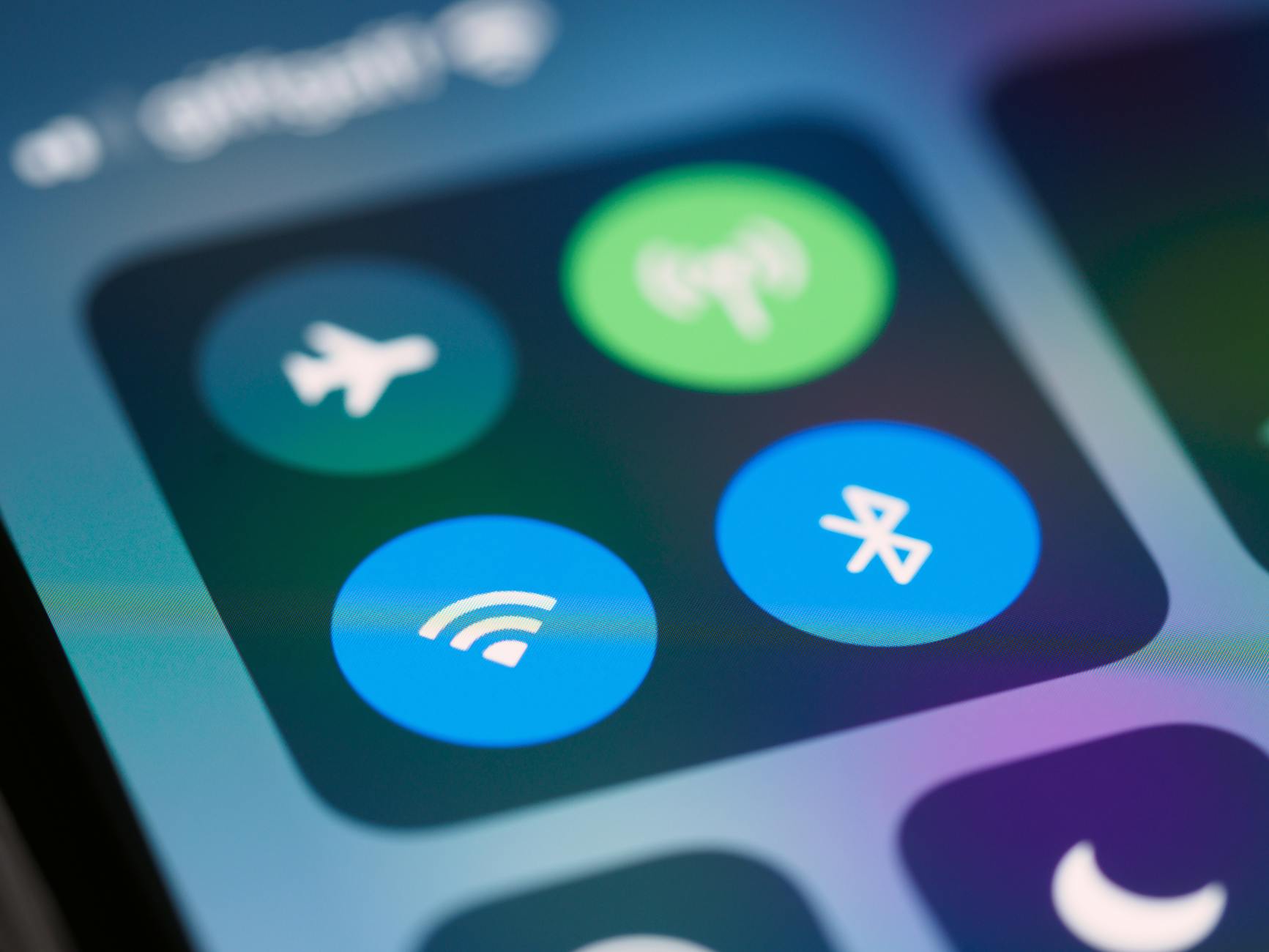 Photo by Brett Jordan
External links were integrated throughout to provide direct, official guidance and supplemental reading. They appear as in-text references so you can click through without losing the article’s flow. For example, you can review Apple’s guidance on controlling location information on iPhone to understand the broader privacy implications of these settings.
If you want a quick recap, here are the core actions covered in this section:
- Limit Bluetooth access for apps
- Forget unfamiliar devices and adjust AirDrop triggers
- Tweak location services and related system services
- Use Control Center and per-app settings for daily control
The combination of these steps helps you reduce background device discovery while preserving the features you rely on. After applying the changes, monitor your iPhone over a few days to see how the battery and responsiveness improve. If you notice any essential function behaving differently, revisit the specific setting and adjust to a balanced default.
Long term strategies and best practices to prevent constant Bluetooth scans
Keeping Bluetooth scanning under control is not a one-time fix. It’s a set of steady, repeatable practices that reduce background device discovery while preserving the features you rely on. Think of it as tuning your smartphone for better battery life and smarter privacy over the long haul. The goal is noticeable gains over weeks and months, not a sudden drop in convenience. Below are practical, long-term strategies you can adopt and refine as your devices and apps evolve.
Keep OS and apps updated
Software updates often include fixes for bugs that cause unnecessary background activity, along with improvements to power management. When the Bluetooth stack or related services are optimized, you’ll see fewer stray scans and steadier battery life. In practice, updates also tighten permission models and reduce how aggressively apps can wake the radio without your knowledge.
- Why updates matter: Updates address glitches and optimize how the system handles BLE advertising and scanning. They can close loopholes that cause constant listening and improve overall efficiency.
- Simple update steps you can follow:
- Android: Open Settings > System > Advanced > System update to check for and install the latest release. For apps, open Google Play > My apps & games > Update all. Keeping both OS and apps current helps reduce spurious scans.
- iOS: Open Settings > General > Software Update to install the latest iOS version. Then go to App Store > Profile (or Updates) and update apps. Regular updates keep the Bluetooth stack aligned with the latest privacy protections.
- Quick check after updates: Use your phone normally for a couple of days and monitor battery behavior. If you notice an uptick in background activity, revisit permission settings and app behavior.
For deeper context on BLE optimization and how updates influence energy use, see BLE-related guidance from Android developers and BLE energy efficiency discussions. Bluetooth Low Energy (BLE) | Android Developers • Why Bluetooth Low Energy (BLE) Improves Battery Life
Use privacy and security best practices
A habit of privacy-first settings helps you avoid constant scanning without breaking essential connectivity. Regularly reviewing permissions, limiting background activity, and staying mindful of new devices encountered during travel form a strong shield.
- Ongoing habits that pay off:
- Review app permissions periodically. Revoke Bluetooth and location permissions from apps that don’t need them.
- Limit background activity for Bluetooth when not actively using certain features.
- Be mindful of unfamiliar devices you encounter on trips or in new environments; don’t automatically connect to every beacon.
- How to implement these habits:
- Android: Settings > Privacy > Permission manager > Bluetooth and Location. Revoke permissions you don’t recognize as essential.
- iOS: Settings > Privacy > Bluetooth. Disable access for apps that don’t need constant discovery.
- Practical outcome: You’ll reduce idle scans while keeping critical features like headphones and car kits functional when you actually need them.
If you want to explore more on BLE privacy, consider reliable industry overviews and developer guides that discuss randomization, address privacy, and how to minimize tracking. Bluetooth Low Energy (BLE) Security & Privacy: A 2025 Guide
Monitor permissions and device connections
A lightweight monitoring routine keeps you in the driver’s seat. Regular checks help you remove apps or devices that trigger scans without clear intent, while keeping the connections you rely on.
- A simple routine you can follow:
- Open Settings and review Bluetooth permissions for each app.
- Check the list of connected or previously connected devices weekly.
- If a device reappears after you’ve forgotten it, block it or remove it from trusted lists.
- Reassess auto-connect options and disable those you don’t need.
- Re-check after a month for new permissions requests.
- Actionable platform paths:
- Android: Settings > Apps & notifications > App permissions > Bluetooth or Location
- iOS: Settings > Privacy > Bluetooth > [App name]
- Why it matters: Apps can trigger scans to keep data ready or enable features you rarely use. Tightening control ensures scans happen only when you intend.
For deeper reading, see Android BLE permissions resources and iOS Core Bluetooth guidance. Bluetooth permissions | Connectivity – Android Developers • Scanning for Peripherals on iOS Core Bluetooth
Practical tips for travel, cars, and smart home setups
Travel, car kits, and smart home devices can trigger frequent scans if not managed thoughtfully. Use scenario-based tweaks to stay connected where you want and quiet where you don’t.
- Travel and transit
- When moving through airports or trains, disable nonessential discovery. Turn off Nearby Share or AirDrop equivalents when not needed, and rely on wired or manual transfers to minimize exposure.
- Cars and in-vehicle systems
- Pair only the devices you routinely use in the car. If your car offers a “quick connect” feature, enable it only for pre-defined devices and disable auto-discovery outside drive time.
- Smart home ecosystems
- Prioritize a single hub or device group for discovery. If a speaker or smart lock keeps waking the radio, review its auto-connect settings and ensure it’s not constantly listening for other devices.
- Battery and privacy payoff: You’ll notice fewer background bursts as you move through these common environments, while keeping important connections intact.
For broader context on how to tune smart home and travel devices, check guides on Bluetooth usage in everyday life and device privacy considerations. Enhancing device privacy and energy efficiency with Bluetooth® Randomized RPA Updates • How to Turn Off Nearby Share on Android
Putting the long term strategy together
- Start with a baseline: note how long your battery lasts on a typical day before you make changes.
- Tackle updates first: keep OS and apps current to minimize glitches that cause extra scans.
- Build a permission audit into your routine: set a monthly reminder to review app access and device connections.
- Apply scenario-based tweaks: adjust travel, car, and smart home settings to limit discovery when you don’t need it.
- Reassess and repeat: every 4–6 weeks, re-run your checks to catch new apps or devices that quietly reintroduce scanning.
External resources you may find helpful as you tune things up:
- Manage your Android device’s location settings: https://support.google.com/android/answer/3467281?hl=en
- How to turn off location services on Android: https://www.asurion.com/connect/tech-tips/turn-off-location-services-android/
- How to turn off Nearby Share on Android: https://mobiletrans.wondershare.com/mobileapp/how-to-turn-off-nearby-share.html
- How to turn off Nearby Share on iPhone (2024): https://www.youtube.com/watch?v=4-jP1jPg6bc
- Stop strangers from sending files over Nearby Share and AirDrop: https://www.wired.com/story/stop-strangers-sending-files-airdrop-nearby-share/
If you want a quick recap, these core actions form a reliable approach:
- Keep OS and apps updated
- Review and constrain app permissions and auto-connect
- Limit location-linked and system Bluetooth scanning
- Manage Nearby/air sharing and forget unfamiliar devices
The goal is steady improvements over time. With consistent practice, your smartphone will stay connected when you want it, while idle scanning and battery drain shrink significantly. If you notice any essential function behaving oddly after a change, fine-tune the setting to a balanced default.
External links cited here are provided for direct guidance and further reading. They’re integrated to support practical steps you can take today, not to overwhelm you with jargon.
Conclusion
Taming constant Bluetooth scans is about balancing connectivity with privacy and battery life. The practical steps outlined help you keep essential features while quieting idle discovery on your smartphone. You don’t need to turn Bluetooth off entirely; you just tighten when and how it listens.
Key actions to remember:
Thousands of People Were Struggling With Money Until They Discovered This One Ancient Secret Hidden in Sound
>>> Unlock It Now <<<

- Limit location linked scanning and review app permissions so background checks happen only when needed.
- Reduce or disable Nearby Share and AirDrop like features to cut down on background device discovery.
- Forget unfamiliar devices and block repeat offenders to keep the Bluetooth list clean and scored for real use.
- Tweak iOS and Android settings to minimize background Bluetooth activity without sacrificing core tasks such as listening for a headset or car kit.
Apply these tweaks gradually and test their impact. A quick battery check after each change helps you see the difference and decide what to keep on or off. Whole setups may differ by device, so adjust based on how you use your phone in daily life. smartphone users can often strike a steady balance with permissions, controls, and routine reviews.
If you try these approaches, share your results or any questions. Your experience could help others fine tune their own devices.
She Pressed Play on a Strange Audio Track and Within Days Her Financial Reality Started Shifting in Ways She Could Not Explain
>>> See How It Works <<<