When you plug in your phone and nothing appears as a drive, it can stall your workflow. You might need to transfer photos, save files, or back up data. The problem shows up on Windows PCs more often than you’d expect, and it usually has a straightforward fix. This guide walks you through practical steps to get your phone recognized as a drive again, without the guesswork.
If you’re juggling a smartphone and a PC, this is for you. The goal is simple: a reliable connection that lets you access your files quickly. Below are clear steps, with checks that cover both Android and iPhone devices. You’ll learn why the issue happens and how to fix it, fast.
Check the basics
Most drive recognition issues start with something simple. Start here before you move to deeper fixes.
- Use a data transfer cable, not a charger cord. Some cables only provide power and won’t carry data. If you’re unsure, try a different cable known to support data transfer.
- Try a different USB port on your PC. Front ports may be slower or less reliable. If you have a USB hub, connect directly to the computer.
- Make sure your phone is unlocked. A locked screen prevents share permissions from being granted to the PC.
- If you’re using a desktop PC, avoid extensions or adapters that block data lines. A standard USB-A to USB-C or USB-C to USB-C cable works best.
- Reboot both devices. A simple restart can clear glitches that block the drive from appearing.
After these checks, if your phone still doesn’t appear as a drive, move to the next steps. A quick verification from the start saves time later and reduces frustration for the smartphone user who relies on quick access to files.
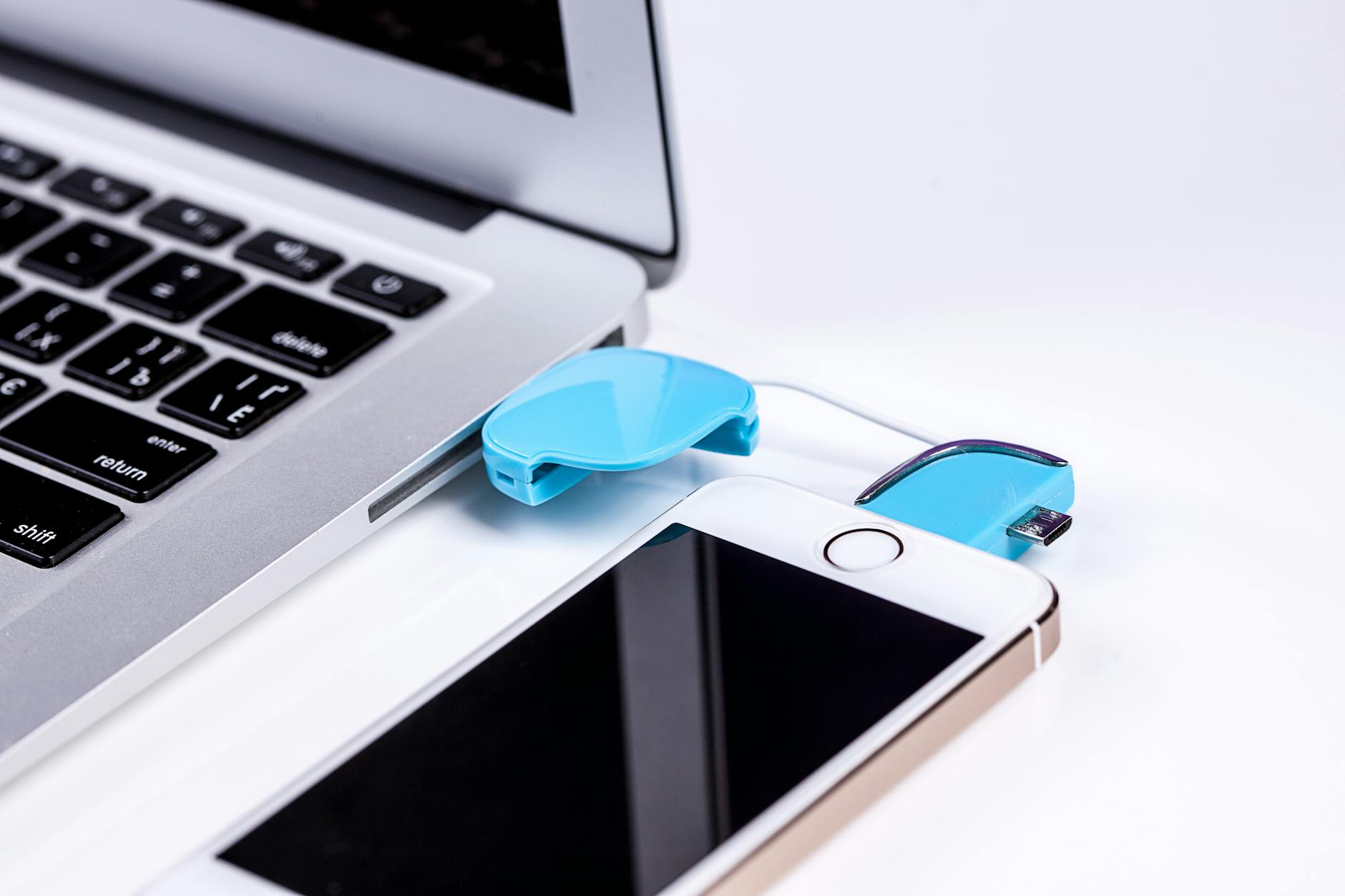
Photo by Pixabay: https://www.pexels.com/@pixabay
Set the correct transfer mode on the phone
A phone can be connected but not show up if it’s in a charging only mode or a mode that restricts data transfer.
- Android devices usually require a file transfer mode. When you connect, pull down the notification shade and look for a USB option. Choose File Transfer (MTP) or a similar data transfer option.
- iPhones typically show a prompt to trust the computer. If you don’t see a prompt, unplug and plug in again, then unlock the phone and confirm the trust request on the device.
- Some devices offer a mixed mode, such as “Charge this device only” or “Transfer files.” Always pick the file transfer option to enable data access.
If the phone was connected but the PC didn’t see the drive, this setting is often the culprit. After selecting the proper mode, retry the connection. If it still fails, it’s time to check drivers and disk management.
Update or reinstall Windows drivers
Windows relies on drivers to recognize external devices. Outdated or corrupted drivers can prevent the phone from appearing as a drive.
- Open Device Manager. You can do this by right-clicking the Start button and selecting Device Manager, or by typing device manager in the search box.
- Look under “Portable Devices” or “Universal Serial Bus controllers.” Find your phone or the generic USB device, right-click, and choose Update Driver. Pick “Search automatically for updated driver software.”
- If updating doesn’t help, try uninstalling the device. Right-click the device and choose Uninstall. Then unplug the phone and reconnect it. Windows should reinstall the correct driver automatically.
- Check for Windows updates. An OS update can include improved drivers for external devices, which helps with recognition.
- After any driver changes, restart your PC and reconnect the phone. A fresh start prevents lingering conflicts.
If the device still isn’t recognized, the problem may lie with a specific USB controller or a hidden driver. In that case, moving to the Disk Management step often reveals more information about how Windows sees the device.
Check Disk Management for the connected device
Disk Management shows drives and devices that Windows sees, even if they don’t mount as a usual drive.
- Open Disk Management: press Windows key + X and select Disk Management, or run diskmgmt.msc.
- Look for your phone in the list of disks. It might appear as a removable device or under another label.
- If you see the device without a drive letter, right-click and choose Change Drive Letter and Paths. Add a drive letter, then confirm.
- If the device appears but is not initialized, right-click and choose Initialize Disk, then create a new simple volume and assign a letter.
- If the device shows as offline or has errors, you may need to update or reinstall its driver again, or consider a different USB port or cable.
Disk Management helps you confirm whether Windows is seeing the phone at all and what kind of storage it is exposing. This insight is crucial when standard file explorers fail to show any drive.
Troubleshoot common culprits beyond drivers
Some issues aren’t about drivers or settings. They’re environmental or hardware related.
- The cable is a charging cable only. This is common with aftermarket cables that look the same but don’t carry data. Try a known good data cable.
- USB ports are worn or dirty. Dust or lint can block the data pins. Inspect ports, then gently clean with compressed air if needed.
- The USB mode is not available on the device. Some phones hide the data transfer option in the developer options or require a setting to be toggled. If you can access the developer options, ensure that USB debugging is off unless you intend to use it.
- Power-saving settings interfere with USB activity. On Windows, USB selective suspend can put a device to sleep. Go to Control Panel > Power Options > Change plan settings > Change advanced power settings, then disable USB selective suspend.
- A faulty PC driver stack. If updates don’t help, you can try a clean boot to rule out software conflicts. Disable startup programs and non essential services, then reconnect the phone.
These checks often uncover the root cause when the usual driver updates do not.
Try alternative methods to access your files
If you still can’t get the phone to show up as a drive, there are fallback options that still get you access to your data.
- Use cloud storage as a temporary measure. Upload photos or documents from your phone to a cloud service, then download them on your PC.
- Transfer via wireless options. Many phones support Bluetooth file transfers or Wi Fi Direct. This can be slower and less convenient but works in a pinch.
- Use a card reader. If your phone uses a microSD card, remove the card and insert it into a reader connected to your PC. This bypasses the need for a USB connection entirely.
- Access through a backup app. Some phones offer companion apps that save files directly to a PC over the same network. This approach can simplify later access.
These alternatives minimize downtime while you work on diagnosing and fixing the underlying USB problem.
When to seek professional help
If the phone still fails to appear as a drive after trying the steps above, you may be facing a hardware issue or a deeper software problem.
- The phone’s USB port may be physically damaged. A port problem can prevent reliable data transfer and often requires service.
- The PC’s motherboard or USB controller could be failing. If other devices struggle to connect, it’s wise to test with another computer to isolate the issue.
- There could be a firmware issue with the phone. In some cases, a factory reset or firmware reflash is needed, but this should be a last resort after backing up data.
A professional repair service or a trusted tech support line can help you determine the best next move without risking data loss.
Quick takeaways for a reliable connection
- Always use a data transfer cable and a direct USB port on the PC.
- Ensure the phone is unlocked and set to File Transfer or MTP.
- Update or reinstall Windows drivers, then verify in Disk Management.
- Disable USB selective suspend if you see sporadic connections.
- Consider backup options and alternative transfer methods for resilience.
These practices reduce downtime and make file transfers smoother for both Android and iPhone users.
Conclusion
A phone not showing up as a drive on PC is usually a sign of a simple mismatch in cable, port, or transfer mode. Start with the basics, confirm the phone’s mode for data transfer, and then check Windows drivers and Disk Management. If the issue persists, try a different cable or port, inspect ports for debris, and test the setup on another computer to pinpoint the cause. With these steps, you’ll regain quick access to your files and keep your workflow steady. If you have a success story or a stubborn case, share it in the comments to help others troubleshoot faster.
Remember, while the path to a fix can vary, the steps above cover most common scenarios. Your smartphone connection shouldn’t be a bottleneck. With a little persistence, you’ll have a reliable setup that makes file transfers painless.