Set Different Alert Sounds for Every App (iOS & Android Guide)
You probably feel it, that constant barrage of pings, buzzes, and chirps coming from your smartphone. Each little alert demands attention, stealing your focus whether you’re working, relaxing, or driving. You don’t want to miss important messages, but you desperately need some quiet time.
The solution isn’t turning the sound completely off; that just leads to missing crucial calls or texts. What you really want is control, the ability to train each app how and when it can interrupt you. This post shows you exactly how to set different alert tones and vibrations for different applications.
Reclaiming your peace starts with setting up custom alerts. We’ll walk you through the steps for both major operating systems, covering everything from simple sound changes to complex vibration patterns. This guide helps you tailor your phone’s behavior to match your life, not the other way around.
Looking ahead, the way our smartphone communicates with us is changing rapidly. Devices coming soon promise even deeper, context-aware customization, letting your phone sort out noise before it even reaches you. Let’s get your current device tuned perfectly first.
Understanding Why Custom Notification Tones Matter
Your smartphone brings you endless information, but that constant digital noise can wear you down. When every application uses the exact same sound—the same “ding” or “trill”—your brain gets overloaded. It treats every incoming alert as equally important. Mastering your phone’s alert system isn’t just a fun tinkering project; it’s a genuine way to reduce cognitive load and regain focus throughout your day. By assigning unique sounds, vibrations, and visual styles, you create a quick-reference guide for your brain, allowing you to instantly prioritize what requires your attention now and what can wait.
The Difference Between Tone, Vibration, and Alert Style
Every notification on your device is actually composed of three distinct sensory inputs we can modify. Understanding these components is the first step toward effective customization.
First, there is the tone. This is the audible alert, the sound your phone plays. You can assign a unique ringtone or alert sound to specific apps or contacts using your system settings.
Second, we have the physical sensation, often called haptic feedback or vibration. Unlike the sharp, generic buzzes of older hardware, modern smartphones now offer highly detailed vibration patterns. These patterns communicate information through touch alone. For instance, you might set a rhythmic tap for a text message and a sustained thrum for an unexpected meeting reminder.
Finally, there is the visual pop-up, the alert style. This dictates how the notification appears on your screen. Does it show up as a banner at the top, a full-screen takeover, or just update an icon badge? You can configure which style each application is allowed to use.
Many experts focus heavily on detailed haptic feedback because it often provides non-intrusive information. Future updates to operating systems appear to center more energy on these precise tactile alerts. Being able to differentiate between a spam call and a text from a family member based only on the feel of the vibration drastically improves your ability to ignore distractions without missing serious alerts.
How Personalized Alerts Reduce Digital Fatigue
Digital fatigue occurs when our minds are constantly cycling through low-priority interruptions. When your phone uses the same sound for a reminder to check your steps as it does for your boss sending an urgent document, two problems arise. Your attention is pulled away unnecessarily, and the important alert loses some of its impact because it blends in with the noise.
Custom tones are the antidote here. They create a personalized sound map for your smartphone experience, making every interruption instantly locatable within your attention hierarchy.
Think of it like organizing a busy office. If everyone in the building used the same doorbell sound, you’d constantly stop what you were doing just to check who was there. By assigning different sounds—a sharp whistle for the executive office, a soft chime for deliveries, and a gentle buzz for maintenance—your mind learns immediately whether to stand up and greet the visitor or let it ring.
Here is how tailoring these alerts helps reclaim your peace of mind:
- Instant Triage: A specific sound (like a distinct custom tone for your calendar) means instant categorization. You know immediately if the alert is a low-priority social media update or something time-sensitive.
- Reduced Visual Scanning: If you know the particular vibration pattern means your partner is calling, you don’t need to pull out your device or look at the screen. This saves time and breaks fewer concentration cycles.
- Setting Boundaries: By giving essential apps (like your primary messaging platform) a loud, recognized alert and giving lower-priority apps a silent or barely perceptible alert, you actively set boundaries on what is permitted to interrupt your focus time.
Research shows that even the mere presence of a smartphone can impact cognitive control, as our brains remain alert for potential notifications. By making notifications distinguishable and meaningful, we give our brains the necessary data to filter out the unimportant signals faster, leading to less exhaustion over time. This process teaches your smartphone to respect your focus better. For more context on how notifications impact attention, you might look into current studies on media psychology.
 Photo by Evan Mahmud Shuvo on Pexels.com
Setting Custom App Tones on Android Phones: A Step-by-Step Guide
Customizing alerts on your Android smartphone goes far beyond just choosing a default ringtone. While iOS often keeps sound settings locked down to the app level, Android offers much more sophisticated controls thanks to its flexible operating system design. We’re moving past simple “on” or “off” alerts here. This section focuses on how to use granular system controls to assign unique auditory and tactile feedback for different apps, ensuring that what interrupts you is always categorized instantly by your senses. Mastering these settings transforms your device from a constant demand-maker into a focused communication tool.
Mastering Notification Channels for Deep Customization
For modern Android users, the key to deep personalization lies within Notification Channels. Think of a single application, like your email client or a messaging service, not as one big notification source, but as a collection of several smaller, independent notification streams running inside it. Each stream, or channel, handles a specific type of alert from that app. This system gives you incredible power to differentiate between alerts coming from the same program.
For instance, consider a popular email app. You might receive many different kinds of messages every day. Without channels, they all sound the same. With channels, you can set them apart easily:
- Primary Inbox Channel: This is for vital emails from known contacts. You might set this channel to play a loud, distinct tone, like Star Trek pips, and vibrate strongly.
- Promotions/Newsletters Channel: These are things you read when you have downtime. You can assign this channel a very quiet, perhaps almost silent, tone, or even set its importance so it never makes a sound or wakes the screen. It just updates the icon badge.
- System Alerts Channel: This handles unusual account activity warnings. Maybe you give this channel a totally unique, non-repeating sound to grab immediate attention.
This granular control means you don’t have to silence the entire Gmail app just to ignore promotional emails. You manage the behavior of each internal communication stream directly from your system settings. This level of control is fantastic for streamlining how your device communicates with you, giving you better oversight over the alerts coming through your smartphone. For developers building apps, knowing how these channels work is important, as you can see how users can take control of the alerts they receive Create and manage notification channels – Android Developers.
To access these settings for a specific app, you usually long-press an incoming notification or go to Settings, then Apps, find the application, and look for “Notifications.” From there, you will see the list of active channels where you can adjust sound, vibration, and priority for each stream.
Creating Unique Vibration Patterns for Critical Contacts
While sound is effective, sometimes ringing alarms isn’t polite or practical. Maybe you are in a meeting or a quiet library, but you absolutely cannot miss a call or text from your child’s school or a key coworker. This is where custom vibration patterns shine. Android allows you to move beyond a simple on-off buzz and design bespoke tactile signals.
Creating a unique vibration signature is like teaching your hand a secret code. Instead of just knowing “my phone buzzed,” you learn, “that specific rhythm means X person.” This provides subtle but immediate context without needing visual or auditory confirmation.
Here is the general process flow to set up these unique shake signatures on most modern Android devices:
- Target the Source: Vibration customization is usually tied either to a specific Contact or to a specific Notification Channel within an app known for sending important alerts, like your primary texting application. If you are customizing for a contact, go into their contact card details.
- Locate Vibration Settings: Look for an option labeled “Vibration,” “Haptics,” or “Alert Style.” If you are in the contact details, you will often find separate settings for Ringtone and Vibration.
- Design the Pattern: Instead of selecting a pre-set vibration, look for an option like “Create custom vibration” or “Vibration Pattern.”
- Set Pulses and Pauses: You will interact with a simple timeline. When you tap the screen, the phone vibrates for the duration of your press. When you lift your finger, there’s a pause. You combine short taps and long presses with deliberate delays between them to form a rhythmic signature.
- A pattern of tap-long press-tap separated by short pauses might signify a family member.
- A rapid stutter-stutter-long buzz could be reserved only for work emergencies.
- Save and Apply: Once you’ve created the pattern, save it and assign it to that contact or notification channel.
This technique is incredibly powerful because system alerts, unlike notification sounds, are often handled consistently across the entire smartphone. A custom vibration programmed for a specific contact will override any default vibration the app might try to generate, giving you ultimate control over tactile feedback. This allows you to maintain focus in sensitive environments while keeping a physical connection to what truly matters.
Customizing Alerts Within the Apple iOS Ecosystem
While Android often gives users deep access to every setting, Apple’s iOS prioritizes a unified, secure experience. This means broad, system-level changes are powerful, but granular, per-app tone switching can require using specific system features. However, you can attain a surprisingly detailed level of control over your interruptions by using custom tones for contacts combined with the robust Focus Modes. Think of it as building layers of protection around your concentration. You aren’t just telling your smartphone to stop making noise; you are teaching it who gets to make noise when. By employing these built-in tools correctly, you can silence the background chatter while guaranteeing that truly urgent alerts cut through the silence using distinct sounds or recognized physical feedback.
Assigning Individual Sounds to Favorite Contacts on Your Device
Knowing exactly who is trying to reach you without even glancing at your screen is the pinnacle of notification management. On iOS, the most direct way to achieve this for direct communication channels like calls and texts is by setting unique tones within the Contacts application. This overrides whatever default alert sound the originating text message or call app might try to use. This feature lets you create a personal auditory key for the people who matter most.
You gain immediate context simply by hearing the alert. For example, a specific musical snippet or a familiar tone signals an incoming call from your partner, instantly prompting you to answer. Conversely, a generic, less attention-grabbing tone can handle alerts from less critical contacts or services. This system works reliably because contact-specific settings often take precedence over generic app settings for calls and Messages.
Here is how you personalize these alerts:
- Open the Contacts App: Locate and select the contact you wish to customize. It’s best paired with people who frequently initiate contact via call or text.
- Edit the Contact: Tap Edit in the upper-right corner of the contact screen.
- Locate Sound Options: Scroll down until you find the settings for Ringtone and Text Tone. These options usually sit just above the section where you add multiple phone numbers or emails.
- Select a Specific Tone: Tap Text Tone (or Ringtone, depending on what you want to customize). You can choose from pre-installed standard tones or select any custom tones you may have created using tools like GarageBand. If you want to use a unique piece of music, you might investigate how to create and save custom alert sounds for your device; this often requires specific software preparation to format the sound file correctly How To Set A Custom Notification Sound For A Contact On The iPhone (iOS 18).
- Save Changes: Click Done to lock in the unique tone for that individual.
Once implemented, if that person sends you a text, your device will play that specific tone, even if your main Messages app is set up for a completely different one. This stratification of sound is extremely effective for immediate triage when your smartphone is on silent mode generally, but you still need VIPs to get through.
Using Focus Modes to Silence or Prioritize App Groups
Focus Modes are Apple’s evolved answer to Do Not Disturb, offering far more sophisticated control over interruptions. While Focus Modes don’t assign unique sounds to every single app, they act as a powerful sound policy manager. They define which applications and which people are allowed to create noise at all during specific parts of your day. This is a crucial form of alert management because silencing the wrong apps is just as important as allowing the right ones to speak up.
Think of a Focus Mode as creating a temporary digital boundary around your activity—whether that activity is sleeping, driving, or intense coding. When a Focus Mode is active, the system automatically silences notifications from every app and contact not explicitly listed as an exception. This means you effectively assign a default “no sound” policy to most applications during that period.
You can customize two essential lists within any Focus Mode, which dictates how noise breaks through:
- Allowed People: This list creates an emergency pass. If someone on this list contacts you—via phone call, FaceTime, or a compatible messaging platform—the alert will sound or vibrate according to their individual settings, easily bypassing global silence. For instance, you can allow only your direct supervisor and spouse to break through your “Work Focus.”
- Allowed Apps: This list dictates which applications can break through the Focus Mode’s silence. If an app isn’t on this list, its notifications will arrive silently, showing up in the Notification Center later. For “Do Not Disturb,” you might only allow system alerts and text messages. For a “Fitness Focus,” you might allow your heart rate monitor app but nothing else.
This granular control over app groups prevents non-essential notifications from consuming your attention. Furthermore, newer iOS versions allow you to adjust the visual appearance of your Lock Screen based on the active Focus. This tells your brain, “I am currently in ‘Sleep Mode’,” reinforcing boundary setting. By strategically permitting only a handful of people and pre-approved applications to generate alerts, you create a highly prioritized sound policy that respects your current task. It transforms your smartphone from a passive recipient of all data into an active gatekeeper of your peace.
Advanced Techniques: Making Notifications Smarter, Not Louder
We’ve established that setting unique sounds for specific apps is already a huge step toward digital sanity. However, the next level of notification control involves context. Why should an alert from a stock portfolio app make the same noise at 3 PM on a Tuesday while you’re focused on a presentation as it should at 10 PM when you are clearly winding down? True notification mastery means making your device smart enough to know when it’s appropriate to interrupt you based on more than just the app sending the message. We need to integrate time and location awareness to create dynamic alert profiles that truly tailor the experience to your current activity. This shifts the burden from your brain constantly filtering noise to the smartphone doing the filtering automatically.
Leveraging Location and Time for Automatic Silence
Both major operating systems offer powerful tools that allow you to automate silence based on where you are or what time it is. This is where you build geofences or schedules that automatically apply custom alert policies. If you automate silence in the right places, you drastically reduce the number of necessary manual adjustments you have to make daily.
Consider the driving scenario. When your smartphone detects you are in motion or navigating, common sense dictates that scrolling through social media updates can wait. However, you cannot afford to miss an alert from your navigation system or an emergency call. Automations allow you to set a rule: When driving, prioritize navigation alerts and emergency calls, and mute everything else.
- Location-Based Silencing: You can set up a rule that triggers when your phone detects it has arrived at a known location. For example, when you enter your office building, the phone can automatically switch to a “Work Focus.” In this mode, all notifications from entertainment apps, shopping lists, and games are silenced completely, perhaps only allowing visual cues. When you leave that location boundary, the phone reverts to its standard, all-alert settings.
- Time-Based Schedules: These are excellent for predictable routines like sleeping or dedicated focus blocks. You set a schedule, perhaps from 10:00 PM to 7:00 AM, where the phone enters a deep Do Not Disturb state. The key here is setting exceptions. You can whitelist specific contacts (like family members) or specific channels (like alarms) to break through the scheduled silence. This system lets your smartphone enforce your downtime automatically.
These location and schedule tools, found within iOS Focus Modes and Android’s Rules or Digital Wellbeing settings, make your phone contextually aware. You give it the map and the timetable, and it manages the noise level without you lifting a finger.
Using Visual Cues Instead of Sound Alerts
Sound alerts are powerful, but they are also inherently disruptive to shared spaces or periods requiring deep concentration. If a notification isn’t urgent enough to warrant an audible interruption, it should still be noticeable enough that you can catch it later without scrambling through an inbox. The answer lies in maximizing visual feedback while minimizing auditory input. This means turning sound off for specific apps and relying on their presentation style to convey importance.
You communicate clearly with your eyes, not always with your ears. For apps that send frequent, low-priority updates—think news feeds or package tracking—muting the sound entirely is appropriate. You need a visual system that ensures you don’t miss updates when you glance down.
There are several ways to enhance purely visual notifications:
- Banner Style Adjustments: On iOS, decide if an app displays notifications as brief Banners (which disappear quickly) or as persistent Alerts (which require dismissal). For minor apps, use the brief banner, or even better, disable the banner entirely so the alert only shows up on the Lock Screen or in the Notification Center.
- Always-On Display Icons: If your phone has an always-on display feature, configure it to show only a subtle, monochrome icon for less important apps. This gentle visual reminder takes minimal cognitive energy to process. In contrast, mission-critical apps can be set to flash a dynamic, richly colored icon or briefly illuminate the entire screen border when a notification arrives, even if no sound plays.
- Badge Customization: For apps where you just want to track volume (like an email client tallying new messages), ensure the app icon shows a count badge, but the app is otherwise silenced. Looking at the badge gives you the data point without the jolt of a sound.
By shifting crucial alerts to visual dominance, you train yourself to only look when the alert style is significant enough to warrant your attention. This is especially useful for apps where sound is unnecessary overhead, like many productivity tools that just need to update a status bar icon.
Incorporating Custom Vibration Textures and Haptics
If sound is the loud voice of an alert, and visual appearance is the face, then haptics are the handshake. Modern smartphones utilize advanced haptic engines that produce a wide range of tactile sensations far beyond the simple, uniform buzz of past devices. This tactile information is perhaps the most intimate and non-intrusive way to customize alerts for your smartphone.
Many users find they can distinguish complex patterns by touch faster and more reliably than by sound when they are in noisy environments or need silent confirmation. The feel of the vibration communicates context instantly.
We can move past generic buzzing by programming specific textures for different alert types. You assign meaning through rhythm and intensity:
- The Crisp Tap: Reserve a short, sharp, high-frequency vibration for alerts that require immediate, precise action, such as a bank or two-factor authentication alert. This feels like a firm tap on the back of your hand.
- The Bubbly Pulse: A longer, lower-frequency vibration that rolls gently might signify lower-priority updates, like social media engagement or a game achievement. This feels less demanding and allows you to gauge importance based on the lack of sharpness.
- The Double Thump: A signature pattern, perhaps two quick, distinct bumps, can be reserved solely for your primary messaging application. This gives you tactile confirmation that a new message has arrived without requiring you to look away from your current task.
Because haptics don’t create noise pollution, you can use complex, unique patterns assigned to priority contacts or specific alert channels on your smartphone. This allows you to receive highly targeted feedback in meetings, movie theaters, or in bed, knowing exactly who or what is trying to get your attention based solely on the feel in your pocket or on your desk.
Troubleshooting Common Tone Customization Issues
You’ve set your unique tones, tailored your vibrations, and perhaps even organized your Focus Modes, but still, an unwanted, generic sound cuts through the quiet. This frustrating experience means that despite your best efforts, something is interfering with your carefully constructed alert hierarchy. Modern smartphone software is complex, and occasionally, an application decides it knows better than you do about when to interrupt your focus. Troubleshooting these overrides requires you to look deeper than the standard settings menus. We need to investigate the app’s internal logic and system power management settings to see where your intended silence is being broken. Identifying the source of the breach is the only way to restore the customized peace you deserve.
When the System Setting Doesn’t Stick: Checking App Permissions
It’s infuriating when you meticulously set a quiet alert for an app in your primary system settings, only to be jolted awake by its default loud sound an hour later. This usually signals that the application itself has an internal notification manager that is overriding your phone’s general instructions. Think of it like setting a universal office quiet policy, but one specific department insists on using its own internal intercom system regardless of the policy sign on the door.
Many popular applications, especially messaging platforms, large social networks, and complex email clients, manage their alerts independently from the operating system’s main dashboard. When this happens, the app ignores the system tone and plays whatever sound is configured within its own menu. To fix this, you must bypass the outer layer of control and check directly within the application’s settings.
Here are the key areas to check inside the troublesome app:
- In-App Notification Settings: Open the specific app causing the issue. Navigate to its primary settings menu (often represented by a gear icon or your profile picture). Look for settings labeled Notifications, Alerts, or Sounds. You must confirm that this internal setting is either set to system default or set to the specific quiet tone you intended.
- Priority Level Configuration: Many apps use an internal urgency scale. Check if the app has categorized the type of notification you are receiving (e.g., a direct message versus a group chat mention) and ensure that the highest priority level isn’t accidentally linked to the loudest sound.
- Third-Party Integrations: If the app integrates with other services (like linking your social media to a productivity dashboard), check the notification settings on the third-party service as well. Sometimes the override originates one layer removed from the app actually displaying the alert.
If you find the application’s internal controls, you gain the upper hand. Always prioritize the app’s internal configuration if it conflicts with the main smartphone settings, as the app’s settings usually execute first before the system enforces its rules.
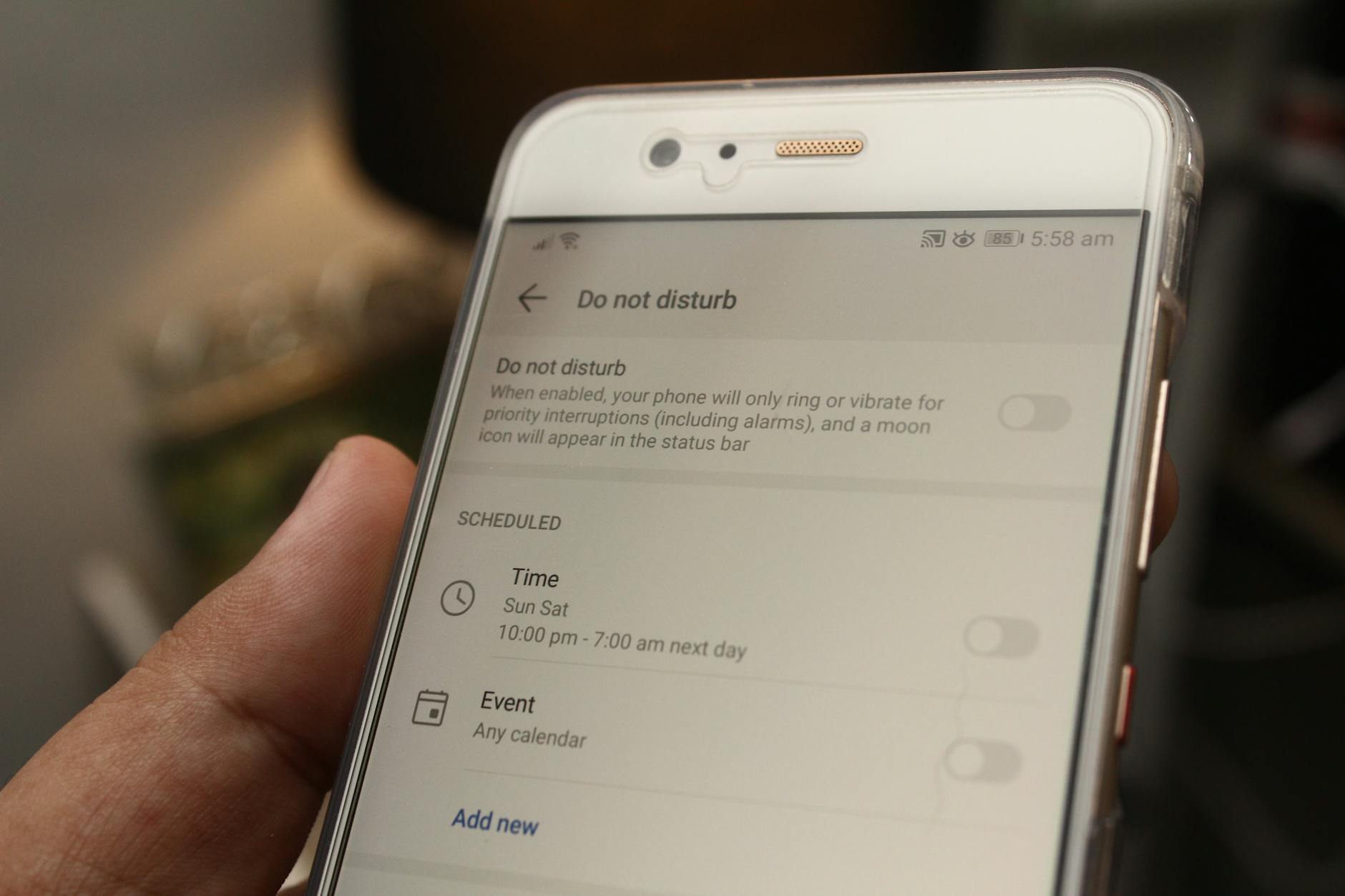 Photo by Daniel Moises Magulado
The Unexpected Role of Battery Savers and Low Power Mode
When struggling with inconsistent alerts, many users overlook the power management features built into their smartphone. Aggressive battery-saving modes or Low Power Mode aren’t just designed to conserve battery life; they often achieve this by limiting background processes severely. These limitations can inadvertently create notification timing issues, especially when you’ve customized complex features.
When your device detects low battery or you manually activate an economy mode, it might throttle the system resources dedicated to alerts. This means that even if you set a unique, specific sound, the system might delay playing that sound until it can process it adequately, or it might suppress sophisticated feedback methods like complex vibration patterns entirely. The result is a delayed, generic notification sound, or sometimes, no sound at all until you unlock the screen.
To make exceptions for your high-priority apps, you need to manage their exceptions within these power-saving features:
- Whitelist Priority Apps: On both operating systems, you can often specify which apps are exempt from background restrictions imposed by battery savers. Locate the battery usage settings and find the list of apps allowed to run freely in the background. Add any application that requires timely, custom alerts here.
- Checking Low Power Mode Exceptions (iOS): If you use Low Power Mode on iOS, check the Focus settings it might be linked to; some modes actively restrict background refresh and timely alerts. Ensure your critical communication apps aren’t accidentally throttled when this mode is active.
- Adaptive Battery Behavior (Android): Android’s Adaptive Battery learns your usage patterns. If you frequently keep a specific messaging app open and responsive, the system should learn that. However, if you rarely use it, the system might heavily restrict its immediate access, causing delays in custom alert delivery. You may need to manually override this “learning” behavior for essential services.
Keeping these power-saving tools informed about your alert priorities prevents them from treating time-sensitive, customized notifications the same way they treat a background process refreshing a sports score. A timely alert is often worth a few extra percentage points of battery life.
Conclusion
You’ve learned that mastering your notification sounds and vibrations is about more than tech tinkering; it’s a direct path to improving your focus and mental peace. By assigning distinct auditory and tactile signatures, you teach your brain to instantly triage interruptions. This personalized alert system transforms your phone from a source of constant demand into a responsive communication tool. The ability to isolate noise from necessity gives you back valuable attention spans. Take action this week by choosing the three apps that cause you the most distraction, perhaps a group chat, a frequent news source, and a social media platform, and customize their alerts immediately. Reclaiming control over your smartphone experience is one profound way to manage your daily well-being.