He Was Drowning in Bills and Burnout Until a Simple Daily Ritual Rewired His Brain for Wealth in Less Than a Week
>>> Start Your Shift Today <<<

You’ve connected your Bluetooth mouse or keyboard to your phone for faster typing in messages or smoother navigation on maps. But Bluetooth lag hits, making every click or keystroke feel delayed, especially during games or work. This happens on smartphones from WiFi interference on the 2.4GHz band, extra connected devices like headphones, or crowded signals.
Don’t worry. Most fixes take under a minute and work on Android or iPhone without risk. You’ll get quick wins like toggling Bluetooth or switching WiFi bands, plus a few longer steps if needed. Follow these safe, actionable tips to restore smooth control on your smartphone.
Quick fixes that solve most Bluetooth lag on phones
When your phone’s Bluetooth lag drags on, the cursor or keystrokes feel delayed and frustrating. The good news is that most lag sources are simple to fix. These quick corrections work whether you’re on Android or iPhone and can dramatically restore the feel of a seamless connection between your phone, a mouse, and a keyboard. Below you’ll find practical steps you can implement in minutes, plus a quick test to confirm the improvement.
Check batteries and proximity
Low power in a Bluetooth device can slow input and introduce noticeable delays. If the mouse or keyboard is almost out of juice, you’ll see sluggish pointer movement or key repeats. Swap in fresh batteries or fully charge the device if it’s rechargeable. Keeping the device close to your phone matters too. For the best signal, stay within about 1 meter (3 feet).
He Was Drowning in Bills and Burnout Until a Simple Daily Ritual Rewired His Brain for Wealth in Less Than a Week
>>> Start Your Shift Today <<<
- Quick checklist
- Replace batteries or recharge now
- Confirm the device shows full power on its indicator light
- Move within 1 meter of the phone
- Remove any obvious physical barriers between devices
- Re-test input by typing a short message or scrolling a document
Insert an image that illustrates a clean, minimalist workspace with a phone, keyboard, and mouse on a desk to visually reinforce this section.
Photo by Ionela Mat on Pexels. https://www.pexels.com/@ionela-mat-268382825
- Credit: Photo by Ionela Mat
Clear interference and refresh the connection
Bluetooth interference is a common culprit in lag. Crowded airwaves in the 2.4 GHz band can cause delays and dropouts. Reducing nearby noise helps restore smooth input. Start by turning off nearby Bluetooth devices that aren’t in use, and switch off any gadgets that rely on Bluetooth during testing. This creates a clean test environment so you can see how much lag drops when the signal isn’t crowded.
- Steps to refresh the connection
- Put your mouse and keyboard in pairing mode again
- On Android: forget the device and re-pair
- On iPhone: forget the device and re-pair
- Test with only the essential device connected
- If problems persist, repeat the process after a short restart of the phone
How to forget and reconnect on Android
- Open Settings > Bluetooth
- Tap the gear icon next to the device name
- Tap “Unpair” or “Forget”
- Turn Bluetooth off, then back on
- Put the device back in pairing mode and select it from the list to reconnect
How to forget and reconnect on iPhone
- Open Settings > Bluetooth
- Tap the “i” icon next to the device
- Tap “Forget This Device” and confirm
- Turn Bluetooth off, then back on
- Put the device back in pairing mode and select it to reconnect
For extra reliability, keep testing with a minimal set of peripherals. This approach makes it easier to confirm if interference is the true lag source. If you want deeper context, see how to fix Bluetooth problems on Android and related troubleshooting steps from reputable sources. https://support.google.com/android/answer/9769184?hl=en
Reconnect and test after a reset
Sometimes a fresh connection is all that’s needed. After removing a device and re-pairing, many users notice immediate improvements. Reconnect and then run a quick test to verify the fix. Try these quick tasks:
- Scroll through a document to check for smooth motion
- Type a short message to confirm keystrokes register immediately
- Play a lightweight, casual game or app that uses both mouse and keyboard inputs
- 5 to 10 minute test plan
- Use the mouse to navigate a few web pages
- Type a paragraph in a note app or chat
- Switch between apps to ensure consistent performance
People often report instant improvements after re-pairing. If lag remains, consider additional steps such as updating device firmware or checking for known compatibility issues. For Android users, you can review more detailed guidance on how to fix Bluetooth problems here. https://support.google.com/android/answer/9769184?hl=en
In addition, if you’re troubleshooting on an iPhone, you may find steps for managing Bluetooth devices there helpful. https://www.verizon.com/support/knowledge-base-207222/
Images can be placed here to illustrate a smooth re-pairing process, showing the sequence from unpair to re-pair. Photo by Ionela Mat on Pexels. https://www.pexels.com/@ionela-mat-268382825
Photo by Ionela Mat on Pexels. https://www.pexels.com/@ionela-mat-268382825
Takeaways
- A clean signal often hinges on battery power and proximity.
- Reducing nearby Bluetooth activity clarifies the airwaves.
- A quick unpair and re-pair can deliver an immediate boost for most users. If you want a deeper dive, Android and iPhone guidance sites offer step-by-step reminders for maintaining Bluetooth performance.
External references and further reading
- How to remove paired Bluetooth devices on Android: https://www.androidpolice.com/remove-bluetooth-devices-android/
- Apple iPhone Bluetooth management: https://discussions.apple.com/thread/2662570
- Fix Bluetooth problems on Android: https://support.google.com/android/answer/9769184?hl=en
Images
- A minimalist workspace with a phone, keyboard, and mouse on a wooden desk. Photo by Ionela Mat. https://www.pexels.com/photo/17198943/
Android fixes to minimize lag on the go
When you’re using a Bluetooth mouse or keyboard with your Android smartphone, lag can ruin a quick workflow or a mobile gaming session. These practical fixes are designed to be quick to apply and effective in real world scenarios. Try each step in sequence and test after every change to see what works best for your setup.
Use 5 GHz Wi Fi or test offline
The 2.4 GHz band often clashes with Bluetooth, which can introduce noticeable lag. If your router supports a 5 GHz network, switch devices over to that band to free up airwaves for Bluetooth. If you can’t switch networks, test lag with Wi Fi turned off to confirm whether the problem is interference rather than the peripherals themselves.
- How to switch to 5 GHz
- Access your router settings and enable the 5 GHz band if it isn’t already active.
- Connect your phone and any relevant devices to the 5 GHz network.
- Re-test Bluetooth input to check for improved responsiveness.
- Quick offline test
- Turn off Wi Fi on both phone and router or simply on the phone.
- Use only Bluetooth peripherals to see if latency drops.
- If lag disappears offline, you’re likely dealing with RF interference from the 2.4 GHz spectrum.
For a deeper dive on Bluetooth and Wi Fi interference and practical remedies, see guides from reputable sources that explain how to reduce cross‑talk between Bluetooth and Wi Fi.
There Is a Frequency That the Wealthiest Families Have Used for Generations and Most People Will Never Know It Exists
>>> Open the Door <<<

Relevant reading: Fix Bluetooth problems on Android and related troubleshooting steps could help you pinpoint the root cause. https://support.google.com/android/answer/9769184?hl=en
Restart Bluetooth and the device
A simple restart often clears stubborn lag and resets the radio stack so input feels snappier. It’s fast and safe, and it works across most Android devices.
- Simple sequence
- Settings > Connected devices > Bluetooth
- Toggle Bluetooth off, wait a few seconds, then toggle it back on
- If lag persists, reboot the phone and repeat
This quick cycle clears stale connections and reestablishes clean pairing with your mouse and keyboard. It’s a reliable first step when you notice delays during use.
Update firmware and OS
Keeping software current is a reliable way to reduce lag. Official updates often include Bluetooth fixes or performance tweaks that improve peripheral stability.
- What to check
- Check for Android OS updates and install them.
- Open the peripheral’s companion app and look for any firmware updates.
- Apply updates to both the phone and the mouse/keyboard firmware if available.
- Why it helps
- New firmware can optimize Bluetooth codecs, connection handshakes, or power management.
- Updated OS drivers can improve compatibility with newer peripherals.
If you’re curious about how firmware updates are delivered to devices, see peripheral firmware update guides from reputable sources. For example, fwupd and other firmware update guides illustrate how updates are applied across devices.
Helpful reference on Android and peripheral updates: Peripheral Firmware Update via fwupd (Chrome OS context) and related firmware channels can guide your approach. https://developers.google.com/chromeos/peripherals/fwupd-guide-for-peripherals
Adjust power saving settings for Bluetooth
Bluetooth power saving can throttle performance in the name of battery life. Turning off certain power saving features can stabilize the signal during active use.
- Where to look
- If your device exposes Developer options, you may find Bluetooth power saving toggles there.
- If available, disable Bluetooth power saving to maintain a steadier connection during mouse and keyboard use.
- What to expect
- You’ll often notice less jitter and more consistent input during long typing sessions or rapid cursor movements.
If you’re exploring related settings, you may encounter guides that cover Bluetooth behavior in Android more broadly. For context, you can review general Bluetooth troubleshooting tips that include power saving adjustments and related options.
Want more context on Bluetooth lag and power savings? See how to fix Bluetooth lag with Android resources and developer options references for guidance. https://www.headphonesty.com/2024/12/fix-bluetooth-sound-delay-android/
Takeaways for this section
- Switching to the 5 GHz band can dramatically reduce interference.
- A quick restart often clears stubborn lag you didn’t realize was software related.
- Keeping OS and peripheral firmware up to date yields tangible improvements.
- Turning off Bluetooth power saving helps maintain a steady signal during active use.
External references and further reading
- Fix Bluetooth problems on Android: https://support.google.com/android/answer/9769184
- Android Police: 9 simple ways to reduce Bluetooth lag: https://www.androidpolice.com/ways-to-reduce-bluetooth-lag/
Images and visuals
- Consider a clean, minimal shot of a phone with a keyboard and mouse on a desk to reinforce the practical, on‑the‑go nature of these fixes.
iPhone fixes for smoother Bluetooth input
When your iPhone uses a Bluetooth mouse or keyboard, lag can ruin your workflow or gaming session. The fixes below are practical, fast, and safe to try. They focus on reducing interference, refreshing connections, and keeping software up to date so input feels as responsive as possible.
Reset Bluetooth module and re pair
If Bluetooth seems stubbornly laggy, a quick reset can clear out stale connections and reset signal behavior. Forget the device in Settings > Bluetooth, restart the iPhone, then re pair. This simple step often clears stubborn lag and is safe to try.
- How to reset and re pair on iPhone
- Open Settings > Bluetooth
- Tap the “i” next to the device and choose Forget This Device
- Restart your iPhone
- Put the device back in pairing mode and reconnect from the Bluetooth list
A fresh pairing can reclaim a clean radio path, and many users notice immediate improvements. If you want a broader context on Bluetooth troubleshooting, you can explore guides that cover both iPhone and Android scenarios, such as how to fix Bluetooth problems on Android and related steps.
Visual context: a clean, minimalist setup with a phone, keyboard, and mouse on a desk can reinforce the idea of a fresh start after a reset.
- Image:
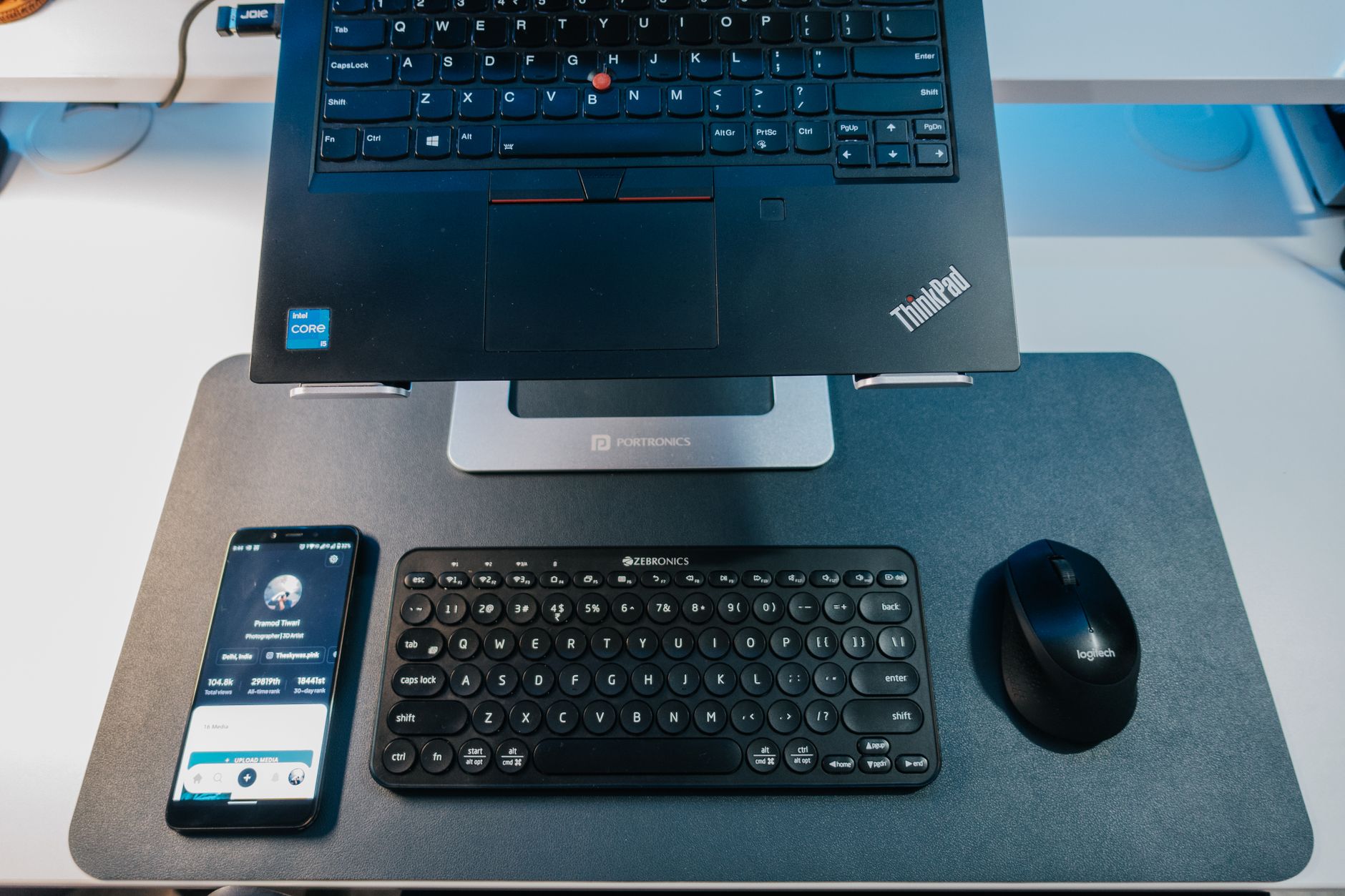
- Photo credit: Photo by Pramod Tiwari
Move to a clear wireless environment and use 5 GHz router if needed
A clean airspace helps Bluetooth stay responsive. If your router supports a 5 GHz band, connect your iPhone and relevant devices there. This reduces interference from other 2.4 GHz gear and lets Bluetooth operate in a less crowded spectrum. If you can’t switch networks, test Bluetooth lag with WiFi turned off to confirm whether the problem is interference rather than peripheral issues.
- How to optimize your setup
- Enable the 5 GHz band on the router and connect devices to it
- Keep the iPhone within a reasonable distance of the router to minimize RF clutter
- Re test Bluetooth input after switching bands
In some cases, turning off nearby Bluetooth devices during testing sheds light on whether interference is the culprit. For further context on Bluetooth and WiFi interference and practical remedies, refer to guides that explain how to reduce cross talk between Bluetooth and WiFi.
- External resource: How to fix Bluetooth problems on Android and related troubleshooting steps
- https://support.google.com/android/answer/9769184?hl=en
Check for updates and test with apps
Software updates often include Bluetooth fixes that improve peripheral stability. Install the latest iOS updates and test with a few different apps to verify the lag isn’t due to a particular app. Don’t forget to keep the peripheral firmware current as well.
- What to do
- Update iOS to the latest version
- Check the keyboard and mouse companion apps for firmware updates
- Update the firmware on the peripherals if available
- Test input across apps that use pointer and keyboard input
If you’re curious about broader guidance, you can review resources that cover both iPhone and Android Bluetooth performance. A reputable source on iPhone Bluetooth management can add helpful context.
- External resource: Apple Bluetooth device management guidance
- https://www.verizon.com/support/knowledge-base-207222/
Images can reinforce the idea of smooth re pairing or a refreshed setup. If you use an image here, ensure it visually aligns with a clean, updated environment.
- Image: Photo by Ionela Mat on Pexels
- https://www.pexels.com/@ionela-mat-268382825
- Credit: Photo by Ionela Mat
Test and monitor after updates
After updating iOS and peripherals, monitor performance with real tasks. Use the mouse to scroll, type in a note app, and switch between apps to gauge consistency. If lag returns, revisit the previous steps or consider deeper compatibility checks with your specific mouse or keyboard model.
She Pressed Play on a Strange Audio Track and Within Days Her Financial Reality Started Shifting in Ways She Could Not Explain
>>> See How It Works <<<

- Quick test plan
- Scroll a long document, type a short note, and open two apps simultaneously
- Check for jitter or delayed responses during rapid input
- If you notice improvements, keep this setup and avoid reintroducing unnecessary Bluetooth devices
If lag persists after updates, you can explore additional guidance for iPhone users facing broader Bluetooth issues. For example, discussions about Bluetooth lag and IPv6 can sometimes surface relevant troubleshooting paths.
- External reading: Bluetooth lag discussions and IPv6 considerations
- https://discussions.apple.com/thread/250688167
Takeaways
- A clean network environment and 5 GHz usage can markedly reduce interference.
- Regular updates to iOS and peripherals often yield tangible improvements.
- A systematic test approach helps pinpoint whether the lag is hardware or software driven.
External references and further reading
- How to fix Bluetooth problems on Android: https://support.google.com/android/answer/9769184
- Apple iPhone Bluetooth management: https://discussions.apple.com/thread/2662570
Images and visuals
- A minimal desk setup illustrating a tidy, modern workspace. Photo by Ionela Mat. https://www.pexels.com/photo/17198943/
Stock image note: The image below mirrors the clean, focused environment recommended for testing and improved Bluetooth input. Photo by Pramod Tiwari.
- Photo credit: Photo by Pramod Tiwari
When lag persists deeper troubleshooting
If you’ve ruled out the basics and the lag still grinds your workflow to a halt, it’s time to push deeper. Deeper troubleshooting focuses on underlying compatibility, signal integrity, and stubborn software interactions. The goal is to identify whether the problem lives in the phone, the peripherals, or the environment around them. Below are practical steps that go beyond the obvious checks, with clear actions and quick validations.
Update all software and firmware
Keeping every part of the setup current matters more than most users realize. Outdated OS, drivers, and peripheral firmware can create subtle compatibility issues that slow input or degrade responsiveness. Even small fixes in a new release can improve how a mouse or keyboard handshake with your phone.
What to do now
- Check the phone for the latest OS update and install it if available.
- Open each peripheral’s companion app and scan for firmware updates. Update if offered.
- Update any related companion software on the phone that manages Bluetooth devices.
- Reboot after updates and test with a minimal setup to confirm improvements.
Why this helps
- Firmware updates often optimize Bluetooth codecs, pairing handshakes, and power management.
- OS updates can bring better driver support and improved device arbitration in the Bluetooth stack.
Visual cue: a clean, minimalist workspace with a phone, keyboard, and mouse to reinforce progress after updating. Photo by Ionela Mat on Pexels. https://www.pexels.com/@ionela-mat-268382825
Further reading and context
- For Android users, see general guidance on fixing Bluetooth problems and how to update peripheral firmware.
- https://support.google.com/android/answer/9769184?hl=en
- Keychron’s Bluetooth firmware updates example shows how manufacturers distribute improvements to keyboards.
- https://www.keychron.com/pages/keychron-q-pro-series-bluetooth-firmware
- Apple devices benefit from Bluetooth management guidance when issues persist.
- https://support.apple.com/en-us/HT204759
Try different mouse or keyboard
A simple way to isolate the fault is to test with another Bluetooth input device. If lag follows the new device, the problem is likely with the original peripheral. If lag remains with a different device, the issue is more likely rooted in the phone or the environment.
What to do
- Borrow or test a second Bluetooth mouse or keyboard.
- Pair the new device and run the same set of actions you used to measure lag (scrolling, typing, app switching).
- Compare results to determine whether the original device is the bottleneck.
How to document the test
- Note response times and any jitter during the same tasks.
- If the second device feels snappier, consider replacing or repairing the original peripheral.
- If both devices show similar lag in the same scenario, revisit the environment and system settings.
In the broader troubleshooting landscape, look up guides on monitoring and reducing Bluetooth latency. A helpful reference discusses testing latency and comparing devices:
- How to test Mouse Latency + Keyboard Latency
- https://www.youtube.com/watch?v=lxscU5WjdxE
If you want to explore common latency cases and community-tested tips, you can review discussions on Windows and Bluetooth behavior as well:
- Fix Bluetooth problems in Windows
- https://support.microsoft.com/en-us/windows/fix-bluetooth-problems-in-windows-723e092f-03fa-858b-5c80-131ec3fba75c
Remove case or USB hubs to test
Physical surroundings can quietly sabotage signal quality. A bulky phone case, a My setup with a USB hub, or even a dense stack of accessories can create noise, reflections, or extra distance in the signal pathway. When you test without these, you can observe whether they’re contributing to lag.
What to do
- Take the phone out of its case for a quick test.
- Disconnect any USB hubs or accessory attachments that might be near the Bluetooth path.
- Re-establish pairing and run a short input test to compare with the baseline.
Why it matters
- Some cases are thick enough to slightly block or reflect the radio waves used by Bluetooth.
- USB hubs can generate electrical noise or create extra ground loops that perturb the radio path.
Example scenario
- You’re testing latency with a USB-C hub that powers a mouse and headset. After removing the hub, input becomes noticeably more responsive. If the hub was the culprit, you’ll see a consistent improvement during subsequent tests.
Real-world context and extra reading
- Bluetooth interference from nearby devices and how to minimize it is a common pain point. See practical guidance on avoiding interference from peripheral devices and USB interactions:
- How to Stop Bluetooth Interference With Other Devices
- https://www.goldtouch.com/stop-bluetooth-interference-messing-devices/
Additional reference on USB 3.0 interference with wireless signals:
- How to Deal with USB 3.0 Interference and Protect Your Devices
- https://acroname.com/blog/how-deal-usb-30-interference-and-protect-your-devices
Factory reset as a last resort
If all else fails, a factory reset can clear stubborn, low-level configuration issues that prior steps missed. This is the most disruptive option, so treat it as a last resort and back up everything important first.
What to do
- Back up important data on your phone to a trusted cloud service or computer.
- Perform a factory reset following your device’s official instructions.
- After the reset, set up your phone as a new device first, re-pair one peripheral at a time, and test regularly before restoring apps and data.
Important caveats
- A factory reset wipes settings and app configurations, not your personal data in all cases, but you should confirm backups.
- This step should only be attempted if you cannot resolve lag with firmware updates, environment changes, and device swaps.
If you want to compare notes with others who have tried a reset, you can explore discussions and guidance from Apple and Android communities:
- Factory reset all Apple-connected devices
- https://discussions.apple.com/thread/253328161
- iPhone Bluetooth management and reset guidance
- https://apple.stackexchange.com/questions/333653/iphone-wont-stop-connecting-to-bluetooth-interferes-with-mouse
When you’re ready, re-pair devices after the reset and test the same tasks you used earlier. A clean slate often reveals whether the lag was a software setting or a deeper hardware compatibility issue.
Final takeaways for deeper troubleshooting
- Software and firmware updates are a low-risk, high-reward path to improve Bluetooth stability.
- Testing with a different mouse or keyboard helps isolate device-level problems.
- Removing accessories and simplifying the setup can reveal interference sources you might have missed.
- Use a factory reset only after all other options have been exhausted and you’ve backed up important data.
Images
- A sleek workspace with a phone, keyboard, and mouse on a desk to reinforce the idea of a refreshed setup after deep testing.
- Photo by Skylar Kang on Pexels
- https://images.pexels.com/photos/6044823/pexels-photo-6044823.jpeg?auto=compress&cs=tinysrgb&dpr=2&h=650&w=940
Notes and further reading
- For broader Bluetooth troubleshooting, Android and iPhone resources provide step-by-step reminders and checks:
- Android Bluetooth issues guidance: https://support.google.com/android/answer/9769184
- Apple Bluetooth management and interference guidance: https://www.verizon.com/support/knowledge-base-207222/
Pro tips to prevent Bluetooth lag in the future
Even after you fix the immediate lag, a few steady habits keep your phone’s Bluetooth experience reliable next time you grab a mouse or keyboard. These practical tips focus on clean signals, stable connections, and ongoing maintenance. Think of it as tuning your wireless setup so you can type, click, and scroll with confidence, every time.
Regular maintenance and battery checks
Sustained performance starts with healthy batteries and up-to-date software. When devices run low on power, Bluetooth input can feel sluggish and unresponsive. Keep a habit of charging keyboards and mice regularly, and carry a spare battery if your peripherals use replaceables. A device that’s consistently near full power also participates in a stronger, steadier connection with your phone.
- Practical steps
- Monitor battery indicators before marathon typing sessions.
- Replace or recharge promptly when the indicator shows lower power.
- Keep a small spare battery on hand for devices that use removable cells.
- Schedule periodic firmware and OS checks to capture small fixes before they impact performance.
- Test regularly after updates to verify lag isn’t creeping back.
Why it helps: well-charged peripherals emit stable signals and maintain steady radio performance, which translates to smoother cursor movement and keystrokes on your phone. A tidy routine reduces surprises during important tasks.
- Quick, repeatable routine
- In a quiet moment, swap in fresh batteries or fully charge devices.
- Confirm device power levels are solid.
- Place devices within a comfortable range of your phone.
- Run a short input test in a messaging app or note app.
Tip: keep track of firmware updates for your peripherals through their companion apps. Firmware updates often include power management improvements that extend battery life and reduce lag over time.
- Visual cue: minimal workspace with a phone, keyboard, and mouse on a desk reinforces the idea of consistent power and proximity.
- Photo: A minimalist desk scene (credit: Ionela Mat) https://www.pexels.com/@ionela-mat-268382825
Manage interference and environment
A crowded radio air can make even good peripherals feel slow. When you test in a calmer environment, you can see whether interference is the real culprit. Keep the testing area clear of extra Bluetooth devices and move the phone to a stable surface away from strong Wi Fi sources.
- What to do
- Turn off nearby Bluetooth gadgets you aren’t using during tests.
- If possible, relocate tests away from routers and devices that broadcast on the 2.4 GHz band.
- Use a single Bluetooth peripheral at a time for the cleanest signal path.
- When testing, place the phone on a stable surface to minimize incidental motion and signal noise.
- Quick testing routine
- After each change, test with one peripheral at a time.
- Note whether lag drops and how stable the input feels across tasks like typing and scrolling.
- If interference persists, try a different room or temporarily disable other 2.4 GHz devices.
- Related guidance
- For broader context on managing Bluetooth interference, see practical tips from reputable sources on reducing cross‑talk between Bluetooth and Wi Fi. The Google Android help article offers a solid foundation on pairing and interference checks.
- External reference: https://support.google.com/android/answer/9769184?hl=en
- Visual context
- A tidy desk with a phone, mouse, and keyboard positioned for testing helps readers picture the setup.
Choose compatible peripherals and keep firmware updated
Peripherals that work well with smartphones reduce the chance of lag. Favor devices with strong compatibility records and robust companion apps. Keeping both the phone and the peripherals updated minimizes known issues and improves reliability.
- How to choose wisely
- Look for devices with good smartphone support and recent firmware histories.
- Prefer peripherals from reputable brands that publish clear update notes.
- Check user reviews for reports of long-term stability with phones.
- Why updates matter
- Firmware updates refine Bluetooth codecs, pairing handshakes, and power management.
- OS updates bring improved drivers and better device arbitration in the Bluetooth stack.
- Actionable steps
- Check the phone for the latest OS update.
- Open each peripheral’s companion app and search for firmware updates.
- Apply updates to both the phone and the peripherals when available.
- Reboot after updates and re-test with a minimal device set.
- External reading and context
- Peripheral firmware updates and how updates are delivered can vary by brand. For example, guidance on firmware vs driver updates can help you plan your upgrade path.
- Reference: Peripheral Firmware Update via fwupd and related guides provide a conceptual map for keeping devices current.
- Visual cue
- Consider a simple image showing a phone with a keyboard and mouse in a refreshed setup after updating.
- Photo credit: Ionela Mat (Pexels) https://www.pexels.com/@ionela-mat-268382825
Quick test routine to confirm improvements
Finally, verify that the changes genuinely reduced lag. A repeatable, easy-to-do test plan ensures you don’t guess about performance.
- Baseline tasks
- Type a short message in a chat or note app.
- Scroll through a document to test input fluidity.
- Switch between two apps that use keyboard and pointer input.
- 5 to 10 minute test plan
- Use the mouse to navigate several web pages.
- Type a paragraph and check for keystroke accuracy.
- Move through multiple apps to ensure consistent performance.
- What to look for
- No noticeable delay between a keystroke and on-screen input.
- Smooth scrolling without stutter.
- Consistent responsiveness across app switches.
- If lag returns
- Revisit earlier steps: check power, re-test in a cleaner environment, and consider updating firmware or OS.
- For Android users, you can revisit more detailed guidance on how to fix Bluetooth problems here. https://support.google.com/android/answer/9769184?hl=en
- For iPhone users, similar context can be found in Apple Bluetooth management guidance. https://www.verizon.com/support/knowledge-base-207222/
- Extra tips
- Keep a lightweight testing routine to catch drift early.
- Document the exact steps that yielded the best results so you can replicate them quickly next time.
Images
- A clean, minimalist workspace showing a phone, keyboard, and mouse to illustrate an optimized testing setup.
- Photo by Ionela Mat on Pexels: https://www.pexels.com/@ionela-mat-268382825
External references and further reading
- How to remove paired Bluetooth devices on Android: https://www.androidpolice.com/remove-bluetooth-devices-android/
- Apple iPhone Bluetooth management: https://discussions.apple.com/thread/2662570
- Fix Bluetooth problems on Android: https://support.google.com/android/answer/9769184?hl=en
Takeaways
- Regular maintenance and battery checks prevent a drop in performance.
- A calmer testing environment helps reveal true interference sources.
- Matching peripherals to smartphones and keeping firmware current yields long-term benefits.
- A simple, repeatable test routine validates real improvements.
Images and visuals
- A minimal desk setup reinforcing a refreshed, reliable Bluetooth testing environment.
- Photo by Ionela Mat on Pexels https://www.pexels.com/photo/17198943/
Conclusion
A quick, methodical approach fixes most Bluetooth lag on a smartphone. Start with fresh batteries, a clean signal, and a fresh pairing to see immediate gains, then move through firmware updates and environment adjustments if needed. Keep testing step by step and note which change made the biggest difference for your smartphone setup. If you found a solution, share your results in the comments to help others, and pass along any tips you discovered along the way.
What If the Only Thing Between You and the Life You Deserve Is a Hidden Wealth Code Waiting to Be Activated
>>> Open the Door <<<
