
Do Not Disturb and Focus mode promise quiet by silencing most alerts, but phones still slip up from time to time. This guide cuts through the noise and shows you how DND works on iPhone and Android, what to check first, and the fixes that actually work.
You’ll learn how DND handles calls, messages, alarms, and notifications in real world scenarios like calls from favorites, time based schedules, and waking alarms. We’ll cover quick checks you can perform, device specific tips, and common tricky cases that stump many users. By the end you’ll have a practical checklist to keep DND doing its job.
If you ever wonder why a notification or a call made it through while DND was on, you’ll know exactly where to look. This introduction sets up a straightforward path from understanding the problem to applying fixes and preventing future surprises, so you stay in control of your phone’s quiet hours.
Understand How Do Not Disturb Works on iPhone and Android
Do Not Disturb (DND) and its equivalents have evolved beyond a single switch. On iPhone, Apple replaced DND with Focus modes, letting you tailor who and what can break through during quiet hours. Android offers a similar concept but with Modes and a system of rules and exceptions. This section outlines how each system handles silencing, what can bypass it, and how to adjust settings quickly so you stay in control.
DND vs Focus on iPhone
The iPhone uses Focus modes as the umbrella feature that replaces the old Do Not Disturb label. Focus lets you create specific quiet hours for different contexts, such as work, personal time, sleep, or driving. Each Focus can be customized with its own set of allowed people and apps, so you’re not left in a black hole of missed alerts when you actually need them.
Key differences you should know:
- Focus is context sensitive. You can switch between Focus modes without turning off the entire device, which means you control what matters in each situation.
- Customization is granular. Choose who can contact you and which apps can interrupt you. You can also set auto-replies and home screen options to reduce distractions.
- Quick on/off access. You can toggle Focus from the Control Center or set up automation so Focus turns on at specific times or when you open a certain app.
What to expect when Focus is on:
- Calls and messages can be silenced or allowed based on your settings.
- Alarms still ring, so you won’t miss important wake-up times.
- Notifications from allowed people and apps come through; everything else is muted.
How to differentiate Focus modes and customize:
- Create multiple Focus profiles for different parts of your day.
- In each Focus, add allowed people (Favorites or all Contacts) and allowed apps.
- Use the “Time Sensitive” option for urgent notifications if you want them to come through while muted.
- Add automation to turn Focus on or off automatically at set times, locations, or app launch events.
Turning Focus off if unintentionally active:
- Open Control Center and tap the Focus icon to disable it quickly.
- If you suspect an automation flipped Focus on, review any automation or automation-enabled apps that might re-enable it, then adjust or disable those automations.
Switching between Focus modes quickly:
- Access Focus in Control Center by swiping down from the top-right (on iPhone with Face ID) or up from the bottom (on older models).
- Tap the Focus you want to use or set a convenient shortcut in Control Center for faster access.
- You can also assign Focus modes to specific times or locations so they turn on automatically.
For deeper setup details, see Apple’s guidance on how to set up and manage Focus on iPhone. Set up a Focus on iPhone and related how-tos offer step-by-step instructions and version-specific notes. Turn on or schedule a Focus on iPhone provides quick on/off guidance and scheduling options.
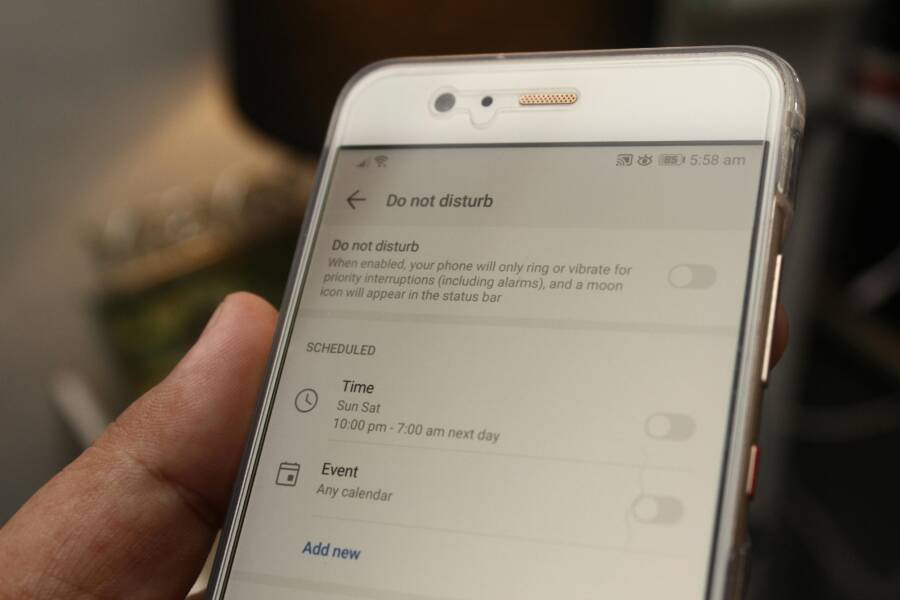
Photo by Daniel Moises Magulado on Pexels. Caption: Close-up of a smartphone screen showing Do Not Disturb and Focus settings.
Android DND and Its Exceptions
Android treats DND as a set of rules with built-in exceptions to keep the essentials flowing while you disconnect. The exact labels and layout can vary by brand, but the fundamental idea remains the same: silence most interruptions while allowing important calls, messages, and app alerts through when needed.
What “DND” means on Android:
- A central rule set controls interruptions by category: calls, messages, reminders, and apps.
- Exceptions determine who can reach you and which apps can bypass DND.
- You can tailor DND to fit different scenarios, from work to home to bedtime.
Brand differences you might notice:
- Samsung, Google Pixel, and OnePlus may call DND features by slightly different names or place them in different menus, but the underlying concept is the same.
- Each brand adds its own flavor of customization, such as more elaborate automation options or integration with their ecosystems.
How to decide who can reach you:
- Favorites: People you’ve marked as favorites can ring through even when DND is on.
- All contacts: Any saved contact can get through.
- Anyone: No restrictions for calls or messages, though you can still mute notifications from non-critical apps.
- You can also set exceptions for repeated calls or messages if you want a safety net for urgent matters.
Managing app notifications that bypass DND:
- Some apps can bypass DND by design, such as critical messaging services or alarm apps.
- Review which apps are allowed to interrupt you under DND and adjust as needed.
- If you find notifications slipping through, check per-app notification settings to reclassify or limit their priority.
Automation and routines to watch:
- Android often lets you automate DND with routines or automation apps. A routine might re-enable notifications when you arrive at a location or during a specific time window.
- Regularly review any active automations to ensure they aren’t re-enabling notifications unintentionally.
- If you rely on routines, consider adding a quick manual override to disable DND when you need quick access to all alerts.
Tip: To ensure a smooth experience, periodically review your DND rules after major OS updates or new app installs. Settings can drift as apps gain new notification permissions.
For broader guidance, Google’s article on limiting interruptions with Modes and Do Not Disturb on Android is a practical reference. It covers how to access DND from Quick Settings and how to turn interruptions on or off quickly. Limit interruptions with Modes & Do Not Disturb on Android and Pixel-specific guidance provide clear, actionable steps.
Photo by Daniel Moises Magulado on Pexels. Caption: A user adjusts Android DND settings on a smartphone screen.
Images credit: Photo by Daniel Moises Magulado, https://www.pexels.com/@daniel-moises-magulado-199841
Links and further reading:
- iPhone Focus setup overview: Set up a Focus on iPhone
- Quick Focus on/off and scheduling: Turn on or schedule a Focus on iPhone
- Android DND basics and modes: Limit interruptions with Modes & Do Not Disturb on Android
- Pixel-specific DND help: Limit interruptions with Modes & Do Not Disturb on Pixel phone
By understanding these distinctions and keeping a simple, repeatable setup, you can trust DND to behave as you expect. Adjust Focus on iPhone or DND on Android to fit your daily rhythm, and you’ll regain control over when your device interrupts you.
Quick Checks to Diagnose Why DND Isn’t Working
Silent hours can vanish the moment you need them most. This section gives you fast, actionable checks to pinpoint why Do Not Disturb or Focus isn’t delivering quiet the way you expect. Think of it as a rapid triage for iPhone and Android, so you can restore calm with confidence. Along the way, you’ll find practical pointers you can test right away on real apps like Messages, Mail, or Calendar.
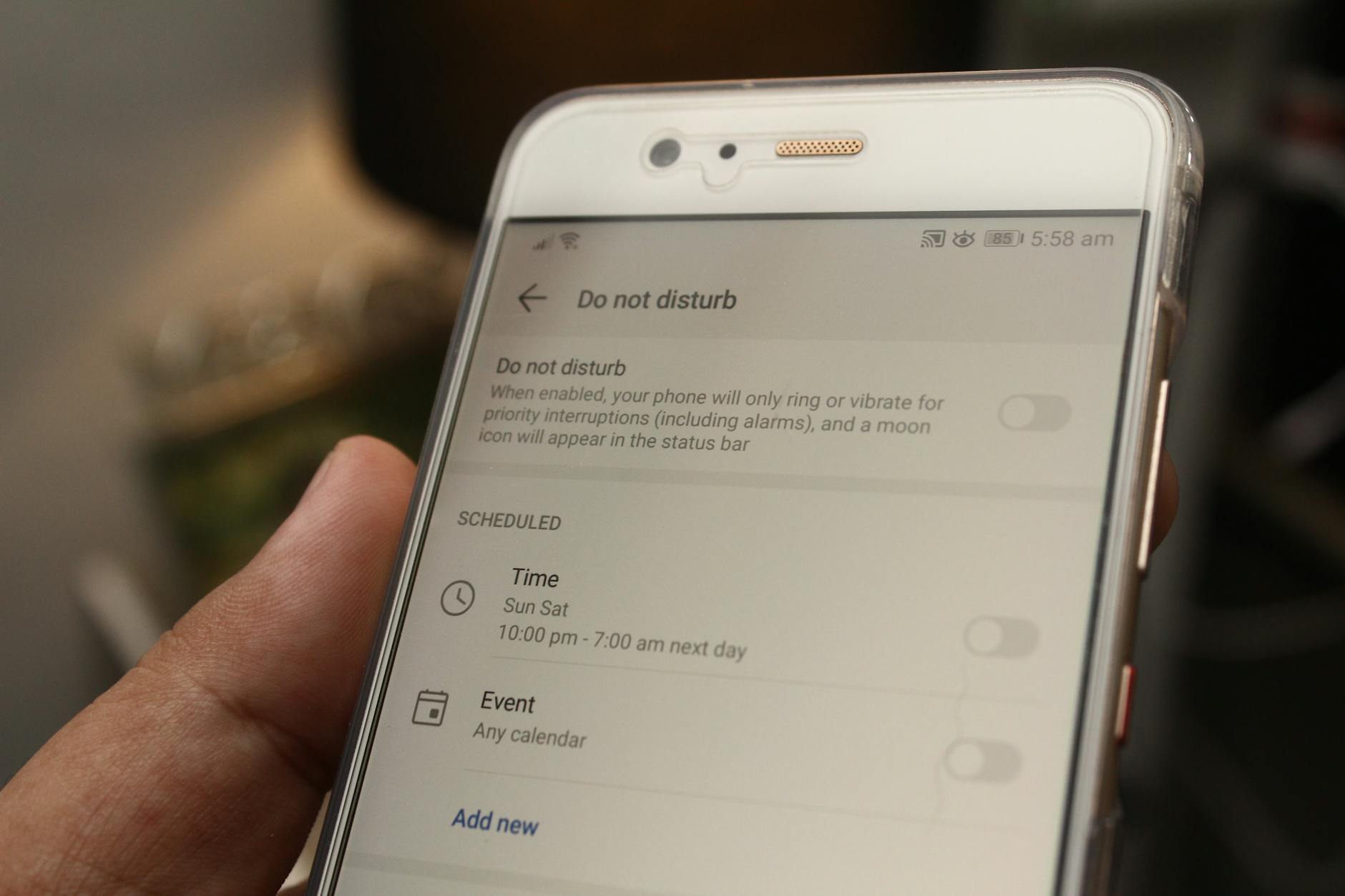 Photo by Daniel Moises Magulado
Photo credit: Daniel Moises Magulado via Pexels
Check the DND Toggle and Focus Status
In iPhone, verify that Focus or Do Not Disturb is off when you expect silence. In Android, confirm DND is on or set to the desired mode. If you see a Focus badge or DND icon, note what it indicates. Remind readers to test a call or message to see if it is silenced.
- Quick visual checks help you avoid guessing. On iPhone, a blue Focus badge in the status bar or Control Center means a Focus is active. On Android, a DND icon in the status bar signals the current silencing state.
- Silence test: have someone call or send a message during your quiet period. If the alert still rings, you may be in a different Focus, or a per-app exception could be allowing the alert through.
- Alarms always ring, even in DND. If you’re missing wakeups, recheck the alarm settings within the Clock app and ensure alarms are excluded from silencing.
Tips to keep in mind:
- On iPhone, Focus is the umbrella for silencing. Turn it off in Control Center if you’re unsure which mode is active, or review the active Focus names to confirm the right one is selected.
- On Android, DND is a rules-based system. If the icon is lit, open the DND settings to confirm the current mode and its exceptions.
To dig deeper, see Apple’s guidance on allowing or silencing notifications for a Focus on iPhone and Google’s guidance for Android Modes and Do Not Disturb. Allow or silence notifications for a Focus on iPhone | Limit interruptions with Modes & Do Not Disturb on Android
Tip: If the UI seems off after a quick update, a full restart can reset stuck states and reapply the current Focus or DND configuration.
Review Schedules and Exceptions
Look for any active schedules or rules that could override silencing. Check who is allowed to break through (Favorites, Contacts, All). Review app-specific exceptions that might enable notifications. See if a time-based setting is turning DND on or off at certain times.
- Schedules are the most common culprits. A Focus or DND cycle might be set to auto-activate at night or during meetings. Confirm the exact time window and the days it’s active.
- Exceptions matter more than you think. If you’ve allowed Favorites or all Contacts, a call from a favorite can break through, even when DND is on. Likewise, certain apps may still deliver alerts if they’re explicitly allowed.
- Per-app exceptions can undermine your silencing goals. Some messaging or calendar apps can bypass DND to ensure critical information arrives on time.
How to audit quickly:
- Open Focus or DND settings and scan for any active schedules. Turn off or adjust the window if it doesn’t align with your current needs.
- Check the allowed list. If you want silence from non-urgent contacts, remove non-essential groups from exceptions.
- Review apps with special permissions. If a critical alert is essential, you may reclassify it from “Silent” to “Alert” or add a temporary exception during a specific event.
For more authoritative steps, Apple provides focused instructions on managing Focus schedules, while Android guidance covers setting up and adjusting Do Not Disturb rules. Turn on or schedule a Focus on iPhone | Limit interruptions with Modes & Do Not Disturb on Android
Illustrative note: if you rely on time-based rules, consider testing with a short, controlled window (for example, a 1 minute quiet period) to confirm that the chosen exceptions behave as expected.
Test with Real Scenarios
Create a simple test: schedule a 1 minute quiet period, then send calls or messages from someone not in allowed lists and from someone in allowed lists. Observe whether alerts are silenced as expected. Use real apps like messages, email, or a calendar alert. These tests show whether the rules work in practice.
- Step 1: create a 1 minute Focus or DND window. Do this during a time you typically use the device for work or personal time.
- Step 2: simulate a call from a non-allowed contact. Note whether the alert rings or is silenced.
- Step 3: simulate a call or message from an allowed contact (Favorites or All Contacts). Confirm that the alert passes through as designed.
- Step 4: test a calendar reminder or email notification during DND. Check whether time-sensitive items behave as expected.
- Step 5: run the same scenarios with Android DND and iPhone Focus to compare results.
Practical takeaway: these quick tests reveal gaps between policy and practice. If something slips through, revisit the specific rule or app permission responsible for the exception.
If you want a deep dive into how to configure Focus on iPhone, Apple’s official setup guides are a solid reference. How to Schedule Focus Modes | Apple Support: Allow or silence notifications for a Focus on iPhone
Images credit: Daniel Moises Magulado via Pexels
Note: For readers using a Pixel or Samsung device, Google’s Pixel-specific and Samsung-variant DND tips help tailor the test results to those brands. Pixel-specific DND help | How to schedule Do Not Disturb mode on Android with automatic schedules
Put It All Together: A Practical, Repeatable Checklist
- Confirm the active mode: Focus on iPhone or DND on Android is the one you expect.
- Check schedules: Look for any auto-activation windows that might be turning DND on or off.
- Review exceptions: Make sure your most important contacts and apps are set exactly how you want.
- Run real tests: Do quick calls/messages for non-allowed and allowed contacts, plus a calendar or email alert.
- Reassess after changes: After OS updates or new apps, re-check the setup to prevent drift.
If you want a broader reference, Apple and Google provide comprehensive resources for Focus and DND management, including setup, scheduling, and troubleshooting steps. Turn on or schedule a Focus on iPhone | Limit interruptions with Modes & Do Not Disturb on Android
This quick-check framework keeps you in control. With a few deliberate tests and a clear rule set, your smartphone can stay quiet when you need it and still reach you when it matters. If you’re juggling work, family life, and personal time, a well-tuned DND or Focus setup can be the difference between constant interruptions and true focus.
Device Specific Fixes: iPhone and Android
When DND and Focus behave unpredictably, the quickest path to calm is device-specific fixes. Below you’ll find practical, step-by-step actions for iPhone and Android that you can apply in minutes. These fixes focus on what actually works in real life, with quick checks you can perform as you go. Think of it as a practical toolbox you can pull from whenever quiet hours slip.
iPhone Do Not Disturb and Focus Tips
Follow this sequence to restore reliable quiet on iPhone. Each step is designed to be quick to execute and easy to rollback if needed. Remember that alarms will still ring and Focus modes can be tailored to different life situations, not just a single blanket setting.
- Quick toggle off and on of Focus
- Open Control Center and tap the Focus icon to disable any active Focus quickly.
- Reopen Control Center and reselect the Focus you want. This swap can resolve momentary stuck states.
- Confirm Do Not Disturb in Settings > Focus > Do Not Disturb is enabled with the right exceptions
- Go to Settings > Focus and choose Do Not Disturb.
- Review allowed people and apps. If a call or notification is still slipping through, tighten or loosen the exceptions to fit your need for quiet.
- Turn off Time Sensitive Notifications if needed
- In each Focus, you can toggle Time Sensitive notifications on or off.
- If you rely on urgent alerts, keep Time Sensitive on; if not, disable to improve silence.
- Update iOS to the latest version
- Go to Settings > General > Software Update.
- Install any available updates. Updates often fix quirks with Focus and notifications.
- Reset all settings if nothing works (without erasing data)
- Go to Settings > General > Transfer or Reset iPhone > Reset > Reset All Settings.
- This resets system preferences without removing personal data. Reconfigure Focus afterward.
- Force restart the iPhone if it seems stuck
- For most models: quickly press and release the Volume Up button, then Volume Down, then hold the Side button until the Apple logo appears.
- A force restart can clear stuck states and reapply your current Focus configuration.
Note: Alarms always ring even when DND is on. You can set Focus to custom modes for work, sleep, or driving, then switch between them as your day changes. For a refresher on Focus basics, see Apple’s guidance on Focus setup and management.
- Useful references:
- Allow or silence notifications for a Focus on iPhone
- Turn on or schedule a Focus on iPhone
These official guides provide version-specific steps if you’re on a newer iOS release. If you want quick on/off guidance, Apple’s Focus scheduling article is a solid go-to.
Android Do Not Disturb Quick Fixes Across Brands
Android users enjoy a flexible, rule-based approach to DND. The fixes below apply across brands while highlighting brand-specific quirks to watch for. Keep in mind that some devices include per-app notification settings that can override system DND, so review those if something still slips through.
- Open Settings > Notifications > Do Not Disturb and confirm mode and exceptions
- Verify the current DND mode (Total silence, Alarms only, or Priority only) and adjust exceptions to fit your needs.
- Double-check who can reach you (Favorites, All contacts, or Anyone) and which apps are allowed through.
- For Samsung, clear the Modes cache if needed
- If DND behaves erratically after updates, clearing cached data for Modes can help.
- This action resets temporary state without removing personal data.
- Check Apps allowed to Notify after OS updates
- Some apps gain new notification permissions after a system update. Review and adjust app-specific exceptions to align with your quiet hours.
- Restart the device to reset processes
- A simple reboot often clears stuck services that keep DND from behaving.
- If DND still misbehaves after updates, review call blocking options and ensure alarms remain allowed in DND
- Confirm that alarms are not inadvertently silenced and that important calls can still get through when needed.
- Remember that some devices have separate per-app notification settings that can override system DND. Review those settings for critical apps like messaging or calendar.
Tip: If you rely on time-based rules, test with a short quiet window to confirm exceptions work as expected. Some devices also offer quick toggles in Quick Settings for faster control over DND.
- Helpful resources:
- Limit interruptions with Modes & Do Not Disturb on Android
- Pixel-specific DND help
These official guides provide steps that stay relevant across multiple Android vendors, including how to access DND from Quick Settings and how to fine-tune interruptions.
Keep Alarms and Time-Sensitive Features Working
A reliable wake-up and timely alerts are non-negotiable. Here’s how to keep alarms, timers, and time-sensitive features active when DND or Focus is on.
- Ensure alarms can bypass DND/Focus
- Alarms are designed to ring even when DND is active. If alarms aren’t sounding, recheck the Clock app alarm settings and ensure the alarm is set to repeat if needed.
- On iPhone, alarms are typically exempt from silencing; on Android, verify that alarm apps are allowed to override DND in the exception list.
- Find the time-sensitive toggle and tailor it
- iPhone: Time Sensitive notifications can be allowed through Focus. Decide if you want these to bypass quiet hours.
- Android: Time-sensitive behavior can be controlled via DND exceptions or app-specific permissions. Adjust as needed to avoid unwanted bypasses.
- Disable or tailor the bypass for unwanted alerts
- If time-sensitive alerts feel like a distraction, turn off Time Sensitive in Focus or reduce app permissions that cause bypasses.
- Test after changes by triggering a known time-sensitive event (alarm, calendar alert) to confirm expected behavior.
- Test alarm behavior after fixes
- Create a controlled scenario: set a short alarm and verify it rings as expected while DND or Focus is active.
- Include a non-critical alert (like a calendar reminder) to ensure it behaves consistently with your settings.
Real-world reminder: alarms and time-based alerts are built into the device to help you stay on track. If you adjust their behavior, run a quick test to confirm they work when you need them.
- Further reading:
- How to turn Do Not Disturb on or off on iPhone and Android
- Will My Alarm Go Off on Do Not Disturb Mode? (Android & iPhone)
- How to Set an Alarm on Your Phone Even If It’s on Silent
A quick note on testing: small, controlled tests reveal how your rules work in practice. After changes, run a few scenarios with both iPhone Focus and Android DND to verify consistent behavior.
Images and visuals
- Visuals illustrating how to access Focus on iPhone and DND on Android can help readers see the exact menus. If you reference these in your article, you can embed illustrations showing the Focus controls and DND toggles.
Link references for quick setup and troubleshooting
- iPhone Focus setup overview: Set up a Focus on iPhone
- Quick Focus on/off and scheduling: Turn on or schedule a Focus on iPhone
- Android DND basics and modes: Limit interruptions with Modes & Do Not Disturb on Android
- Pixel-specific DND help: Limit interruptions with Modes & Do Not Disturb on Pixel phone
By keeping these device specific checks in your toolkit, you can regain control over when your phone interrupts you. Adapt Focus on iPhone or DND on Android to fit your daily rhythm, and you’ll reclaim quiet when you need it.
Troubleshooting Scenarios That Break DND and How to Handle Them
This section dives into common situations where Do Not Disturb or Focus modes fail to quiet the phone as expected. Each scenario includes practical checks and proven fixes so you can restore calm quickly. You’ll learn how alarms, time sensitive alerts, unknown callers, and app notifications behave, and how to tailor settings for reliable quiet hours on both iPhone and Android. Think of these as a playbook you can pull out when real life intrudes on your focus.
Alarms and Timers Ringing Through DND
Alarms are built to wake you up or remind you of events, even when the phone is in DND or Focus mode. That behavior is intentional in most cases, but it can feel like a surprise if you’ve enabled silence across other alerts. Here’s how to ensure alarms stay reliable while still keeping distractions at bay.
- Check the alarm policy in your Clock app. On both platforms, alarms are designed to bypass standard silencing, but a misconfigured setting can throw you off. Confirm the alarm is set to ring and that it’s not accidentally muted by a general alert rule.
- For iPhone users, review each Focus’s Time Sensitive option. If you don’t want urgent app alerts to break through, you can turn Time Sensitive off in the Focus settings. If you rely on urgent reminders, keep it enabled but test a sample alarm to be sure it behaves as expected. See Apple’s guidance on Focus controls for details.
- For Android devices, confirm that alarms are allowed in the DND exceptions. Some brands place alarms in a separate alarm exception list; if an update changes this, you may need to re-verify the policy for alarms.
- Quick validation you can perform: set a 1 to 2 minute alarm and run a test while DND or Focus is active. Have a non-saved contact attempt to reach you to verify that alarms still ring while other alerts stay silenced.
If alarms stop working during DND, the first step is to recheck alarm settings, then verify that the DND or Focus policy isn’t inadvertently treating alarms as ordinary alerts. A quick restart can also clear any stuck state that blocks the expected bypass. For deeper understanding, see guidance on whether alarms go off under DND on iPhone and Android.
- Helpful references:
- Allow or silence notifications for a Focus on iPhone
- Limit interruptions with Modes & Do Not Disturb on Android
Alarm behavior on iPhone and Android | Limit interruptions with Modes & Do Not Disturb on Android
Image note: A smartphone screen shows Focus controls during setup. Photo by Watford London Media
Time-Sensitive Notifications Bypassing DND
Time sensitive alerts are designed to bypass silencing for urgent matters. They can be extremely helpful, but they can also defeat the purpose of DND if used too aggressively. Here’s how to manage them so you keep control over when you get through.
- What “time sensitive” means: these are alerts that a system marks as urgent, such as critical reminders, calendar events, or app updates that demand timely attention. If you want a stricter quiet, turn these off in the Focus or DND settings.
- Where to disable or limit time sensitive alerts on iPhone: open the specific Focus, then toggle Time Sensitive notifications off if you don’t want urgent passes during that period. Keep it on if you want high-priority updates to reach you even when you’re distracted.
- Where to disable or limit time sensitive alerts on Android: in the DND rules, remove Time Sensitive from the allowed categories or adjust per-app permissions so only truly critical alerts bypass the mode.
- Quick test: create a short quiet window and trigger a time sensitive notification from a non-critical app. Confirm whether it bypasses the silence as intended. Then try a time sensitive alert from a critical app to ensure it still comes through if that’s your preference.
For a solid baseline, review official guidance on Focus settings for iPhone and Android DND modes. Apple and Google provide clear steps to adjust these controls so you won’t be blindsided by urgent alerts.
- Useful links:
- Turn on or schedule a Focus on iPhone
- Limit interruptions with Modes & Do Not Disturb on Android
How to schedule Focus on iPhone | Limit interruptions with Modes & Do Not Disturb on Android
Image note: A close-up shot of a smartphone showing a settings screen with notification controls. Photo by Daniel Moises Magulado
Unknown Callers and Emergency Alerts
Unknown numbers and emergency alerts can still reach you during DND if the policy allows, or due to regional emergency alert systems. This section shows how to block or permit unknown calls and how to handle alerts that must break through.
- Why unknown callers might come through: some devices keep a safety net for repeat calls or allow non-contact numbers when a caller is flagged as urgent. You can customize these rules to reduce noise while keeping a safety valve for real emergencies.
- How to block or allow unknown calls: in iPhone Focus or DND, you can restrict calls to Favorites or All Contacts. If unknown callers slip through, switch to a stricter option like All Contacts or Favorites only. On Android, adjust the Call B obstruction and ensure the appropriate priority list is set.
- Managing emergency alerts and disaster warnings: these alerts often bypass DND by design. If you want to silence them, you’ll need to check regional options in Settings. Always ensure you do not disable life-saving alerts unintentionally.
- Quick steps to review priority settings:
- Check who can reach you: ensure only trusted groups are allowed through during DND.
- Review emergency alert settings: ensure alerts are enabled or disabled per your needs, depending on whether you want them to override the silence.
- Confirm any country or carrier-specific safety alerts enabled for the region.
For authoritative steps, consult guides on Focus and DND management from Apple and Google, and consider Pixel- or Samsung-specific tips if you own a device from those brands.
- Reference links:
- Allow or silence notifications for a Focus on iPhone
- Limit interruptions with Modes & Do Not Disturb on Android
- Pixel-specific DND help
Allow or silence notifications for a Focus on iPhone | Limit interruptions with Modes & Do Not Disturb on Android
Image note: A smartphone screen showing emergency alert settings. Photo by Daniel Moises Magulado
App Alerts and Smart Home Notifications
Apps and smart home devices are notorious for finding ways around silence. When DND is on, some apps may still push alerts, and smart home ecosystems often rely on persistent notifications to keep you informed. Here’s how to curb noise while staying informed about what matters.
- Apps that bypass DND: certain messaging apps, alarm apps, or calendar services may be configured to bypass silencing. Review per-app notification settings to confirm which apps can interrupt you and adjust accordingly.
- How to add apps to allowed lists: in iPhone Focus, you can add apps to the Allowed Apps list for each Focus. On Android, locate the per-app notification controls and adjust the priority or allow lists for the apps that matter.
- Smart home notifications: devices like security cameras or smart assistants can push alerts even when the phone is quiet. Create a separate rule for these devices or set them to a lower priority so they don’t wake you unintentionally.
- Practical tips:
- Periodically audit your allowed lists. Remove apps that no longer need to wake you.
- Consider grouping smart home alerts with a lower priority so you’re only alerted to events that truly matter.
Key resources to guide setup:
- How to exclude apps from Do Not Disturb on iPhone
- How to manage notifications on Android for a more balanced approach
Exclude apps from Do Not Disturb on iPhone | How to manage notifications on Android
Image note: A home smart hub screen showing app alerts and automation settings. Photo by Watford London Media
Putting it all together, you’ll want a setup that keeps the essentials flowing while quiet hours stay truly quiet. Use these checks as a repeatable routine—test with real scenarios, review exceptions, and adjust as your needs shift. If you’re juggling work, family life, and personal time, a well-tuned DND or Focus configuration makes the difference between constant interruptions and genuine focus.
References for quick setup and troubleshooting:
- iPhone Focus setup overview: Set up a Focus on iPhone
- Android DND basics and modes: Limit interruptions with Modes & Do Not Disturb on Android
- Pixel-specific DND help: Limit interruptions with Modes & Do Not Disturb on Pixel phone
For readers using a Pixel or Samsung device, brand-specific tips help tailor the results. Pixel-specific DND help | How to schedule Do Not Disturb mode on Android with automatic schedules
Image credits: Daniel Moises Magulado via Pexels
Note: All references and links above are provided for quick access to official guidance and practical tutorials.
Photo by Daniel Moises Magulado, https://www.pexels.com/@daniel-moises-magulado-199841
Preventive Tips and a Quick Troubleshooting Checklist
Keeping DND and Focus reliable across iPhone and Android starts with simple, repeatable practices. These preventive tips reduce drift after updates and make quick troubleshooting fast. Think of this section as your compact playbook: set up once, then cycle through a quick check whenever something surprises you. You’ll stay in control of quiet hours without losing important notifications.
Create Simple DND Profiles You Can Use
Set up a few easy to switch Focus profiles for work, sleep, and downtime. Profiles act like presets that remember who and what can break through. They minimize setup each time you switch, which means you won’t overlook crucial exceptions when your day changes.
- Work: Allow your team and essential work apps, mute noncritical social alerts, and enable time-sensitive notices only if truly needed. This keeps you productive without missing important reminders.
- Sleep: Restrict everyone except a tiny, trusted group. Disable nonessential apps and disable time-sensitive interruptions unless you absolutely require urgent alerts.
- Downtime: Create a relaxed profile with a narrow exception list for family or urgent needs, plus a scheduled window that matches your evenings.
Why this helps: with clearly defined profiles, you avoid digging through settings every time you start a new activity. It creates predictable behavior, so DND feels dependable rather than improvised. For iPhone users, Focus is the umbrella system you’ll configure; on Android, set up Do Not Disturb rules that mirror your daily rhythm. If you want guidance on how to structure Focus on iPhone, Apple’s setup guides are a solid starting point. Set up a Focus on iPhone and Turn on or schedule a Focus on iPhone offer clear steps. You can also explore third-party perspectives like Lifehacker’s approach to custom Focus modes for inspiration. How to Set Up Your Own Custom Focus Modes on iPhone
Across Android devices, treat DND like a rule book you can tailor. Build profiles for “Work,” “Home,” and “Sleep” with explicit calls and app exceptions. A consistent set of rules helps prevent annoying surprises after updates or app changes. For a practical framework, Google’s guidance on limiting interruptions with Modes and Do Not Disturb is a reliable baseline. Limit interruptions with Modes & Do Not Disturb on Android
If you rely on Pixel or Samsung devices, you’ll find brand-specific tweaks helpful. Pixel users can consult the Pixel DND help resources, while Samsung users should check their Modes and Edge lighting interplay. Pixel-specific DND help
Image: A smartphone screen showing a curated set of Focus profiles with clear labels and toggles.
Regular Maintenance: Updates, Reboots, and Backups
Maintenance is your first line of defense against DND misbehavior. When the OS or apps shift their notification behavior, a light cleanup helps keep things aligned with your intentions.
- Keep the OS and essential apps updated. Updates fix bugs that can affect how DND or Focus handles interruptions. Always review new permissions dialogs during updates and adjust as needed.
- Reboot periodically. A quick restart clears stuck states that can leave Focus or DND partially active or misconfigured.
- Back up before major changes. If you’re about to reset settings or install a major OS update, back up your data first. This ensures you can recover quickly if something goes wrong.
A practical approach is to schedule a monthly quick maintenance check. During the check, verify the current Focus or DND configuration, confirm alarms still bypass silence, and ensure your preferred exceptions are intact. For iPhone users, Apple’s Focus management guides walk you through adjusting schedules and exceptions after updates. Turn on or schedule a Focus on iPhone Also, when you’re preparing for big software moves, consult Apple’s Focus setup overview. Set up a Focus on iPhone
Android users should keep DND rules fresh after system or app updates. Google’s official guidance covers creating and adjusting DND rules, including quick toggles from Quick Settings. Limit interruptions with Modes & Do Not Disturb on Android
Image: A neatly organized backup drive and a phone showing backup reminder.
Keep a Short Exception List for Peaceful Notifications
A concise list of trusted contacts and apps makes DND predictable and useful. The goal is to protect focus without blanking out everything that matters.
- Trusted contacts: Narrow the list to essential people. Favorites or a small group of contacts you know you’ll want to reach you in a pinch.
- Critical apps: Choose a few apps that must interrupt during quiet hours, such as calendar, messaging from key family groups, or a security app.
Benefits of a short exception list:
- Fewer surprises during DND, especially during important meetings or focused work blocks.
- Faster adjustments when you need to tweak your priorities for the day.
- Clear, auditable rules you can share with colleagues or family.
Implementation tips:
- Start with a minimal set and expand only if you truly need more reachability.
- Regularly audit the exceptions. Remove apps or contacts you no longer rely on during quiet hours.
- For iPhone Focus, use the Allowed Apps and Allowed People settings per Focus to manage exceptions precisely. If you’re unsure where to start, Apple’s official Focus controls guide is a good quick reference. Allow or silence notifications for a Focus on iPhone
- For Android, review per-app notifications in the DND settings and adjust priorities to ensure only critical apps can bypass silence. Google’s guide is a practical baseline. Limit interruptions with Modes & Do Not Disturb on Android
Smartphone users often underestimate the value of a tight exception list. A small, well-chosen set of contacts and apps keeps you reachable when it really matters while preserving quiet hours.
Images credit: Daniel Moises Magulado via Pexels
Putting these preventive measures into practice creates a reliable, repeatable workflow. Set up a few Focus or DND profiles, keep your device refreshed with regular maintenance, and maintain a lean exception list. When you pair this with targeted testing, you’ll experience fewer glitches and more predictable quiet hours. For a quick refresher on Focus setup, you can start here: Set up a Focus on iPhone and Limit interruptions with Modes & Do Not Disturb on Android.
Conclusion
Most DND or Focus issues come from a few simple causes: a toggle left on, an overlooked schedule, or an mis configured exception. A quick check of the active mode, plus a review of who and what is allowed to break through, fixes the majority of problems. Use the quick checks and the final checklist to keep your quiet hours reliable over time, and test with real scenarios to confirm behavior.
As you tune your settings, remember to keep the exception list tight and your schedules sensible. A well crafted setup gives you true focus without missing important alerts. If you found this guide helpful, share it with others and try the steps to reclaim focus on your smartphone.