
Cold drafts sneak through your door in winter. Noisy gaps let outside sounds invade your home. Worn door weatherstripping fails to block them. You can fix this yourself with parts from Home Depot. This guide walks you through every step. You’ll save on energy bills and enjoy a quieter space. Grab basic tools and follow along for a quick upgrade.
Old weatherstripping cracks or peels over time. It loses its grip on the door frame. Air leaks raise heating costs by up to 20 percent in some homes. Simple replacement seals those gaps tight. Home Depot stocks affordable options like foam tape, rubber bulbs, and door sweeps. Pick what fits your door type, and you’ll finish in under an hour.
Signs Your Door Weatherstripping Needs Replacement
Check for visible wear first. Look at the strips along the door jamb and threshold. Cracks, tears, or gaps wider than a quarter signal trouble. Feel for drafts by holding a lit incense stick near the closed door. Smoke pulls toward leaks.
Dust buildup along the edges points to poor seals. Test noise too. If street sounds boom inside, seals have failed. Sticky doors that rub or won’t latch often mean swollen wood from air moisture. These clues save you guesswork.
Energy bills spike without good seals. In cold months, heat escapes fast. Utility data shows homes with tight doors cut bills by 10 to 15 percent. Replace now to stay comfortable year-round.
Tools and Materials You’ll Need from Home Depot
Head to Home Depot for quality picks at low prices. Start with weatherstripping kits. Frost King or M-D Building Products offer foam, vinyl, or rubber in various sizes. Match your door: compression seals for side jambs, sweeps for bottoms.
Gather these essentials:
- Utility knife or scissors
- Measuring tape
- Screwdriver set (flathead and Phillips)
- Pliers
- Cleaning supplies (rubbing alcohol, rags)
- Optional: caulk gun and sealant for extra gaps
| Item | Purpose | Home Depot Example |
|---|---|---|
| Foam tape weatherstripping | Seals uneven gaps | Frost King 9/16 in. x 3/4 in. |
| Door sweep | Blocks bottom drafts | M-D 36 in. aluminum sweep |
| Utility knife | Cuts strips clean | Stanley retractable blade |
| Measuring tape | Ensures perfect fit | Lufkin 25 ft. tape |
Budget $20 to $40 total. Kits include adhesive-backed strips for easy install.
Remove the Old Weatherstripping Step by Step
Prep your workspace first. Open the door wide. Prop it if needed to avoid slams. Work on a clear floor to spot small pieces.
Peel away foam or rubber strips from the jamb. Grip one end and pull firmly at a 45-degree angle. Most adhesive types lift without residue. Stubborn spots need pliers for leverage.
Check screw-in sweeps at the bottom. Unscrew brackets with a screwdriver. Slide off the old sweep. Wipe residue with rubbing alcohol on a rag. Dry surfaces fully.
Inspect the frame for damage. Sand rough spots lightly. Clean dirt from tracks or thresholds. Fresh surfaces help new strips stick better.
Measure Your Door for the Perfect Fit
Accuracy matters here. Close the door lightly. Slide a thin piece of paper around edges. Note tight spots and gaps.
Measure jamb heights from top to bottom on both sides. Add 2 inches extra for overlaps. Width across the top matches door width plus 4 inches. Bottom sweep equals door width exactly.
Test fit dry. Press sample strip in place without peeling backing. Adjust for even compression when door closes. Mark cuts with pencil.
Pro tip: doors warp slightly over years. Measure in three spots per side. Use the longest length to avoid short strips.
Cut and Prep the New Weatherstripping
Lay strips on a flat surface. Use your utility knife for straight cuts. Score foam lightly first, then slice through. Rubber needs firmer pressure.
Angle ends at 45 degrees for corner miter joints. This creates clean overlaps. Trim sweeps to width with tin snips if metal.
Peel adhesive backing halfway for side jamb strips. Keep ends covered until ready. Dry fit again. Pieces should compress 50 percent when door shuts.
Install New Weatherstripping on Door Jambs
Start at the top. Peel backing and press strip into the door header. Center it evenly. Work down one side jamb next.
Stretch slightly as you go. Press firm with fingers or a roller. Avoid bubbles by smoothing from center out. Repeat on the other side.
Corners overlap top strip by half an inch. Trim if needed for snug fit. Adhesive grabs fast, so align before full press.
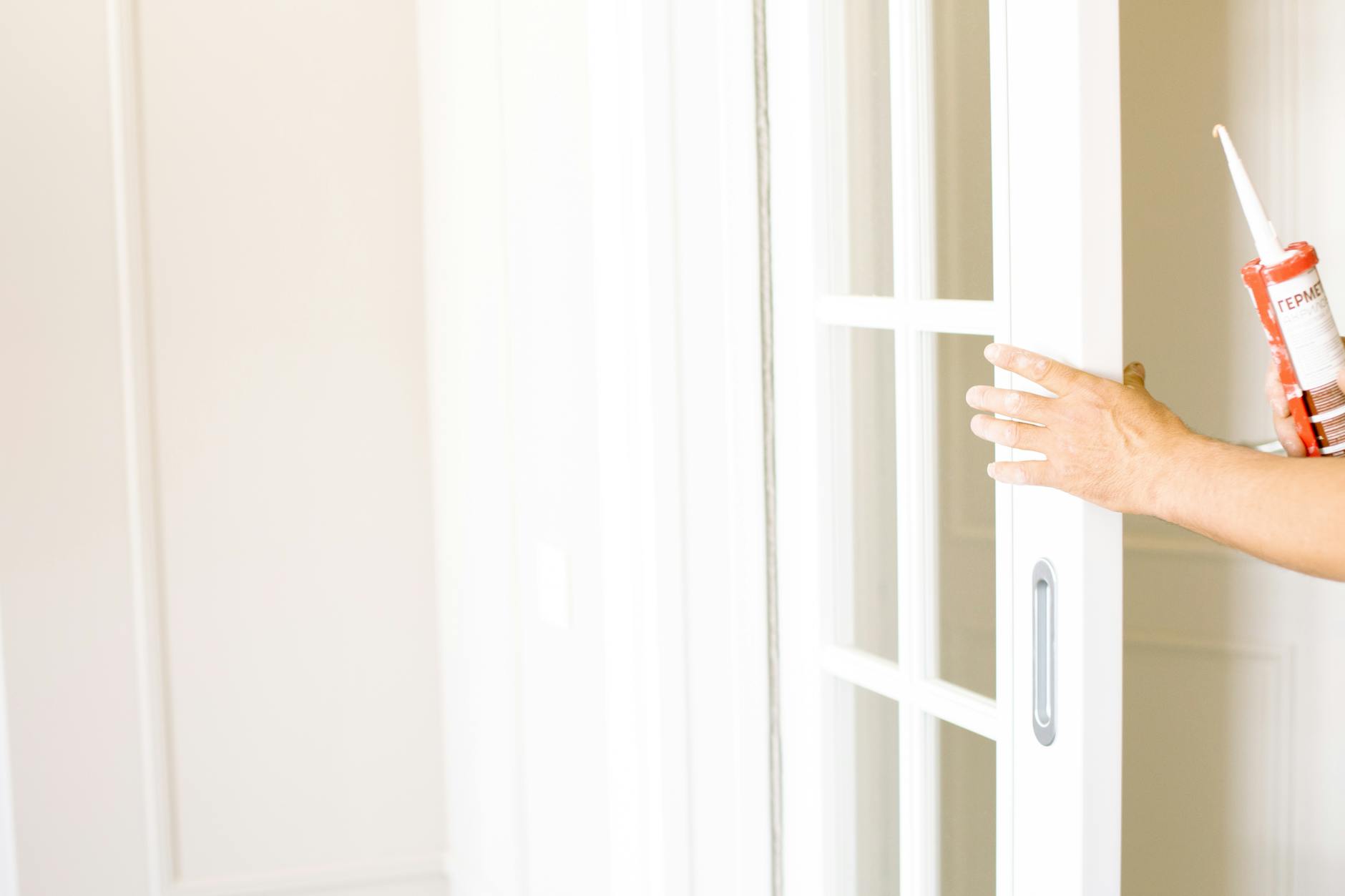
Photo by La Miko
Attach the Door Sweep at the Bottom
Position the sweep under the door. Ensure vinyl or rubber flap angles inward. Mark screw holes on the door bottom.
Drill pilot holes if wood is hard. Screw brackets tight. Adjust height so flap just kisses the threshold when closed.
Rubber bulb sweeps fit tracks. Slide into place and secure with clips. Test door swing. It glides smooth without drag.
Test Your New Seals for Airtight Results
Close the door firm. Run your hand along edges. Feel for air flow. Incense test again: smoke stays straight.
Open and shut ten times. Check for rubs or rattles. Fine-tune by trimming excess or repositioning.
Cold weather reveals weak spots. Spray water on outside edges during rain. No drips inside means success.
Maintenance Tips to Make It Last
Clean strips monthly with mild soap. Avoid harsh chemicals that degrade rubber. Vacuum thresholds to prevent grit wear.
Inspect twice yearly. Re-glue loose spots with weatherstrip adhesive from Home Depot. Replace full sets every 3 to 5 years.
Pair with threshold seals for total protection. Combine with window kits for whole-home savings.
Common Mistakes and How to Fix Them
Rushing measurements leads to gaps. Double-check twice. Uneven cuts cause overlaps that bind doors. Practice on scrap first.
Poor cleaning leaves residue. Strips won’t stick. Spend extra time wiping.
Over-compression pinches seals flat. Aim for half-gap close. Wrong type mismatches door style. Foam suits wood; vinyl fits metal.
Skip pliers on tough old strips. They tear messy. Steady pull wins.
Fix minor issues right away. A tweak now prevents full redo later.
Replacing door weatherstripping from Home Depot boosts comfort fast. You seal drafts, cut noise, and trim bills with basic steps. Grab supplies today and tackle it this weekend. Your home stays cozy through every season.
Share your results in comments. Did this save you money? What’s your next DIY fix?
(Word count: 1487)