If you rely on your phone for directions, a misbehaving compass can turn a simple trip into a guesswork ordeal. A precise compass helps with accurate navigation, better map orientation, and fewer wrong turns in unfamiliar streets or hiking trails.
In this post, you’ll learn a clear, step by step approach to compass calibration for both iPhone and Android devices, plus practical tips to keep accuracy over time. We’ll cover common magnetometer issues, how to spot when maps are pointing the wrong way, and quick checks you can perform before you trust a route again.
By the end, you’ll know exactly how to calibrate your compass using the figure-8 method, manual techniques that work when calibration apps fail, and real world scenarios where these skills save time and frustration. This guide covers compass calibration, magnetometer basics, iPhone compass, Android compass, and map orientation in plain terms you can apply today.
Why a Calibrated Phone Compass Improves Navigation
A reliable compass on your phone makes maps feel like a trustworthy guide. When the magnetometer reads your direction accurately, you spend less time second-guessing which way to go and more time enjoying your route. In this section, you’ll learn how the magnetometer works in plain terms and how to spot when your compass may be drifting. With simple calibration steps, you can keep your map oriented correctly, whether you’re wandering city streets or trekking a trail.
How the magnetometer keeps you on course
A magnetometer is a small sensor inside your phone that acts like a digital compass. It reads Earth’s magnetic field to figure out which direction you are facing. Think of it as tiny invisible arrows all around the device, constantly telling the software which way is north, south, east, and west. When you move, the sensor updates this information so the map can rotation to match your orientation.
To work well, the magnetometer needs a clear signal. If nearby metal or electronics create interference, the readings can drift. Your phone uses this data alongside other sensors to keep the map aligned with your actual movement. In practice, calibration helps the device separate real magnetic direction from local noise, so the arrow on the map points where you’re truly looking.
Common signs your compass is off
There are quick, recognizable tells that your compass isn’t giving you accurate direction. First, the map arrow or blue direction line spins independently of your actual movement, especially when you’re standing still. Second, you notice the map orientation doesn’t match landmarks you see on the ground, like a street grid facing the wrong way. Third, when you walk in a straight line, the compass seems to lag or jump, causing a noticeable mismatch between your path and the on-screen route. Fourth, elevation changes or being near metal structures cause sudden shifts in the compass direction. Finally, you may get repeated requests to recalibrate during normal use, even when you haven’t moved far. If any of these happen, it’s a good sign the magnetometer readings need a fresh calibration.
Calibrating the Compass on iPhone
A precise compass on your iPhone helps maps align with your actual direction, making navigation smoother whether you’re in a city or on a trail. Calibration keeps the magnetometer readings clean from local interference and metal nearby. Use the quick enablement steps first, then turn to manual methods only if you notice drift. This approach works for both everyday routes and more involved outdoor trips, ensuring your map always points you the right way.
Step-by-step: enable compass calibration
- Open the Settings app and navigate to Privacy & Security.
- Tap Location Services and ensure it is turned on.
- Scroll to System Services and switch Compass Calibration to on (green).
- Open the Compass app; if prompted, grant necessary permissions.
- Confirm Compass Calibration is active by checking for a visible calibration status indicator.
Manual calibration when needed
- Use manual calibration when you still see drift after enabling the toggle.
- Hold the iPhone flat in your hand, then rotate it in a large figure-8 motion.
- Complete several loops in the air, keeping the device steady.
- Check the Compass app heading after each pass; repeat if needed.
- Move away from metal objects or magnetic sources and re-test with a short walk.
Calibrating the Compass on Android
Your Android phone relies on a magnetometer to determine direction. Calibrating it helps maps align with your real movement, reducing drift and misdirection. This section covers common Android paths to calibration and how to perform the figure-8 motion correctly. You’ll learn where to find calibration prompts, what to tap, and how to finish with a quick test. Whether you’re navigating city streets or a hiking trail, a well-calibrated compass keeps you oriented and boosts confidence in every turn.
Common Android paths to calibration
Android devices vary by manufacturer, but most calibration starts happen through familiar routes. In many cases, you’ll access calibration inside a map app or directly through system settings. Open Google Maps, tap the blue location dot, and look for a “Calibrate compass” option or prompts guiding you through a figure-8 motion. If you prefer native options, check the Maps or Navigation app’s settings for a calibration prompt. Some devices require you to reset location or grant sensor permissions first. If you don’t see prompts, try a quick restart or a sensor check app to verify the magnetometer is active.
Using in-app prompts and figure-8 motions
Once you find the calibration prompt, follow the on-screen steps. The most common method is the figure-8 motion, performed with the device held flat. Start by rotating the phone in a large, smooth figure-8 in the air, then repeat a few times until the app reports high accuracy or a narrow beam. On many Androids you’ll complete a few passes in different directions to ensure all axes are covered. If drift persists after the motion, move away from metal objects and test again on an outdoor surface. The key is steady, full-range motion so the sensor can recalibrate accurately.
Practical Tips to Maintain Compass Accuracy
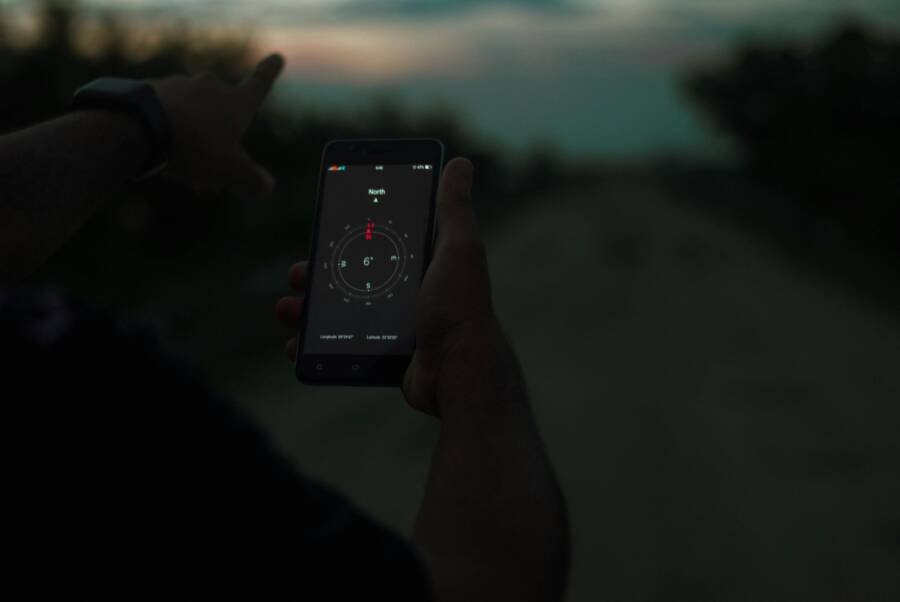
A reliable compass on your phone makes navigation feel more trustworthy. In this section, you’ll find practical, quick-hitting tips to keep your readings steady. From minimizing interference to knowing when to recalibrate, these guidelines help you stay confident on any route. Think of your smartphone as a tiny guidance system that rewards clean signals and thoughtful positioning.
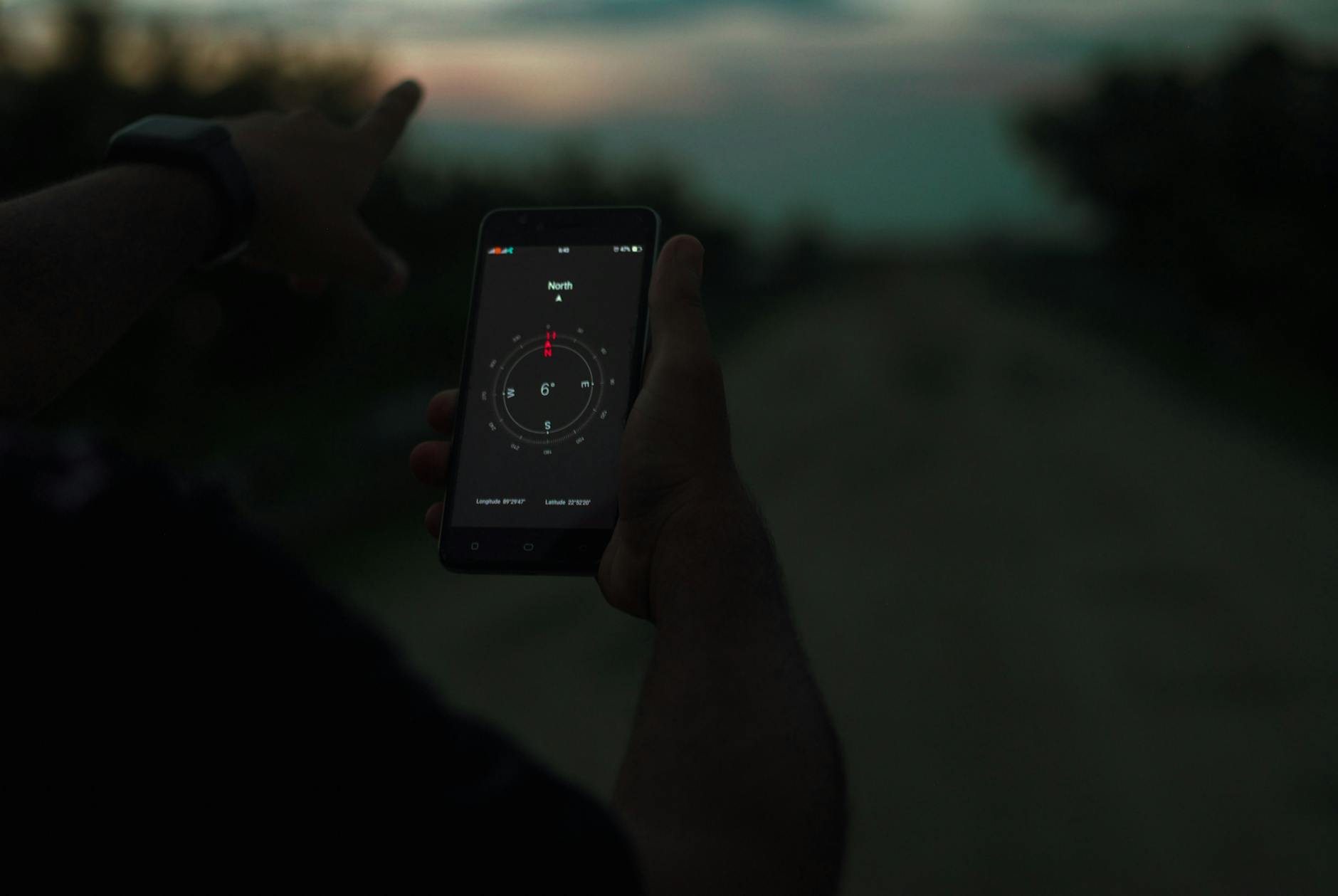
Photo by Khan Nirob https://www.pexels.com/@khanniru
Low interference habits
Keep the compass readings clean with simple habits. Hold the phone away from speakers, clusters of metal, and heavy magnets that can distort the magnetometer. When possible, avoid placing the device on metallic surfaces like car dashboards or bike frames during calibration or map use. Remove accessories with magnetic components, such as certain mounts or wallets with magnets, and give the sensor some breathing room. If you notice drift, move to an open area and recheck.
When to recalibrate after travel
Different places bring different magnetic noise, so recalibration after a trip is smart. If you’ve moved from a city with lots of metal infrastructure to a more open landscape, drift can appear as soon as you start using maps again. A quick recalibration is a good habit after outdoor adventures, in new neighborhoods, or near large metal buildings. If the blue dot seems off by even a few degrees, run a fast figure-8 motion and verify with a brief test walk.
Real-world Scenarios: What to Expect
Calibrating your phone compass pays off in two very common real‑world situations. In cities with dense high rises, the magnetometer can misbehave as metal and glass create interference. Outdoors, terrain and weak signals can hide your true direction. In both cases, a quick calibration brings the map back in line with your actual path, helping you stay on course without second guessing every turn. Here are two concrete examples to illustrate how it works in practice.
Urban navigation without a compass glitch
In a bustling downtown with tall buildings, map orientation can drift if the compass isn’t calibrated. You step off a corner and expect the blue dot to point toward the next cross street, but the arrow lags or spins. A quick figure-8 calibration or a fresh toggle of Compass Calibration clears the magnetic noise from nearby metal. After recalibrating, you’ll see the map align with the street grid, and turns feel natural again, not guesswork.
Outdoors and off the grid
When you hike through a canyon or a forested area, GPS signals can weaken or drop entirely. The map may stall, leaving you with an outdated blue dot and a direction that doesn’t reflect your movement. Calibrating the magnetometer restores a reliable sense of direction, so the onscreen route tracks your actual path. A few smooth figure-8 motions in open space, followed by a short test walk, typically brings the compass back to accurate alignment.
Conclusion
A calibrated phone compass keeps maps honest and routes clear, whether you’re in a crowded city or out in the countryside. Regular calibration minimizes drift, so the on screen direction matches your actual movement and the map stays aligned with real landmarks.
Key steps at a glance
- iPhone: enable Compass Calibration in Settings, then perform the figure-8 motion in the Compass app when needed. Hold the device flat and recheck after short tests.
- Android: use in app prompts or system prompts to run the figure-8 motion, then test by walking a short distance. Move away from metal objects if drift persists.
A quick confidence check after calibration helps you stay prepared. Recalibrate after long trips, changes in scenery, or when you notice the blue dot misaligning with the street grid. Regular practice keeps your smartphone navigation reliable.
Checklist you can reuse
- Turn on Compass Calibration (if available) on your device
- Calibrate with a smooth figure-8 motion
- Move away from magnets or metal surfaces during and after calibration
- Do a brief test walk to confirm alignment
- If drift repeats, restart the app or device and recalibrate
If you have tips from your own tests or questions about tricky environments, share them below. A few quick tweaks can save time and keep your maps trustworthy on every journey.