Thousands of People Were Struggling With Money Until They Discovered This One Ancient Secret Hidden in Sound
>>> Unlock It Now <<<

Guitar players who post clips online need more than just good riffs they need a phone that handles video, sound, and quick sharing with ease. This guide helps you pick a device that makes your performances pop, from crisp visuals to clean, natural audio.
In late 2025 the standout choices focus on four pillars: top video quality, reliable audio capture, solid battery life, and smooth editing plus fast sharing. You’ll find how each option supports easy workflow so you can record, polish, and post without a hitch.
If you want a fast answer upfront, the goal is simple: choose a phone that can record in high resolution, capture your guitar tones faithfully, stay powered through long sessions, and push clips to your favorite platforms in just a few taps. Let’s break down what to look for and how the leading phones stack up.
What makes a great phone for guitar clips
Choosing the right phone for guitar clips is about more than just how the guitar sounds. You want visuals that match your performance, stable footage while you play, clean audio that sits in the mix, and the reliability to keep recording during long sessions. In this section, you’ll learn how to evaluate a phone for guitar clips and why certain specs matter. You’ll also see practical tips you can apply right away to improve your results.
There Is a Frequency That the Wealthiest Families Have Used for Generations and Most People Will Never Know It Exists
>>> Open the Door <<<

Video quality that shines for guitar clips
When recording guitar clips, resolution, frame rate, color, and exposure all shape how your performance is perceived. Here’s how to think about each factor and what to trade off in real life editing.
- Resolution matters for detail. 4K looks crisp on large screens and in social feeds that scale up. But 8K is not always practical; it creates huge file sizes and demands more from your computer during editing. In many cases, 4K at 60 frames per second (fps) hits a sweet spot for sharp detail and smooth motion. If you mostly post vertical clips for social platforms, 4K downscaled to 1080p can still deliver strong clarity without overwhelming your workflow.
- Frame rate affects perceived motion. 24 or 30 fps feels natural for casual playing, while 60 fps excels when you perform fast picking or strumming patterns. If you record slow-motion sections or want ultra-smooth edits, higher frame rates can help, but they also multiply file sizes.
- Color and dynamic range determine how faithful your tones look on screen. A phone with good color science and a wide dynamic range helps your guitar colors stay accurate in bright room lighting or backlit scenes. You’ll want consistent white balance so fretboard details aren’t washed out or tinted by mixed light sources.
- Exposure and noise performance matter in varying lighting. Good exposure control keeps your fretting fingers visible and your strings shimmering. Phones with reliable HDR video can capture both bright highlights in the room and darker corners of the fretboard without excessive noise.
- Practical trade-offs: 4K at 60 fps is great if you plan post-production polish and big-screen viewing. However, it produces larger files that can slow down editing and cloud uploads. If your editing setup is limited or you post mostly to social apps that compress video, shooting at 1080p or 4K 30 fps can save time and storage while still delivering strong results. For guitar clips, the priority is clean, sharp visuals that stay consistent across clips, not the highest possible resolution.
External reads can deepen your understanding of how video specs affect outcomes. For a quick primer on how frame rate and resolution interact, see this overview on video fundamentals.
Best smartphones for video – cinematic reels made easy
- Quick tip: enable a consistent shutter speed around 1/120 or 1/125 of a second for 60 fps to keep motion clean, then let your phone handle exposure. If your phone offers extended dynamic range modes, test them in your typical practice space to see which setting preserves fretboard detail best.
Images can help readers visualize the setup.
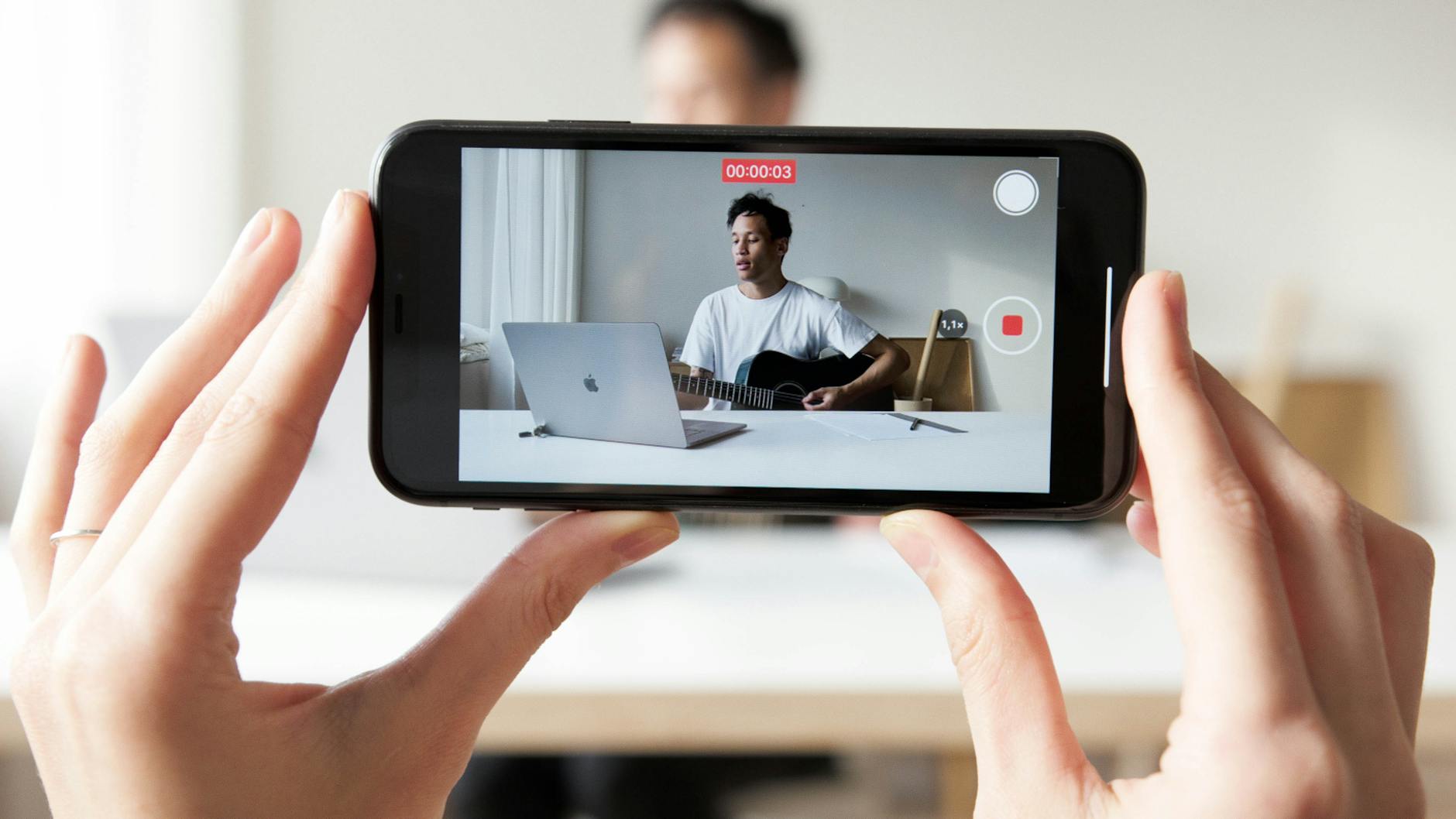
Photo by Artem Podrez
Stabilization and motion handling
Smooth motion sells a performance. Stabilization can be optical (hardware-based) or software-driven, and both play a crucial role when you’re playing and recording at the same time.
- Optical stabilization (OIS) helps reduce small tremors from your hands, letting your fingers shine without distracting shakes. Phones with strong OIS are valuable for close-up shots of picking hand movements and fingerwork on the fretboard.
- Electronic stabilization (EIS) and software stabilization can help when you don’t have a tripod. Modern phones combine OIS with smart stabilization to keep clips steady even with micro-mips in your hand.
- Tripods and mounts provide rock-solid baseline footage. A small tabletop tripod or a desktop stand keeps the camera at the ideal angle for head-on views or side angles.
- Gimbals and handheld stabilizers offer dynamic motion without the wobble. For guitarists, a compact handheld gimbal can follow a slow arc across the fretboard or capture a performance from a slightly moving perspective without sacrificing clarity.
- Tips to keep footage steady while playing: lock your left elbow against your body for a stable fretting hand, use a compact mount that lets you clip the phone near amplifier distance, and practice a few warm-up takes to dial in framing before you commit to a full clip.
For readers seeking a deeper dive into stabilization methods, this guide covers how different phones stack up on optical and software stabilization.
Top 10 Best Phones for Video Stabilization
- If you’re new to mobile video, consider starting with a small tripod and a simple clamp to position the camera at eye level
Top phones for guitar clips in late 2025
If you’re recording guitar clips to share online, you need a device that handles sharp visuals, clean audio, and easy editing without getting in your way. In this section, you’ll discover four standout phones for late 2025 that balance video quality, sound capture, and workflow efficiency. Each option brings a distinct strength to your musician toolkit, so you can pick the one that fits your style and posting cadence.
Samsung Galaxy S25 Ultra
The Galaxy S25 Ultra sets a high bar for creators who want flexible resolution and robust stabilization in one device. For guitar clips, 8K and 4K options give you future-proof choices for editors and fans who crave ultra detail. Recording in 8K at 30fps ensures crisp texture on close-ups of fretting hand work, while 4K at 60fps delivers silky motion during rapid picking. If you post vertical clips, you can downscale 4K to 1080p without losing notable sharpness.
Stabilization is a key strength here. The phone employs AI-powered stabilization that keeps footage steady even when you’re moving between chords and stage-like lighting. That means fewer trips to the tripod and more time jamming. The built-in mic suite includes an Audio Eraser feature that helps reduce background noises from the room, allowing your guitar tone to sit cleanly in the mix. You’ll get a more professional sound without external gear.
Battery life is solid for long practice sessions and on-the-go recording, with a sizable capacity and fast charging to get you back in the groove quickly. For editing, expect professional-grade tools on-device, including RAW-style options for post-production adjustments and AI-assisted color and detail enhancements. These features let you polish tone and visuals in one pass, then publish with confidence.
Key takeaways for guitar
How to pick the best phone for your setup
Selecting the right phone for guitar clips means more than choosing a device with a good camera. It’s about aligning video, audio, and workflow with how you record, edit, and share. Below you’ll find a practical guide to evaluating phones, plus concrete tips to optimize sound, visuals, and posting cadence. The goal is a device that helps you capture authentic tones, stable footage, and quick, reliable publishing.
There Is a Frequency That the Wealthiest Families Have Used for Generations and Most People Will Never Know It Exists
>>> Open the Door <<<
Align with your budget and ecosystem
Your budget shapes every other decision, from hardware add-ons to app availability. Start by mapping three factors: upfront cost, total cost of ownership, and ecosystem compatibility.
- Cost and value: High-end flagships deliver exceptional cameras and raw audio options, but midrange phones often cover 80–90% of what most guitar clips need. If you record often in different rooms or outdoor spaces, invest in a model with strong stabilization and reliable autofocus. For many players, a solid midrange phone paired with a good microphone adapter hits the sweet spot.
- Warranty and service: A longer warranty reduces risk if you’re recording on the go. Check what’s covered for screen damage, battery health, and camera modules. If you travel or gigs push the phone hard, a plan with screen replacement and battery service adds real value.
- App availability and platform parity: Your editing, capture, and posting apps should be consistent across devices you own. Both iOS and Android ecosystems have rich toolsets, including external mic support, audio apps, and social posting plugins. If you’re already using a preferred editing suite or cloud workflow, stay within that ecosystem to minimize setup time.
- Impact on upgrades: If you plan to upgrade every 1–2 years, consider how your chosen device will age. A phone with robust video processing, a strong microphone input path, and good external accessory support will stay usable longer as apps demand more performance.
- External links for deeper reading: For a quick sense of how platform choices affect microphone options and app ecosystems, explore comparisons of mobile microphones and adapters. These resources can help you weigh the tradeoffs between iPhone and Android setups.
- https://www.engadget.com/computing/accessories/best-mobile-microphones-for-recording-with-a-phone-154536629.html
- https://www.ikmultimedia.com/products/irig2/
When you pick a phone, make a short playbook for upgrades. If you settle on one ecosystem now, you’ll save time later when you add a better mic, an audio interface, or a new editing app. A future-proof plan reduces the friction of growing your channel or moving to higher production values.
There Is a Frequency That the Wealthiest Families Have Used for Generations and Most People Will Never Know It Exists
>>> Open the Door <<<
Consider mic options and accessories
Great guitar tone on video often hinges on where the mic sits in the chain. A phone’s built-in mic is convenient, but the real difference comes from a dedicated mic path and reliable adapters. Here are practical options to consider, plus quick pairing tips.
- External mics for phones: A compact shotgun or lavalier can drastically improve room tone and string clarity. If you want a balanced guitar sound with minimal room noise, look for mics designed for smartphones, such as compact condensers or USB-C/Lightning-friendly options. For many players, a well-chosen external mic elevates clips without requiring a full audio interface.
- Adapters and interfaces: To connect a guitar directly or to route a guitar through an interface, you’ll likely need an instrument input adapter. The iRig 2, for example, remains a common pocket-friendly choice for iPhone and iPad users, providing instrument input and headphone output in a small form factor. Other popular options include portable interfaces that work across Android and iOS, offering better preamps and more routing flexibility.
- https://www.amazon.com/IK-Multimedia-Interface-Adaptor-IPIRIG2PLGIN/dp/B00T631UTC
- Phone-friendly interfaces: If you want cleaner tones and more control, a compact audio interface designed for mobile use can be worth the investment. Android and iOS ecosystems both support a range of interfaces that deliver phantom power, multiple inputs, and low-latency monitoring.
- https://www.adorama.com/lists/audio-interfaces-for-android
- Microphone options by use case:
- For indoors jam sessions with minimal spill, a small boundary mic or a shotgun mic aimed at the guitar can help.
- For sits-and-records on the move, a high-quality handheld or clip-on mic that connects via a USB-C or Lightning port keeps setup simple.
- If you want to capture amp dynamics specifically, a dynamic mic placed near the amp’s speaker can be routed through an adapter to the phone for direct recording, though you’ll want to monitor latency and clipping.
- Practical pairing tips:
- Keep the mic path clean by using a simple, shaded recording space to reduce reflections.
- If you rely on the phone’s built-in mic for ambiance, reserve the external mic for guitar tone and room contribution only.
- Test multiple angles: one close to the fretboard for detail, another aimed at the amp for body and air.
- Examples and inspiration: For real-world setups and suggestions from players who’ve tested mobile mic paths, see discussions and reviews from established musicians and gear sites.
- https://www.reddit.com/r/ipadmusic/comments/18ydsxd/which_portable_ios_audio_interface_do_you/
By pairing a capable external mic with the right adapter, you unlock a richer, more controllable guitar tone on video. The right combination reduces post-production fixes and gives you more tonal consistency across clips.
Editing and posting workflow
A smooth workflow from recording to posting saves time and keeps your content consistent. Here’s a concise, repeatable process you can adopt today, plus practical export settings for common platforms.
- Plan before you record: Decide the shot and the tone you want. A quick storyboard or shot list helps you frame the guitar, hands, and amp. Pre-select a noise-reduction approach if you’re in an echoey room, and set your exposure to avoid blown highlights on the fretboard.
- Record with intention: Use a stable setup, whether that’s a small tripod, a clip-on mount, or a handheld gimbal. Shoot in a high-quality resolution and enable the phone’s best color profile. If your app supports it, lock white balance to keep fretboard colors accurate across clips.
- On-device editing essentials: Look for apps that offer non-destructive editing, color correction, and basic audio ducking so you can balance your guitar tone with room sound. Some phones provide RAW-style options for more finesse in post, while others excel with AI-assisted color and stabilization.
- Audio tweaks during editing: A light touch of compression can help guitar notes sit in the mix, especially in busy settings. If you recorded with an external mic, use a 1–2 dB gain structure to avoid clipping and maintain headroom. Consider a subtle high-pass filter to reduce low-end rumble from the floor.
- Export and optimize for platforms: Each platform has its preferred specs. For most social feeds, vertical or square formats at 1080p deliver the best compromise between file size and perceived quality. Here are practical export guidelines:
- YouTube: 4K or 1080p, H.264, AAC audio, 24–60 fps
- Instagram Reels / TikTok: 1080p, 9:16 aspect, H.264, AAC, 30–60 fps
- Facebook: 1080p, H.264, AAC, 30 fps
- Best practices for consistency: Create a template for thumbnail, captions, and hashtags. A consistent opening beat or 2–3 second intro helps your clips feel cohesive across the feed.
- Helpful resources to refine your setup: For readers seeking more on mobile video improvements and stabilization, these guides can offer deeper dives into gear choices and workflow.
- https://www.linkedin.com/pulse/top-10-best-phones-video-stabilization-yasir-memon-j92cf
- https://amateurphotographer.com/buying-advice/best-smartphones-for-video/
A steady workflow reduces friction and helps you publish more often. The aim is to get from record to share in just a few taps, with enough polish that fans notice the improvement in your tone and visuals.
Key takeaways for this section:
- Choose a phone that fits your budget while offering strong app support and dependable hardware.
- Pair an external mic and proper adapters to unlock cleaner guitar tones and more consistent results.
- Build a repeatable editing and export process so posting becomes a routine, not a hurdle.
If you’re ready to dive deeper into specific phone models and their real-world performance for guitar clips, we’ll compare popular options in the next segment. For now, keep a simple recording setup in your practice space and focus on getting the tone and timing right.
Tips to record great guitar clips fast
Recording great guitar clips quickly is a skill you can nail with a simple, repeatable setup. The goal is to capture clean tone, steady footage, and a smooth path from start to share in just a few taps. Below are practical, ready-to-use tips you can apply today to speed up your process without sacrificing quality.
Setup your guitar and space
A clean, distraction-free space makes all the difference. Start with a small, dedicated corner or a quiet room where lighting is consistent. Position your amp or DI box off to the side, not directly behind the guitar, to avoid backwash and glare on the fretboard.
- Guitar setup: Keep action comfortable and strings in tune. Use a quiet pick or finger technique you’re comfortable with, and consider a short warm-up to lock in your timing before filming.
- Microphone and mic placement: If you’re using an external mic, place it about 6–12 inches from the amp speaker or aiming at the fretboard for detail. A boundary mic on a desk can capture room tone and add depth without taking up much space.
- Camera position: Set the phone at eye level for a natural, engaging view. A front-facing shot of the fretboard and picking hand works well, with a second camera angle later on for variety if you want a cut between views.
- Lighting basics: Use soft, even light from a window or a couple of inexpensive LED panels. Avoid harsh overhead lights that cast shadows on your hands. A simple key light to the side and a fill light opposite keeps your tones visible and the hands clear.
A quick tripod or clamp makes setup fast. If you’re in a pinch, a stable surface near your guitar stand can work, but prioritize planful framing so you don’t waste time tweaking mid-session.
Sound and lighting quick wins
Sound clarity and good lighting are the two levers that lift a clip from decent to polished. You don’t need a big budget to get clean results.
- Sound: Use at least a basic mic path for your guitar. A compact USB microphone or a small external mic aimed at the amp can dramatically improve tone compared with the phone mic alone. If you can, route your guitar through an interface for cleaner level control and less noise.
- Room treatment on a budget: A couple of soft blankets or a small rug can tame reflections and reduce flutter echoes. A simple reflection filter behind the amp also helps focus the sound.
- Lighting: A diffuse key light at 45 degrees and a secondary fill light on the opposite side create a balanced look. If you’re filming in dim spaces, a small LED panel with a color temperature around 3200–5600K keeps skin tones and fretboard colors accurate.
- Color consistency: Lock white balance and exposure to keep your fretboard details stable across clips. If your phone supports a manual white balance, use it to prevent shifts when you move.
If you want to go deeper, you can explore affordable lighting setups that mimic studio warmth without complexity. Practical reviews can help you compare small LED panels and clip-on lights for guitar work.
Polish with a quick edit and post
A fast edit brings your clip to life without slowing your workflow. A few straightforward steps can make a clip feel finished and ready to share.
- Quick trim: Remove stray breaths, pauses, and any dead air between phrases. Keep the core musical moments intact.
- Captions and captions timing: Add a short caption to set context, such as the gear used or the vibe of the piece. Subtitles help viewers catch nuances when they watch without sound.
- Caption idea for SEO and engagement: “Guitar clip recorded on a smartphone | Clean tone, quick edit, share-ready.”
- Simple effects: A light color correction to bring out your string tones and a subtle noise reduction can improve perceived quality without a heavy edit. Optional stabilization can be used if you shot with movement, but avoid overdoing it so the performance still feels natural.
- Export settings: Match platform preferences to your audience. For most socials, 1080p at 30–60 fps works well. If you shoot in 4K, downscale
Conclusion
For guitar clips that look and sound professional, the top picks are the iPhone 17 Pro Max, Galaxy S25 Ultra, and Sony Xperia 1 V, each bringing strong video, audio, and workflow benefits. If you want the most versatile video fabric with reliable stabilization and superb slow motion, the iPhone option is hard to beat; the Galaxy excels with high resolution and AI audio tools, while the Xperia stands out for streaming and color accuracy. Test external mic setups with any of these smartphones to lock in clean tone and consistent room sound, then pair your favorite editing app to speed up posting. Share your setup in the comments and tell us which phone you’re trying next.
He Was Drowning in Bills and Burnout Until a Simple Daily Ritual Rewired His Brain for Wealth in Less Than a Week
>>> Start Your Shift Today <<<
